
How to Fix a Roof Leak (And When DIY Costs the Insurance Claim)
Sliding patio doors cost less ($1,500-$4,500 installed), take up no floor space when open, and provide more unobstructed glass area. French doors cost more ($2,500-$6,000 installed), offer a wider clear opening for furniture and foot traffic, and seal more effectively against Portland's wind-driven rain when installed in an outswing configuration. The right choice depends on the available floor space, the wall's weather exposure, the home's architectural style, and whether the homeowner prioritizes view and light or opening width and ventilation.
A brown stain shows up on the ceiling after a Saturday storm. Or water runs down a wall during a hard rain. Maybe it is just a small drip — for now. Either way, the homeowner is standing in the house wondering whether to grab a bucket, call the insurance agent, or climb up with a tube of caulk.
The right answer depends on three things: how the leak started, how long it has been running, and whether the home is inside an active insurance claim window. Get those wrong and a $400 fix turns into a denied claim or a five-figure repair. This article walks through how to find the leak, what a homeowner can safely patch themselves, and when DIY stops saving money and starts costing it.
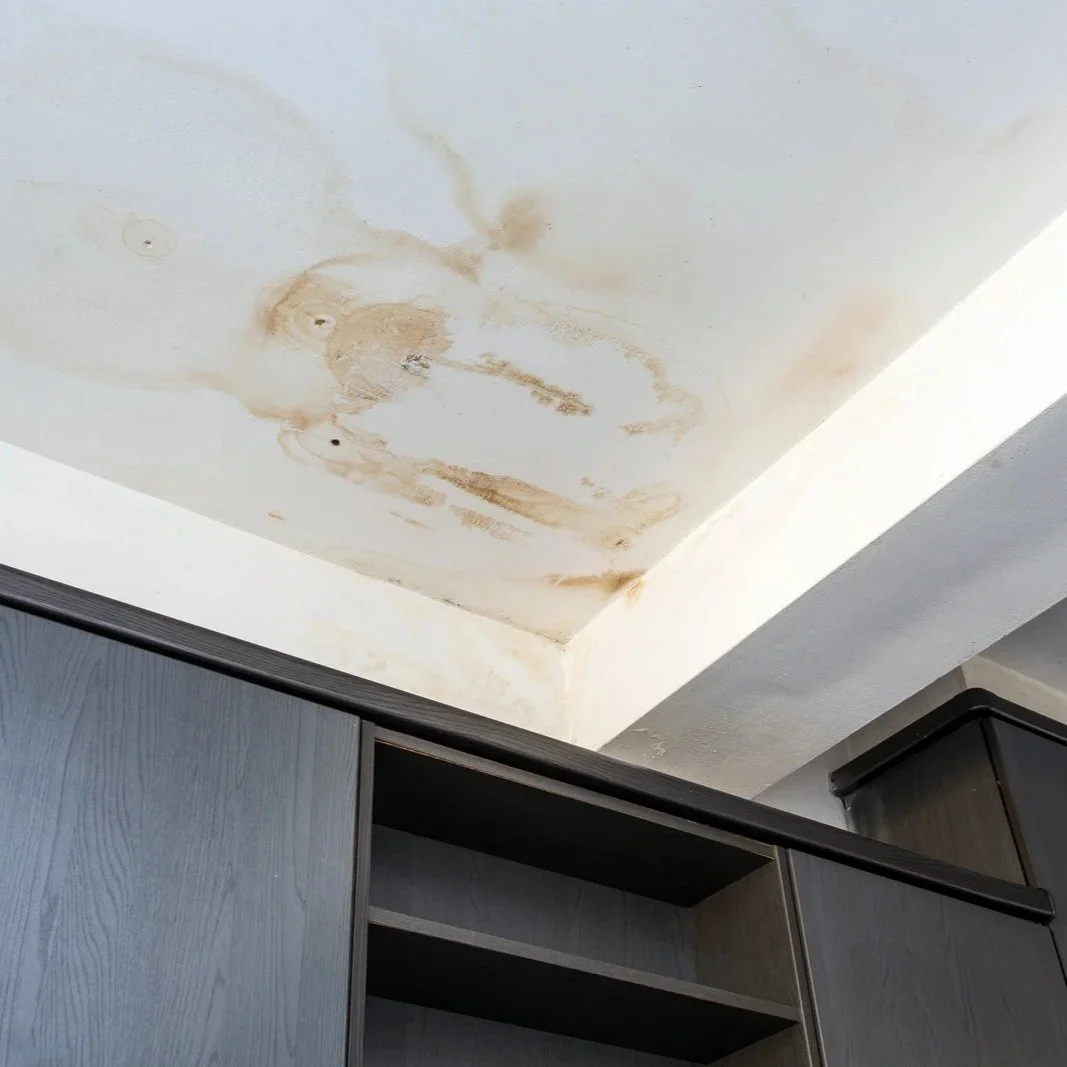
Water stains spreading across ceiling drywall after Louisiana storm reveal active roof leak damage above kitchen cabinets needing immediate repair.
First, Stop the Damage Inside the House
Move furniture first. A good rug or a piece of upholstered furniture under an active drip is gone in an hour. If the ceiling drywall is sagging from accumulated water, a screwdriver driven into the lowest point lets the water drain into a bucket in a controlled way, instead of pooling until the whole panel comes down on the floor.
Photograph everything before any cleanup happens. Wide shots of the room. Close-ups of the stain. Video the active drip with audio. If this turns into an insurance claim, those first photos are the difference between a covered loss and an adjuster saying "we can't tell when this started."
Nobody goes in the attic if anything electrical is wet. Ceiling fixtures, recessed cans, junction boxes — water in any of those means the breaker comes off first.
How to Find Where the Leak Is Coming From
The leak is almost never directly above the drip. Water hits the roof, runs along the underside of the decking, follows a rafter, and shows up wherever it finds a low point in the drywall. The ceiling stain can be 8-15 feet from where the water actually enters.
Method one — the attic walk
Flashlight, a few minutes, look up. Dark spots on the plywood decking, mold rings, daylight where there shouldn't be any, dampness near anything that goes through the roof — plumbing vents, bathroom fans, chimney flashings. The water trail on the rafters shows where it traveled. Follow it back to where it started.
Method two — the garden hose test
Two people are needed. One on the ground with a hose, working in 5-minute sections from the bottom of the roof up. One in the attic with a flashlight, watching for water entry. This works for most leaks. It misses wind-driven rain that only enters at certain angles — common in Louisiana when a thunderstorm pushes rain sideways under shingle edges.
Method three — call a roofer with an infrared
Older roofs, complex rooflines, multiple suspected leaks, or a leak that only shows up in heavy rain — none of those resolve from the ground. A professional infrared inspection finds the wet zones in the decking from inside the attic without anyone climbing on a slick roof.
In Louisiana, the most common leak source on roofs 5-10 years old is pipe boot failure. The rubber collar around the plumbing vent stack degrades in Gulf Coast UV in 5-8 years — way faster than the manufacturer's stated lifespan. A spring walk-around to inspect for cracking near every pipe penetration prevents the next leak.
The Common Causes of Roof Leaks in Louisiana
Pipe boots fail first. The rubber sun-bakes, cracks around the collar, and water runs down the pipe and into the attic. Visual clue: dark staining on the plywood right next to a pipe vent. The fix is straightforward — replace the boot. $40 in materials for a comfortable DIY job; $150-$400 from a roofer.
Flashing comes next. Step flashing around chimneys, sidewall flashing where the roof meets a wall, and valley flashing where two roof planes meet. Sealant ages in the heat and pulls away. Flashing physically lifts in high wind. The problem isn't the leak itself — it's that re-caulking failed flashing is a 12-month band-aid, not a fix.
Missing or damaged shingles. Hurricane wind pulls them off in clusters. UV makes them brittle. Hail cracks them. The repair is straightforward if the roof is under 10 years old — pull the damaged shingle, slide a new one in. After 10 years, color matching becomes nearly impossible, and the patch is visible from the street.
Skylight seals fail. Most homeowners assume the flashing is leaking. Usually it's the skylight unit itself — the rubber gasket around the glass. If the unit is more than 15 years old, replacing the whole skylight is cheaper than chasing the seal year after year.
Valley issues. Spanish moss, pine needles, and oak leaves dam up in roof valleys here. Water backs up, finds the side of the flashing, and runs sideways under the shingles. Easy to miss because the leak shows up far away from the valley itself.
Storm damage that looks like normal wear. If a leak appears within 30 days of a named storm — hurricane, tropical depression, severe thunderstorm — it is almost certainly a covered claim, not a maintenance fix. Document it before patching.
A DIY patch on a storm-related roof leak can void the insurance claim for unrelated damage on the same roof. Adjusters argue that any modification before documentation makes it impossible to determine the storm's cause. Photograph and tarp first. Permanent repair second.
Temporary Patches That Buy Time
Lifted shingle. Roofing cement under the shingle, pressed down. 30 seconds. Holds 6-12 months in the Louisiana sun. Costs $8 for a tube of cement at any hardware store.
Cracked pipe boot. Self-leveling sealant or Henry Wet Patch around the crack lasts 3-6 months. Not a real fix — the boot needs replacement before the next storm season.
Active drip during a storm. Tarp it. But tarp it after the damage is documented for insurance, not before. A tarp screwed properly into the roof rafters with 1×2 wood strips holds water out for weeks. A tarp thrown over the roof with bricks holding the corners down comes off in the next gust.
Epic Roofing has a separate guide on how to tarp a roof safely after a storm — read it before climbing up. Wrong tarp, wrong screws, wrong angle, and the result is a wind sail that pulls more shingles off the next time the wind picks up.
When DIY Stops Being the Smart Choice
Anything above one story. Ladder injuries are the leading cause of DIY roof ER visits. Pros use Personal Fall Arrest Systems for everything above six feet — required by OSHA. Most homeowners do not own one, and the math on a fall is not kind.
Anything within three feet of a chimney, dormer, or skylight. Flashing work is where amateurs make leaks worse. Wrong sealant, wrong overlap direction, wrong piece sizes — every one of those creates a fresh entry point that shows up the next month.
Anything that needs more than two or three shingles replaced. Color match on shingles older than five years is nearly impossible. Even when the same brand and color is sourced, the new shingles have not aged. The patch shows from the curb. On resale, every buyer's inspector flags it.
Anything inside 30 days of a named storm. File the claim first. Tarp temporarily. Permanent repair after the adjuster has documented everything. DIY before that point is a $400 mistake that costs a $15,000 covered claim.
Any leak visible from inside the attic, but with no clear source traceable on the roof. The water is entering somewhere not visible from above. Climbing up to chase it from the roof side creates new problems without fixing the original one.
A second leak in the same season anywhere on the roof. That is a pattern, not a one-off. Time for an inspection before the third one shows up.
The Louisiana Department of Insurance publishes a list of FORTIFIED-approved contractors at ldi.la.gov. For a roof under 15 years old needing a major repair, choosing a contractor from that list means meeting IBHS installation standards — a baseline that filters out many fly-by-night operators after every hurricane season.
What Roof Leak Repair Actually Costs in Louisiana
Pricing varies by source, access difficulty, and whether the leak revealed a deeper damage. These are typical 2026 Northshore and Greater New Orleans ranges:
| Repair Type | Typical Cost |
|---|---|
| Pipe boot replacement | $150–$400 |
| Single-shingle replacement (matched) | $200–$500 |
| Step flashing re-seal | $300–$700 |
| Chimney flashing replacement | $500–$1,500 |
| Valley flashing replacement | $800–$2,500 |
| Skylight replacement | $1,200–$3,500 |
| Storm damage repair (filed via insurance) | Typically rolled into claim minus deductible |
The cost of waiting six months changes the math completely. A $400 pipe boot replacement turns into a $3,000 decking repair, $1,500 of insulation replacement, and $2,500 of mold remediation. Same leak, same source — the difference is just how long the water has been running through the house.
When the Leak Means a Roof Replacement, Not a Repair
Multiple active leaks across different sections of the roof. One leak is a problem. Three leaks in three different spots are a roof telling the homeowner it is done.
Granule loss visible in the gutters — more than half a cup per gutter section. The shingles are wearing through their protective layer. UV accelerates the damage from here, and patching individual leaks is throwing money at a roof that is already failing.
Roof age 18+ years on a 30-year shingle. Louisiana's heat and humidity cut every shingle's stated lifespan by 20-30%. A "30-year shingle" rarely makes it to 25 in this climate.
Decking sponginess noticed during a repair. If the roofer pulls a few shingles and the plywood underneath flexes, the deck is failing. Patch repairs at that point are throwing money at a roof that needs to come off.
Filing Insurance vs Paying Cash
Quick framework: divide the repair cost by the deductible. If the answer is less than 2, paying cash usually makes more sense than filing.
Storm-related leaks: always file. The claim window is 30-90 days from the named event, depending on the policy. Miss it, and the claim is lost entirely.
Age-related wear leaks: the insurer almost always denies these. Wear and tear is excluded from every Louisiana homeowner's policy.
The middle case — when storm versus wear is unclear: file an inquiry, not a formal claim. Most carriers offer a free roof inspection benefit that does not count against the homeowner's claims history. Use that first to determine the cause.
What an Honest Inspection Includes
A free Northshore roof inspection from Epic Roofing includes drone aerial photos of every slope, an attic moisture check, and a full report with photos delivered the same day. The inspection produces an honest call — $400 fix, $4,000 repair, or replacement.
Epic does not sell roofs to homeowners who do not need them.
Frequently Asked Questions
$300-$1,500 for most repairs, depending on the source. Pipe boots are the cheapest. Chimney and valley flashing are the most expensive. If the leak has been running for months and the deck or insulation is damaged, add $2,000-$10,000 to the total.
No. Anything done from inside the attic addresses the symptom, not the source. The water entry point is on the roof — that is where the fix has to happen.
Storm-caused leaks are covered. Age and wear leaks aren't. The insurer determines the cause based on documentation, the roof's age, and the timing of the leak relative to a named weather event.
Days, not weeks. After 30 days of active water, decking damage starts. After 90 days, mold is growing in the wall cavity. After six months, the structural framing is at risk. The ceiling stain is always weeks behind the actual damage.
Yes — provided the damage was photographed before tarping. Adjusters need to see the cause. A tarped roof with no pre-tarp documentation appears to the insurer as preventive maintenance, not storm damage.
Two reasons. Either the leak source is small enough that light rain doesn't generate enough water to find it. Or it's a wind-driven rain leak that only opens up when the wind pushes rain sideways under shingle edges from a specific direction.
Don't Wait for the Drip
A roof leak does not fix itself. Every storm makes it worse, and Louisiana gets a lot of storms. The ceiling stain is the visible end of a problem that has been working through the decking, insulation, and framing for weeks before anyone noticed. Catch it early. Document everything. Get a real diagnosis before anyone touches a tube of caulk.
