
Underlayment SOS: Replace Before It’s Too Late
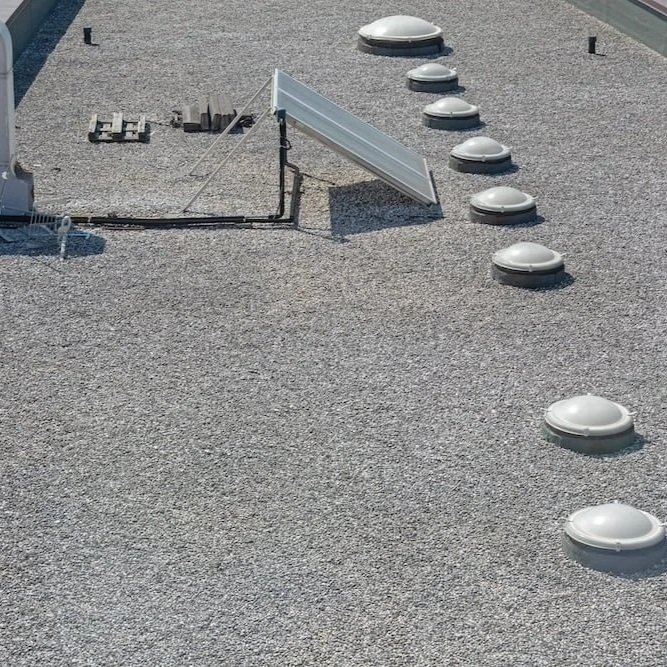
A flat roof with dome skylights and HVAC systems shows why professional underlayment inspection beneath the surface is absolutely essential.
A roof might look fine from the street, but trouble can start long before shingles show signs of distress. Hidden beneath the surface, roof underlayment quietly battles moisture, wind, and heat day after day. When it starts breaking down, even the toughest roofing system begins to lose its strength. Professional roof underlayment replacement isn’t just maintenance—it’s a rescue mission that saves homes from costly leaks and structural damage.
Roof underlayment acts like the backup quarterback, stepping in when shingles falter under extreme weather. Without it, a roof becomes vulnerable to everything from wind-driven rain to moisture buildup that leads to rot. Homeowners who wait too long to replace worn-out underlayment often discover leaks where they least expect them—attics, ceilings, or even inside walls. That’s why professional roofers treat underlayment replacement as one of the most crucial stages in roof care.
Understanding What Underlayment Does For A Roof
Underlayment serves as the protective barrier between the roof deck and the outer shingles. It’s designed to keep water out, regulate heat, and provide a smooth foundation for roofing materials. While shingles take most of the visible punishment, underlayment is what stops water infiltration when storms hit hard or debris tears at the surface.
Professional roofers see underlayment as the true backbone of a roof’s waterproofing system. When properly installed and maintained, it prevents long-term damage by redirecting water flow, reducing condensation, and keeping the deck dry. Over time, though, exposure to heat, UV rays, and trapped moisture weakens even the highest-quality materials. Once the underlayment starts to deteriorate, replacing it becomes a matter of protecting the entire structure beneath.
Warning Signs: The Underlayment Needs Replacement
Spotting underlayment damage isn’t always easy for the untrained eye, which is why professional inspections matter. Roofers often identify early warning signs long before leaks become visible indoors.
Common indicators include curled or missing shingles, sagging rooflines, and water stains along attic rafters. Mold or a musty odor in the attic can signal moisture trapped beneath deteriorating underlayment. If granules from asphalt shingles collect in gutters, it may indicate that the underlayment below is failing to support the surface layers.
Professionals also look for cracks, soft spots, and uneven patches on the roof deck. These subtle clues often reveal that the underlayment has lost its integrity. Once the protective barrier is compromised, every storm or high-humidity day accelerates the damage.
Why Replacing Underlayment Isn’t A DIY Job
Underlayment replacement might sound straightforward, but it’s a job for seasoned roofing professionals. Removing old materials, checking for hidden water damage, and laying new underlayment correctly require precision and experience. One small mistake—like improper overlap or loose fasteners—can create new leaks before the next rainfall.
Professionals follow strict installation procedures to maintain watertight coverage across the roof deck. They understand how underlayment interacts with shingles, flashing, and ventilation systems. Their work prevents future issues by addressing not only the visible wear but also the underlying conditions that caused the damage in the first place.
Attempting to patch or replace underlayment without professional equipment or knowledge often leads to further problems. Professional crews use safety gear, specialized tools, and high-quality materials designed to perform under extreme conditions. The investment in expertise pays off with years of reliable protection.
The Professional Replacement Process
When roofers take on an underlayment replacement, they start by stripping away old roofing materials to expose the deck. The surface is cleaned, inspected, and repaired if necessary before any new layers are added. Once the base is ready, the new underlayment is carefully rolled out, overlapped, and fastened to create a seamless moisture barrier.
Professionals pay special attention to vulnerable areas such as valleys, ridges, vents, and areas around chimneys. These zones are reinforced with extra layers or specialized flashing tape to prevent leaks. Roofers also consider slope and regional climate conditions when choosing materials. For example, homes in humid or rainy areas often benefit from synthetic or rubberized underlayment that resists water absorption and tearing.
Precision in overlap spacing, fastening methods, and sealing details separates professional craftsmanship from shortcuts that lead to early failure. Each step is designed to protect the roof deck and provide a foundation strong enough to handle high winds, heavy rains, and blazing sun.
Choosing The Right Underlayment Material
Professional roofers work with several types of underlayment, each offering unique benefits for different climates and roof systems. Asphalt-saturated felt, the traditional option, remains popular for its affordability and moderate protection. Synthetic underlayment, made from polypropylene or polyethylene, offers superior tear resistance, UV stability, and lightweight handling. It’s now the go-to choice for most modern roofing projects.
Rubberized asphalt underlayment, a premium material, provides exceptional waterproofing and self-sealing capabilities around nail penetrations. Roofers often use it in valleys and along eaves where leaks are most likely to occur. In regions with frequent storms or ice, rubberized asphalt is often the preferred choice for its flexibility and resilience.
Professionals tailor the selection to fit local conditions. A roofing system in Arizona, for instance, may require UV-resistant underlayment to withstand extreme heat. At the same time, homes in Florida might need synthetic products that repel moisture during long rainy seasons.
The Hidden Risks Of Delaying Roof Underlayment Replacement
Waiting too long to replace aging underlayment can lead to more than a leaky ceiling. Once moisture infiltrates the roof deck, it compromises the structural integrity of the entire system. Wood rot, mold growth, and insulation damage can occur, leading to expensive repairs and potential health concerns.
A deteriorated underlayment can also affect energy efficiency. When water seeps into the insulation, the home loses its ability to regulate temperature effectively. Energy bills rise, comfort declines, and indoor humidity becomes harder to control.
Professional roofers often find that delayed underlayment replacement can shorten the lifespan of even new shingles. The lack of a stable, protective base causes premature curling, cracking, and granule loss, forcing homeowners into full roof replacements far sooner than expected.
Regional Factors Affecting Roof Underlayment Lifespan
Local weather plays a significant role in how long the underlayment lasts. High humidity, intense UV exposure, or frequent temperature fluctuations can all accelerate deterioration. In coastal or storm-prone regions, the combination of wind and salt air can accelerate material degradation compared to dry inland climates.
Professional roofers take these factors into account when recommending replacement schedules. In areas with heavy rain or snow, they may suggest inspecting the underlayment more frequently. Homes in desert regions often face rapid expansion and contraction cycles, which can cause cracking if inferior materials are used.
Choosing a local roofing company familiar with area-specific challenges ensures the right materials and installation techniques are used to maximize lifespan. Experienced professionals know how to adapt strategies to handle everything from coastal humidity to mountain snow loads.
The Financial Wisdom Behind Timely Replacement
Replacing underlayment before major damage occurs saves money in the long run. Professional roofers often compare it to replacing brake pads before the rotors are destroyed. Acting early prevents extensive repairs later.
A proactive replacement also preserves warranty coverage for both shingles and roofing systems. Many manufacturers require proof of proper underlayment installation to validate their warranties. By hiring professionals for timely replacement, homeowners protect not only their roofs but also their investment value.
Energy efficiency is another financial benefit. New underlayment materials often include reflective or insulating properties that reduce heat transfer. In warm climates, this can substantially reduce cooling costs over time. A well-protected roof also enhances property value, appealing to buyers seeking durable, low-maintenance homes.
How Professionals Diagnose Underlayment Damage
Roofing experts use a combination of visual inspection and diagnostic tools to evaluate the condition of the underlayment. They look for signs of moisture infiltration, test for soft decking areas, and use infrared imaging to detect hidden water pockets beneath the surface.
Professionals also assess the alignment and adhesion of existing underlayment layers, checking for wrinkles or gaps that could compromise waterproofing. If the roof shows signs of multiple repairs or patchwork, they may recommend replacing the underlayment rather than temporary solutions.
By using professional-grade tools and experience, roofers can accurately determine whether a roof requires partial replacement or a complete overhaul. That level of accuracy saves homeowners from unnecessary expenses and provides peace of mind about the roof’s integrity.
The Environmental Benefits Of Replacing Underlayment
Roof underlayment replacement isn’t just about protecting homes; it’s also an environmentally smart decision. Modern materials are designed to be more sustainable, using recycled content and reducing waste. By upgrading to synthetic or reflective underlayment, homeowners can improve energy efficiency and reduce cooling loads.
Professional roofing companies often responsibly recycle old materials, minimizing landfill waste. Many underlayment manufacturers now focus on eco-friendly production methods, creating products that perform better while having a smaller environmental footprint. Investing in a roof upgrade helps both the home and the planet.
Integrating New Technology Into Roof Replacement
Advancements in roofing materials have changed how professionals approach underlayment replacement. Synthetic underlayment now includes anti-slip surfaces for safer installations, high UV resistance for prolonged exposure, and integrated moisture barriers that outperform traditional felt.
Some roofing systems even incorporate self-healing membranes that automatically seal around fasteners. Professionals trained in modern installation techniques can apply these innovations effectively, creating longer-lasting and more reliable roofs.
As part of smart home improvements, some homeowners choose reflective underlayment that pairs with energy-efficient roofing to reduce solar absorption. The result is a roof system that not only lasts longer but also contributes to a cooler, more comfortable living environment.
Protecting Homes From The Inside Out
A failing underlayment can cause more than surface damage. When water seeps into attic spaces, it affects insulation, wiring, and even drywall. Over time, that moisture promotes mold growth and weakens the structure. Professional roofers view underlayment replacement as a full-system upgrade, addressing all roof layers to restore complete protection.
They also verify proper ventilation during the process. Balanced airflow prevents condensation buildup and heat trapping, extending the lifespan of both the underlayment and the shingles. A roof that breathes properly lasts longer and performs better during extreme temperature shifts.
When homeowners schedule professional underlayment replacement, they’re not just fixing a problem—they’re rebuilding their home’s first line of defense. Every carefully installed layer adds security, strength, and comfort for years to come.
Local Expertise Makes All The Difference
Regional roofing conditions require local knowledge. A roofer in Arizona understands the need for heat-resistant materials, while one in Florida knows the battle against humidity and storms. Hiring local professionals means the project benefits from expertise rooted in real-world weather experience.
Local companies also understand the building codes and energy-efficiency requirements specific to their area. That insight ensures every roof replacement meets both safety and performance standards. Partnering with a certified local roofing company connects homeowners to professionals who know what works best for their homes.
Professional roof underlayment replacement isn’t just another maintenance step—it’s a safeguard against the unpredictable forces of nature. From the first nail to the final inspection, roofing experts treat every project as an opportunity to rebuild strength from the inside out. A roof might be what people see, but it’s the underlayment beneath that truly keeps a home protected. When handled by professionals who understand its importance, that hidden layer becomes the quiet hero of every secure and comfortable home.
