
Wet Attic Insulation After a Roof Leak: Dry It or Replace It
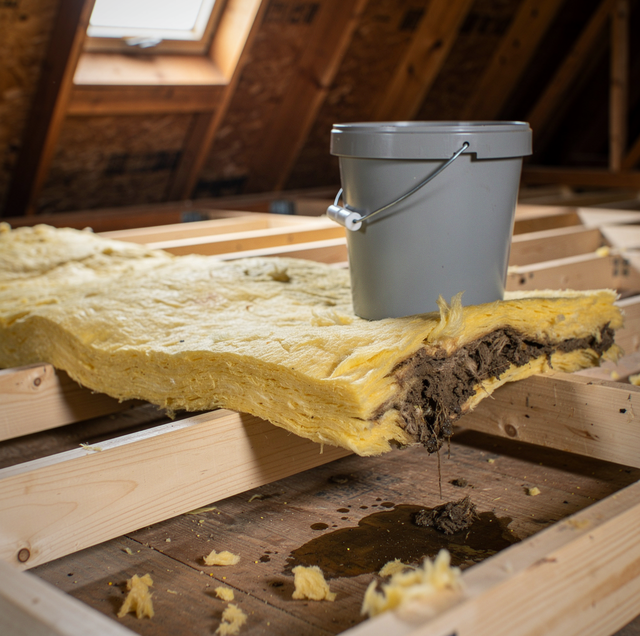
Quick Answer: Wet fiberglass and cellulose both sit on the discard-and-replace list after water damage, and closed-cell foam is the only insulation rated acceptable for wet exposure. Material, time, and what rode in with the water determine whether any of it stays.
Your roofer has stopped the water, your ceiling stain has stopped spreading, and someone has told you that the insulation above your bedroom took the worst of it. Now you have a question nobody has answered. Does your wet attic insulation dry out and stay where it is, or does the whole soaked run of it have to come out?
The answer does not depend on how bad your attic looks to you from your hatch. It turns on what your insulation is made of, how long your material stayed wet, and what came out of the water with it. There's a clear line on each of those three, and on the point where your own judgment should stop and your contractor's should start.
What Happens to Insulation When a Roof Leaks
Water from a roof leak does not reach your ceiling all at once. It comes through the deck, runs down a rafter, and lands on the insulation, the first absorbent thing in its path. Blown-in and batt insulation resist heat by holding still air in millions of pockets, and water fills those pockets from the top down.
Once the pockets fill, three things change at once. The material stops resisting heat because the trapped air does that work, not the fiber. It gets heavy and presses down on the ceiling drywall below. And it holds moisture far longer than a wall cavity would, because an attic is a still, warm space.
What Counts as Truly Wet Insulation?
There's a plain rule for this, and it runs from the other direction. Unless old insulation is wet, moldy, smelly, or contains animal waste, a contractor can simply add new insulation on top, and removing the existing material is usually unnecessary. The default is that old material stays and new material goes over it.
Read the rule backwards and you get four triggers instead of one. Wet is only the first. Moldy is second, smelly is third, animal waste is fourth, and any single one of them moves your material from stays to goes. Smell is worth dwelling on, because you can register it from an open hatch without touching anything, and because it outlasts the surface, which stops looking wet long before a batt gives up its core.
A second list of hidden attic problems calls for hiring a professional before insulation work proceeds: wet or damp insulation, which signals a leaky roof, and moldy or rotted attic rafters or floor joists, which signal a moisture problem. You are the first entry. The second is what your crew will hunt for once they are up there, because rot in the framing widens the job well beyond the insulation.
That inspection is a routine part of insulation work, not an add-on you have to request. A contractor reviewing existing material looks for gaps, compression, and moisture damage, then recommends repairs or replacements based on what turns up, so you get the scope in advance. Compression matters as much as wetness, because material that soaked and then dried is often left flattened, and flattened insulation no longer performs at its rated depth.
Judging wet insulation means working inside an attic with trapped heat, an unsupported ceiling underfoot, and possibly asbestos-bearing vermiculite, so have an insulation contractor make that call while you wait down on the floor below.
Which Materials Survive a Wetting and Which Do Not
Building materials are sorted by how they handle water, in three classes. Sprayed polyurethane foam and other closed-cell plastic foams are classified as Class 5, the top of the acceptable band. Fiberglass and mineral wool, whether batts, blankets or blown, sit at Class 3. Cellulose, cotton and open-cell plastic foams drop to Class 2. The distinction between those last two classes is the part worth reading: Class 3 materials can survive wetting and drying but may not be cleaned well enough after floods to remove most harmful pollutants, while Class 2 materials cannot survive the wetting and drying that come with flooding.
This classification serves a narrow purpose: telling a builder which materials may be placed below the base flood elevation in a flood hazard area. Its reference case is floodwater. Class 3 covers materials submerged in clean water, though a roof leak can deliver clean water.
So a Class 3 rating is a statement about a material, not a clearance for one wet batt in one attic. It says that fiberglass, as a class, can come back from wetting. It does not say that your run of fiberglass, wet for days nobody counted, has come back.
The 24 to 48 Hour Drying Window
The drying-window rule runs on a clock: dry items before mold can grow, if possible, since in most cases mold will not grow if wet or damp items are dried within 24-48 hours. Response strategies for water damage operate on the same clock, aiming to handle it within 24-48 hours.
The half-people drop is the exception. Anything wet beyond 48 hours, or already growing mold, calls for fuller remediation. A caveat pulls in two directions: materials dried within 48 hours can still develop mold, but mold will not always occur after 48 hours, since the window is only a guideline, not a guarantee.
Why Wet Porous Insulation Gets Thrown Away
Why discard instead of dry? The mechanism comes down to one line: absorbent or porous materials, such as ceiling tiles and carpet, may have to be thrown away once they turn moldy, because mold can grow into the empty spaces and crevices of porous materials and become difficult or impossible to remove completely. Insulation is almost nothing but empty spaces.
That is why insulation is handled differently from the hard surfaces around it. Concrete and cinder block get water extraction and fans. Cellulose insulation gets three words: discard and replace. Fiberglass insulation gets the same instructions, along with ceiling tiles and drywall.
Vermiculite: The Material to Leave Completely Alone
One kind of attic insulation stops the conversation entirely. Vermiculite is a pebble-like, pour-in product that is usually gray-brown or silver-gold. Much of it was sold under a well-known brand name. A mine near Libby, Montana was the source of over 70 percent of all vermiculite sold in the United States from 1919 to 1990, and asbestos was also present at that mine.
The instruction on vermiculite is blunt: assume the material contains asbestos and do not disturb it. Further testing is not necessary to take the appropriate precautions, and a professional asbestos contractor should be hired for any remodeling or renovation that would disturb vermiculite in an attic or a wall. Wet or dry, it is not yours to move.
Who Makes the Call, and What They Measure
So the work splits three ways. Your roofing crew owns the leak, the deck, and the flashing that let the water in. An insulation contractor owns the assessment and whatever replacement follows it, since a contractor has the equipment and experience to do the job right, and often does it much quicker. Vermiculite belongs to a professional asbestos contractor and nobody else.
Ask for the record at the end of the job. Your contractor is expected to hand over a statement of how much insulation went in and what the finished R-value is, and that figure is the one you check against the plan, not the number of bags you watched go up the ladder.
There is simple arithmetic sitting behind it, and you can follow along from the floor below. Fiberglass, cellulose, and mineral wool all run roughly R-3 to R-3.5 per inch, so the depth your crew reports back, multiplied by three, is the estimate: six inches of blown fiberglass works out to about R-18.
Frequently Asked Questions
Not for insulation. Drying methods like a water-extraction vacuum, a dehumidifier, and fans to speed drying are for materials meant to be kept. Insulation gets none of that. One caution still reaches your attic: do not run fans before you know your water is clean.
Not automatically, and your ceiling gets its own test. Wallboard is treated as a maybe: it may be dried in place if your board shows no obvious swelling and the seams hold; otherwise it comes out. Ventilating the wall cavity is part of that too. So you can easily end up replacing all your insulation while your drywall stays.
The response scales by area. Remediation is split into small jobs under 10 square feet of mold, medium jobs of 10 to 100 square feet, and large jobs over 100 square feet, with a remediation manager assigned to the medium and large categories. Your attic can cross that line easily, because the insulation your leak wets is wider than the stain you see below.
There's a short list of requests for the day of the job, and two of them are yours to make. Ask your crew to notify you of any wet insulation or roof leaks they notice, and to notify you if there are signs of birds, mice, or squirrels in your attic. Photographs of your attic floor before work begins leave you a record of what was up there.
It turns on what the water carried, not where it entered your house. The same clean-water approach applies, and if you know or suspect the water source is contaminated with sewage, or with chemical or biological pollutants, then personal protective equipment and containment are required, with an experienced professional consulted when your remediators lack it. A supply line gives you clean water. A drain or a sewer line does not, and that changes everything.
There's a widely used definition here, and you may meet the phrase on your own paperwork, used loosely. A flood damage-resistant material is any building product capable of withstanding direct and prolonged contact with floodwaters without sustaining significant damage. Both terms it rests on are pinned down too. Prolonged contact means at least 72 hours. Significant damage means any damage requiring more than cosmetic repair; cosmetic repair includes cleaning, sanitizing, and resurfacing, such as sanding, joint repair, and repainting. That threshold qualifies a product for use below a base flood elevation. It is not a deadline for drying out your attic or a test of your insulation.
Book an attic insulation inspection after any roof leak — a contractor can tell you exactly what stays, what has to come out, and what the finished R-value should be before any new material is covered back over. Epic Roofing LLC serves Mandeville, Covington, and Baton Rouge. Call (225) 819-3742.