
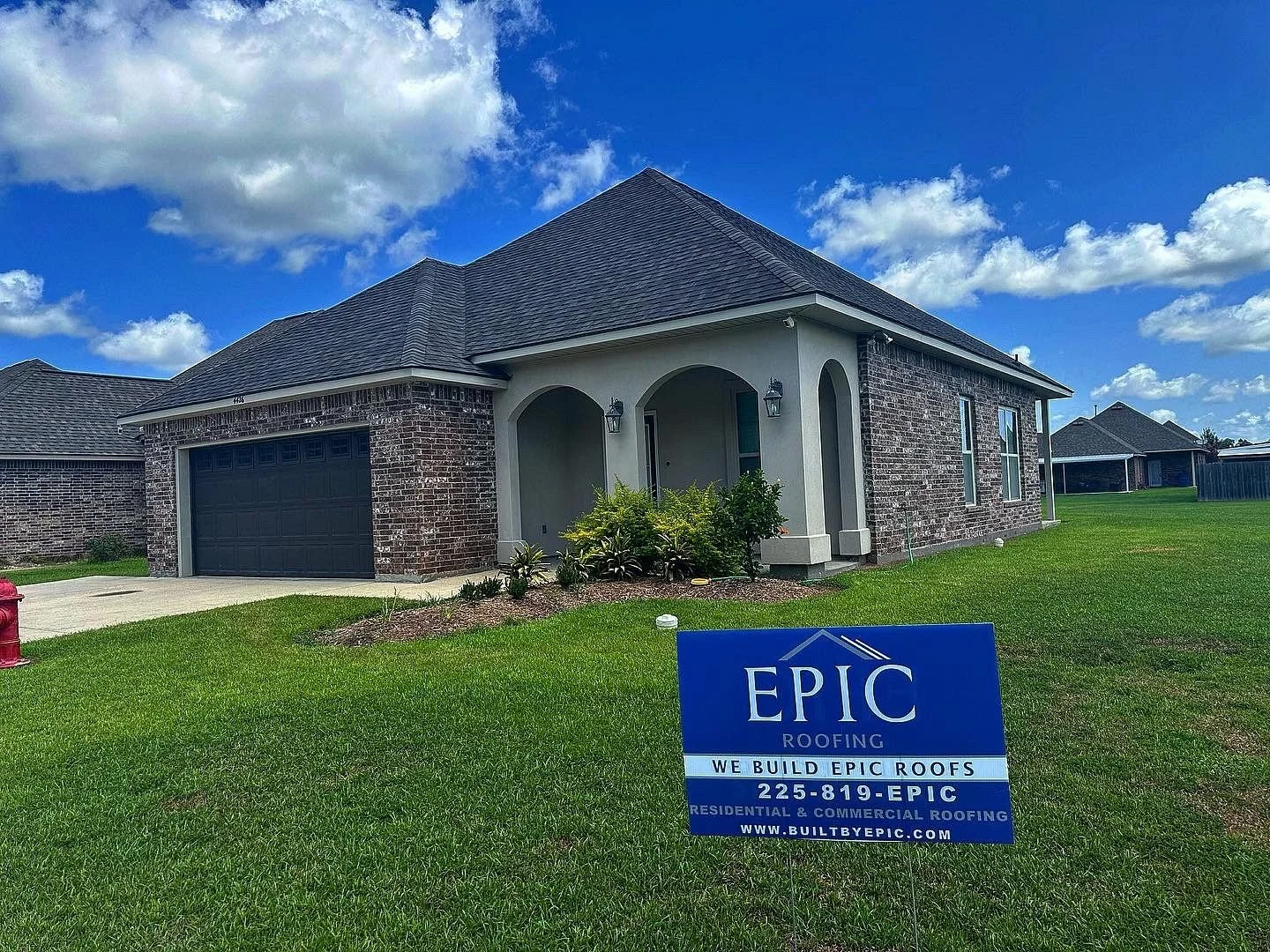
Commercial Roofing in Hammond, LA
For downtown Hammond buildings with flat roofs behind parapets, we bid reroofs that fit the city's historic-district guidelines, from the membrane to where the rooftop vents sit.
Flat roofs prevail on downtown Hammond's commercial buildings, and many sit hidden behind a parapet. When one of those roofs wears out, the replacement goes through the city's historic-district guidelines before a building permit is issued. Those guidelines handle a flat commercial roof differently from a pitched house roof: wide latitude on the membrane, firm limits on the parapet, the roof's profile and anything a passerby can see.
Epic Roofing bids that work for building owners and property managers under Louisiana commercial license CL69991. We install TPO, EPDM, modified bitumen, built-up and coating systems, and we write each downtown bid around the review it has to clear.
Hammond's Rules for Flat Roofs Behind Parapets
The Hammond Historic District on the National Register was drawn to include only the downtown commercial area, with buildings dating from about 1880, and a later boundary expansion reaching into the early 1950s. The city's design guidelines start from that same point, a flat roof hidden by a parapet, and several rules follow from it.
Where the guidelines give owners room
Because a flat roof behind a parapet is generally out of public view, the guidelines consider most replacement materials acceptable for it. Unlike on sloped roofs, lighter cool-roof membranes may be acceptable on a flat one as long as they stay out of view. On a large flat-roofed building, the guidelines note that can mean energy savings.
What has to stay
The flat profile stays. The guidelines do not permit a sharply sloped roof to replace a flat one, so a failing roof gets a low-slope system with only enough pitch to drain. Parapets, cornices, and other character-defining roof features must be kept, and concealed or built-in gutters should generally stay concealed. Ventilators and similar rooftop equipment belong in inconspicuous spots where they will go unnoticed from the street, and the guidelines call front and street elevations inappropriate for them.
Review runs through a certificate of appropriateness. The city's ordinance holds back a building permit for work in the district until that certificate is issued, except for exceptions the city allows, and the application must include plans and specifications for the exterior, including the roof.
Membranes and Details That Suit a Downtown Hammond Roof
Each option below can meet the guidelines on a flat roof screened by a parapet. The right one depends on the deck, the drains, foot traffic, and how long you plan to hold the building.
- TPO: TPO roofing is a white, heat-welded single-ply membrane. Behind a parapet, its reflective surface is the kind of cool roof the guidelines may accept, and it can cut heat gain across a large flat roof.
- EPDM: A rubber membrane in black or white, fully adhered or mechanically attached. It suits low-traffic roofs and buildings where degreaser fumes or vehicle exhaust would wear on TPO.
- Modified bitumen: Multi-ply asphalt-based sheets, torch-applied or self-adhered, for roofs where puncture resistance counts for more than reflectivity, such as those crews cross often to service equipment.
- Built-up roofing: The guidelines list built-up tar or asphalt and aggregate among the historic coverings on these roofs. A new built-up system keeps that construction with multiple plies of felt and asphalt.
- Coatings: Silicone, acrylic, or urethane coatings can extend a membrane that still has serviceable life. Wet insulation underneath rules a coating out, so we confirm the substrate is dry before offering one.
- Tapered insulation and crickets: Where water ponds, tapered insulation adds drainage slope while the roof stays flat. A thicker roof build-up shortens the parapet above it, so flashing heights and coping are part of that design.
A Downtown Hammond Bid, Approval First
Our downtown bids put approvals ahead of mobilization.
The certificate of appropriateness:
Because the review precedes the building permit, it goes at the front of the schedule. We prepare the submission with the membrane, its color, the parapet flashing and equipment locations spelled out, and we work through the review with you and the board before the price is set.
The site walk:
A roof-level look at the membrane, the parapet walls and their flashing, built-in gutters, drains, penetrations and equipment curbs, with drone imagery of the whole roof for the record.
The written bid:
Most bids arrive within 5–10 business days of the walk, with system options, line items by roof area, and how the parapet, gutters and equipment will be handled under the guidelines.
Permit, installation and close-out:
Once the certificate is issued, we pull the building permit. Our own crews install the roof under the same site supervisor who walked the bid; the job is photographed daily in CompanyCam, and the close-out packet carries the photo log and our 5-year transferable workmanship warranty.
If a storm caused the damage, we document it and, at your invitation, walk your carrier's adjuster through the scope. Louisiana RS 22:1684 bars roofers from serving as public adjusters, so we do not negotiate or settle claims. Pitched sections, metal, and other systems fall under our wider commercial roofing work, and residential jobs under roofing in Hammond.
Before the Certificate of Appropriateness
Our building sits just outside the old downtown blocks. Do the guidelines apply to us?
They apply to properties inside the city's historic preservation district. Outside it, the historic review drops away, and the job follows the city's regular permit process. We check where your parcel falls against the city's district records before the bid is written.
Can we replace an old tar-and-gravel roof with white TPO?
Often, yes. The guidelines give the widest choice of material to a flat roof the street cannot see, and a white membrane tucked behind a parapet fits that description.
Could we frame a pitched roof over the leaking flat one?
Within the district, plan to keep it flat. The guidelines call a sloped roof added to a historically flat building defacing. Ponding is solved within the parapet with tapered insulation, crickets, or drainage work.
We are adding rooftop units. Where can the curbs go?
In inconspicuous spots away from the front and street elevations, where they won't be noticeable from the street. We show proposed curb locations in the submission, coordinate with your HVAC contractor, and flash each curb into the new membrane.
Our cornice has a built-in gutter. Will it be replaced with a hanging one?
The bid keeps it concealed, as the guidelines ask. The site walk covers the liner and outlets, and the written bid records what we found there.
Part of our flat roof can be seen from a side street. Does that change anything?
It can. The guidelines tie the wider choice of materials to flat roofs out of public view, so a visible section, such as a lower rear roof seen from a side street, may draw closer review of material and color. We flag those sections in the submission, so material and color for them are settled during the review.
Start the Hammond Bid With Your Building Address
Phone 225-396-8122 with the building's address, the rough size of the roof, and any leak history. If you already know whether the building sits inside the historic district, say so on the call.
137 Girod Street, Suite 3, Mandeville, LA 70448
Get A Free Inspection
Fill out the form below, or for quicker service, call us at 225-396-8122.
Submit Request