
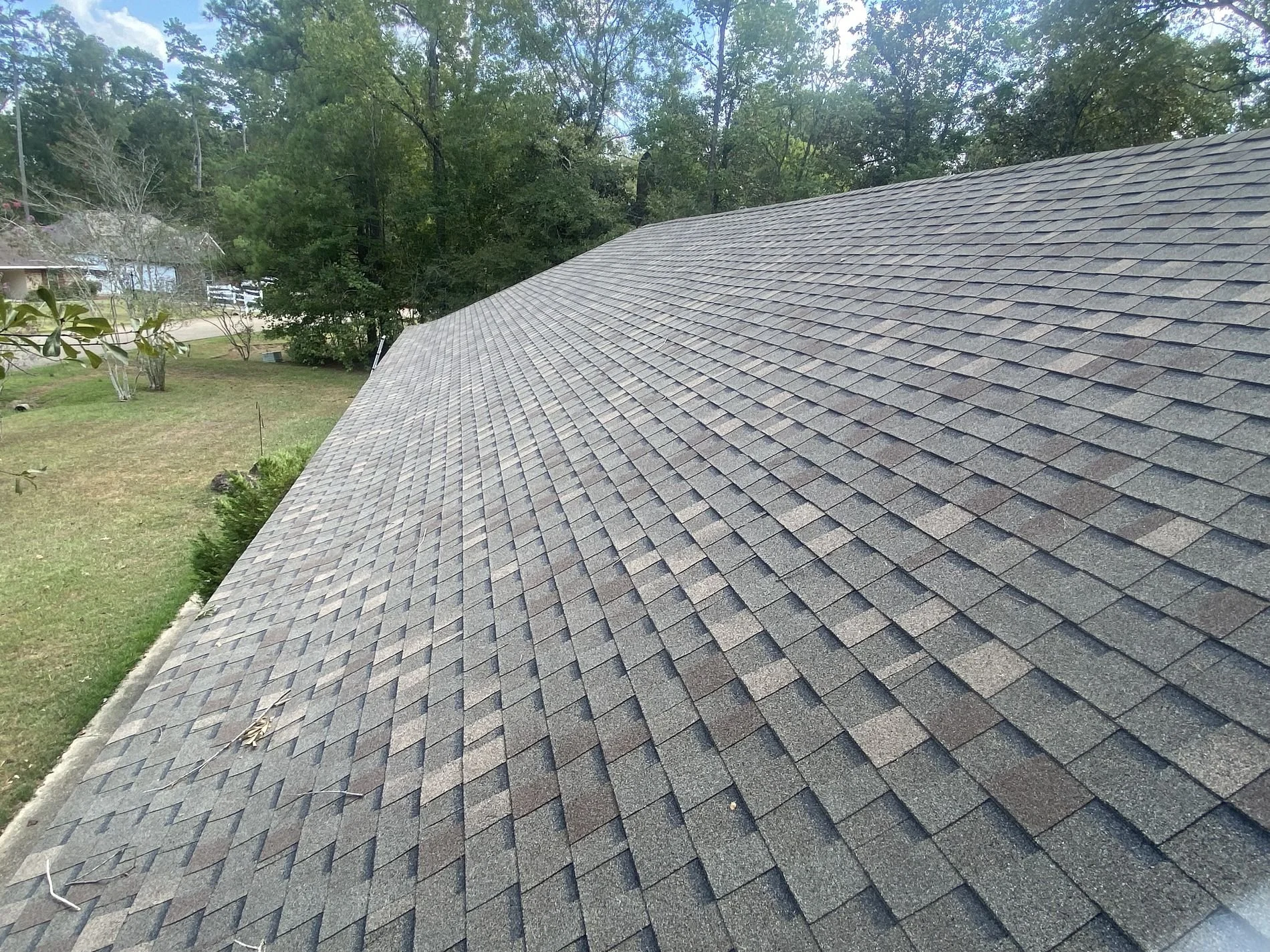
Historic Roof Restoration in Kenner, LA
Rivertown has its own design commission and its own list of roofing that fits the district. We build the roof scope around both, before anyone orders material.
Kenner designated Rivertown a local historic district in 1983, and a year later, the city established the Historic District Design Commission to oversee it. The commission looks hard at three things: architectural design, building materials, and paint colors. A roof touches all three. When a Rivertown building faces a street or an alley, the plans that go to the commission are supposed to describe the roof along with the front, sides, and rear, and that happens before work starts.
So a Rivertown roof job begins at the Planning Department, which sets it apart from the rest of our roofing in Kenner. Our part in historic roof restoration here is to arrive at that first conversation with the roof already measured, photographed, and matched against what the city code calls appropriate.
Rivertown Roof Questions
We only want our Rivertown metal roof repainted in a new color. Does the commission need to see that?
Expect it to. The code sends color changes to the Historic District Design Commission and first requests accurate samples. For exterior colors in general, it suggests starting from published historic color collections, with the commission making the final call.
Will the commission steer us away from metal toward shingles?
Not because of the metal itself. Corrugated, V-crimp and standing-seam metal are all on the city's list of roofing with historic context in Rivertown. The commission still reviews the profile, the finish, and how it suits the building.
Our neighbor's roof looks like slate but isn't. Could ours match it?
Synthetic slate isn't on the city's list, so it would be the commission's call. A listed material is the surer place to start the application.
We picked a different shingle color after the plans were approved. What happens now?
The approved plans bind the property, and any changes to them must be submitted to the commission. That is why we settle color with you before the application goes in.
Do the neighbors hear about our application?
If it goes to a public hearing, yes. At least ten days before it, the city makes a good-faith attempt to notify property owners within 250 feet by certified mail.
Who issues the building permit once the commission votes?
The commission's recommendation goes to the director of the city's Inspections and Code Enforcement department, who issues the permit. Kenner handles that itself, separate from Jefferson Parish. If the commission disapproves, or you decline its changes, the director sends the matter on to the City Council.
What Kenner's Code Says About a Rivertown Roof
The district's section of the city code names roofing materials outright. Wood shakes, slate or tile, rigid shingles with ridge tiles, asphalt shingles, and three kinds of metal (corrugated, V-crimp, and standing seam) are listed as having historic context in Rivertown. Materials are still reviewed one application at a time, but that list tells you where a proposal starts. By the code's own terms, a painted V-crimp roof on an old-frame cottage has historic context, and so does a plain asphalt shingle roof.
Composite or synthetic slate is not on the list. That doesn't make it forbidden, only unlisted, so any proposal to use it lands with the commission as a judgment call. Mansards have their own number: a mansard roof in the district maintains a slope between 4:12 and 12:12, which matters whenever a mansard has to be reframed.
Color is reviewed too. Any activity that changes color goes before the commission, and accurate color samples tied to the building's elevations are expected before the change is made. A new finish on a painted metal roof, or a switch from gray shingles to brown, is a color change. Mechanical equipment is to be screened from public view, and the code names a parapet as one way to do it.
We have not found a written exemption for ordinary maintenance in the parts of the code we have read, and we won't assume every small repair needs a hearing either. So we ask a city planner early whether a given scope goes to the commission.
Getting Ready for the Pre-Application Meeting
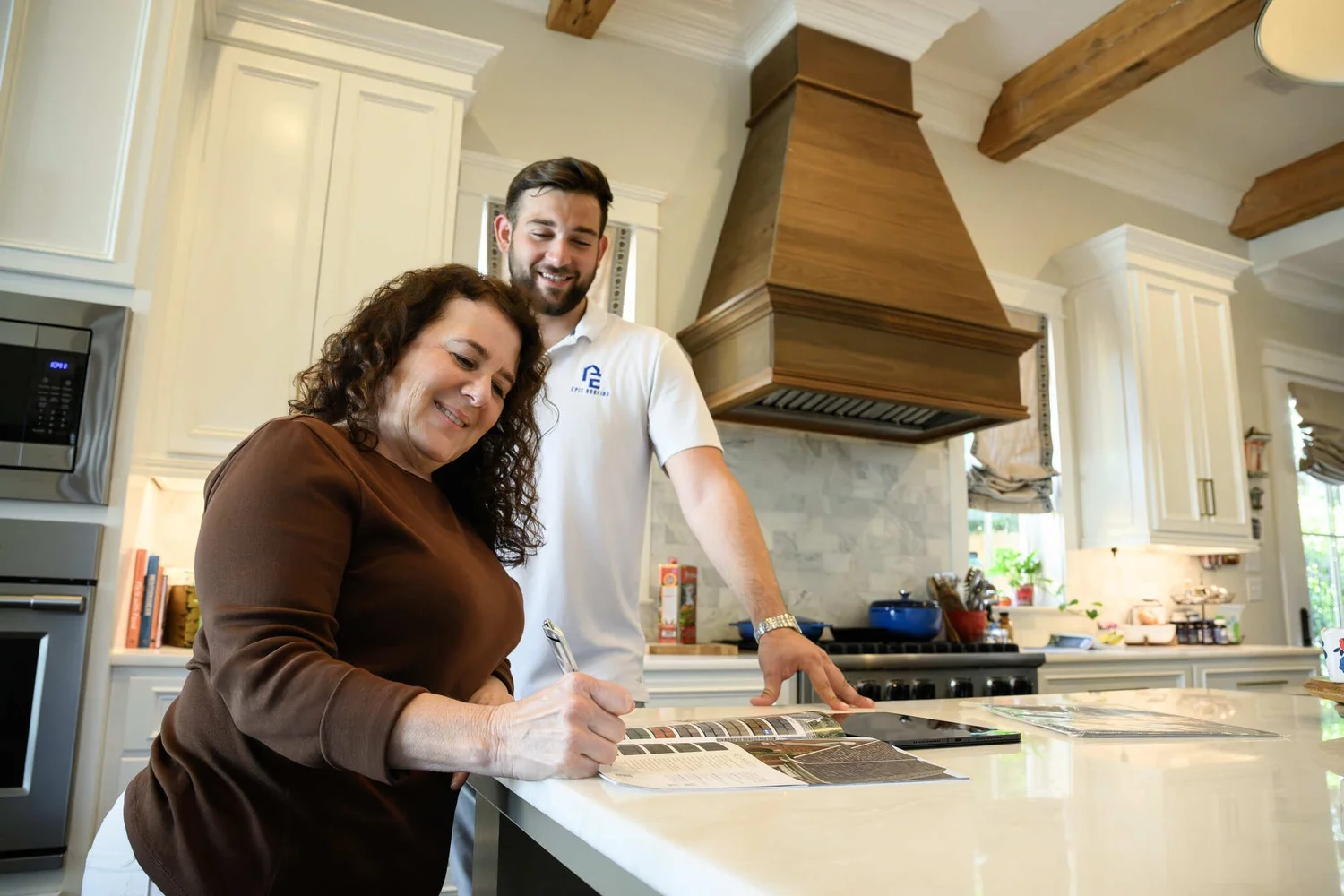
Kenner asks applicants to meet with one of the Planning Department's planners before filing an application. For that meeting, you bring five things from us:
Photos of every face of the roof:
Review covers buildings that face a street or an alley, so the file holds overhead drone shots of each face and close shots of the material and flashing.
The proposed material, named against the city's list:
Maker, product line, and profile (such as rib spacing on V-crimp or panel width on standing seam), with the product sheet attached.
The color, named from the maker's chart:
The shingle or metal finish color is named in the scope exactly as the manufacturer lists it, so the color the commission approves is the one that shows up on the truck.
Roof notes for the elevations:
The city's elevation requirement covers roofing material and exterior paint colors, so the scope names both for whoever prepares the drawings. On a mansard, the photos record the existing slope so the rebuild can stay within the 4:12 to 12:12 band.
A short list of questions for Planning:
Whether the work goes to the commission, which items the roof application needs (the city's packet is written for larger projects, and Planning decides what applies to a roof), and whether any rooftop unit needs screening.
Approved Plans Bind the Roof, and the Next Owner
Once the commission approves a set of plans, Kenner registers them with Planning and with Inspections and Code Enforcement, and they bind the owner and any later owner of the building. That makes the approved scope the job, not a starting point for it.
Our own roofers install what was registered:
There are no subcontractors on the roof, and the crew works from the same material sheet and color used in your file. If something found after tear-off requires a change, the change goes back to the commission before the work proceeds.
Photos from the first flight to the last course:
The drone and attic look open the CompanyCam file that runs through the install, and your estimate, in writing and illustrated with those photos, lands within 2–5 business days. Whatever was registered, our workmanship on it is warranted: five years, transferable, on a replacement, and a shorter written term on a repair.
Storms complicate the order. In the sections we have read, Kenner's code provides no special storm-path provisions for district roofs. Because the registered plans already name the roof's material and color, a wind-damaged Rivertown roof has an exact target. During business hours, we put temporary cover on when it is safe and photograph the loss against the approved file. Whether rebuilding to those plans needs another look from the commission is a question for Planning.
A Kenner roof outside the district skips the commission and goes straight to an ordinary roof repair in Kenner or roof replacement in Kenner.
Your Rivertown Roof, Measured Before the Meeting
Call 225-396-8122 with the address and what the roof is doing. Estimates are free, no deposit is due at the consultation, and you'll hear what we plan to show the planner.
137 Girod Street, Suite 3, Mandeville, LA 70448