
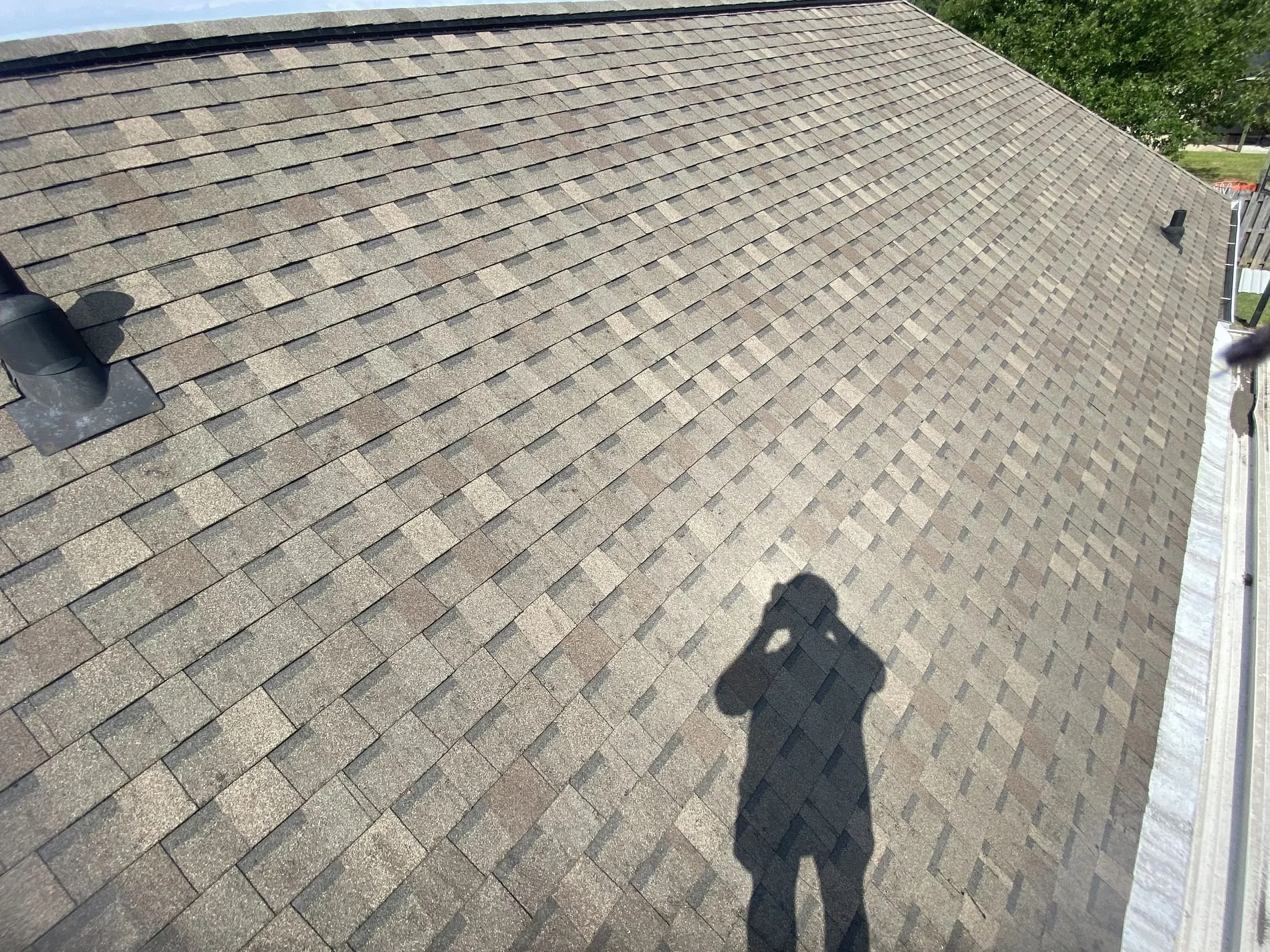
Historic Roof Restoration in Slidell, LA
Inside Olde Towne, a new roof counts as an exterior alteration, so the city reviews it before work begins.
Slidell started as a railroad stop near Bayou Bonfouca, and the blocks around that first town now sit inside the Olde Towne Preservation District. Within its lines, the city handles a reroof much as it handles an addition or a new porch: as an exterior alteration that requires a Certificate of Appropriateness to be approved before the change is made. That applies to a contributing house from around 1915, and it has applied to buildings with no historic standing at all.
Epic Roofing restores and replaces roofs in Olde Towne from our Mandeville office, about 30 minutes west in the same parish.
How Olde Towne Reviews a Roof
The district extends beyond the 1888 town limits. Its boundary runs roughly from West Hall and Florida Avenues on the north, with St. Tammany Avenue, east to Fifth and Tenth Streets, south to Cleveland Avenue, Mary Street and Jacob Street, and west to Front Street and Bayou Bonfouca. The Planning Department confirms whether a given address is in or out.
Applications start with a planner. Planning reviews the request and decides whether staff can approve it administratively, or it goes to the Olde Towne Preservation District Commission. Some district projects have been approved at staff level. A request bound for the commission gets a technical recommendation from Planning and a notice in the parish newspaper, and the commission decides at a public hearing. The city says that route generally takes at least two weeks from the day a complete application, attachments included, reaches Planning. An approved certificate sits alongside the building permit; you still need the permit before the crew mobilizes.
For the roof itself, the city's standard for the district says new roofs must conform to Olde Towne's distinctive architecture, and staff has called the simple form of the gable roof appropriate to a building's original construction period. The same standards ask whether a building protects against rain, sun, and high humidity, which is where a roofer has the most to add to the file.
Contributing, Non-Contributing, and a Roof Reviewed Either Way
Slidell keeps a Historic Building List of the properties designated as individually historic or contributing to the district. Contributing houses can also carry a number in the state's Louisiana Historic Resource Inventory; houses on Maine Avenue from around 1915 are among them. A planner can look up an address's status, and so can the state's standing structures database.
Status changes the conversation, though it does not lift a roof out of review. In 2025, a city staff report on a non-contributing commercial building on Second Street, one with no historic designation, still handled its new roof, soffit, and fascia as a certificate request before the commission. Staff found that architectural shingles had historic context there and recommended approval. That roof had been replaced before the review took place, and that sequence is the one to avoid. File first, then put the crew on the calendar.
On a contributing house, the roof carries more weight, because it is part of what the survey recorded. The city's 2017 historic resource survey lists the shapes that fill Olde Towne: Creole cottages under hipped or side-gabled roofs, center hall cottages with side gables and often dormers, shotguns, some wrapped by verandas on three sides, and bungalows with front, side or cross gables, overhanging eaves and exposed rafter tails. Twenty-nine of those bungalows went up on Maine and Teddy Streets between 1910 and 1935. The survey also judged condition partly by integrity, so a fresh renovation that strayed from the historic form could still be rated only fair.
For us, that means pitch, hips, gables, dormer cheeks, porch roofs and eave details get measured and photographed before anything is proposed. The scope keeps them as built unless you have a reason to change one and the city agrees.
The Roofing Packet Behind an Olde Towne Filing
You sign the application, and the city rules on it. What we put together is the roofing material that goes with it:
Photos of the existing roof:
Drone shots of every slope and the attic check, logged in CompanyCam, so a planner can see the form, the eave line, dormers and chimneys.
The form, as the photos show it:
Pitch, hip or gable, porch and dormer roofs, overhang depth and any exposed rafter tails, so the scope can show the profile stays as it is.
The proposed materials and color:
Shingle or metal, the product sheet and color, plus the flashing and edge metal, so the request can be read against the district's roofing standard.
Trim and wood in the scope:
Soffit, fascia, and any decking repair the job needs are named in the written estimate, since the city has reviewed soffit and fascia together with a roof.
Olde Towne Review, Asked and Answered
Our house is not on the historic list. Do we still need a certificate for a new roof?
If the address falls inside the Preservation District, plan on it. The requirement follows the district boundary, and Planning decides whether staff can approve it or the commission hears it.
Will the city accept architectural shingles in Olde Towne?
It has. In the 2025 Second Street review, staff called them appropriate for that building. Each request is weighed on its own facts, so we show the color and profile in the packet and leave the ruling to the city.
We are inside the Olde Towne Main Street area. Is that the same thing as the Preservation District?
No. Olde Towne has three overlapping areas: the Preservation District, a state Cultural District, and a Louisiana Main Street district. The certificate requirement comes from the Preservation District, which is the largest of the three.
Is there a storm exception to the certificate in Olde Towne?
We have found no published one. During business hours, weather permitting, we can photograph the damage and place temporary cover over the opening; the permanent repair remains a question for Planning.
Who files the application and speaks at the hearing?
The application is filed in your name, and our photo record and written scope go in with it. Hearings are public, and neighbors may send comments through Planning, so we write the scope in plain language.
How much time does the review add to a reroof?
A staff-level approval may move quicker than the hearing route, which the city says generally takes at least two weeks, and the building permit follows either one. Our written estimate comes back within 2–5 business days, so it can go in with your filing.
One Record, From Survey Photos to Install
The record comes before the hammer.
Your submittal and our install start from the same set of measurements and photos, so what goes on the roof follows the scope the city approved.
No subcontractors on the roof.
Epic's own roofers handle the installation, and replacement roofs carry a 5-year transferable workmanship warranty.
Restoration work here follows the salvage and flashing standards of our historic roof restoration. Fixes outside the district run through roof repair in Slidell, full tear-offs through roof replacement in Slidell, and any other job through roofing in Slidell.
Call About an Olde Towne Roof
Give us the address and what you are seeing on the roof at 225-396-8122. We book the free estimate from there, and the consultation takes no deposit.
137 Girod Street, Suite 3, Mandeville, LA 70448