
Roof Leak Detection & Repair in Baton Rouge, LA
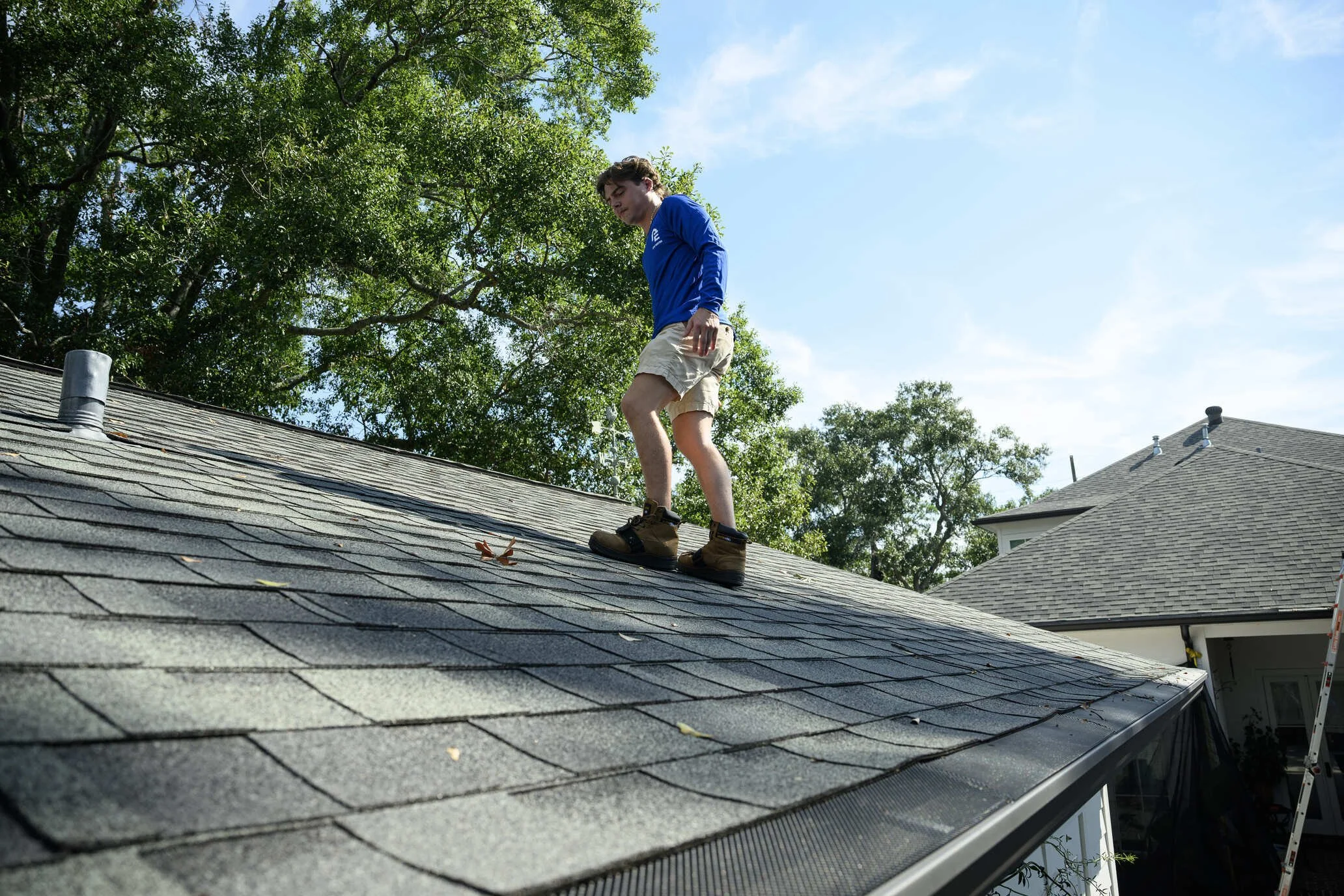
Under Baton Rouge's big trees, a spring leak can begin with leaves. Debris dams a valley or the back of a chimney, rain backs up under the shingles, and we trace the water to where it stood.
Say a Baton Rouge roofing call comes in April. A stain has spread across a bedroom ceiling with no chimney or vent pipe above it, and from the yard the roof looks fine. Under heavy limbs, the cause usually sits uphill of that room: a valley or chimney back-packed with leaves, where rain pools and creeps under the shingle edges until it finds a seam in the deck.
Our first look goes to where debris collects, before any pipe boot gets the blame. You get photos of the source and a written estimate, and Epic Roofing handles the roof-side repair.
A Heavily Treed City With Wet Springs
When a 1996 study compared urban tree cover across US cities, Baton Rouge came out on top, measured at 55 percent. A more recent study of the parish found that the rate of canopy decline increased after 2014. Still, one big oak over a roof fills its valleys whether the rest of the block has thinned or stayed shaded.
Timing matters as much as the trees. Live oaks hold their leaves through winter and shed the old ones in spring as new growth pushes out, so where oaks hang over a roof, the heaviest debris lands in late winter and spring, just as some of the city's wettest stretches arrive. The wettest April on the Baton Rouge record brought 14.84 inches in 1980, and the Aprils of 1983 and 1967 each passed 12.6 inches. A valley cleared in October can be packed again by the time those storms come through.

Wet years find the slow drains
In 1989, the city took 88.32 inches of rain, its wettest year on record until 2016 passed it. A detail that stays dry in an ordinary year, such as a cricket that drains slowly or a valley half full of leaves, can start to leak when rain keeps coming for weeks, then go quiet once the weather turns dry.
Where Leaves Send Rainwater on a Baton Rouge Roof
Debris seldom opens a hole. It stops water from draining, and the backed-up water finds a lap built to shed rain, never to sit under it. Four spots collect the most:
- Valleys; Two slopes pour into one channel, and leaves settle along the flow line. Water rises beside the dam, slips under the cut shingle edges, and runs down the deck. The stain can appear several rooms away from the valley that caused it.
- The uphill side of a chimney: Leaves and twigs bank up against the back of the chimney, where a cricket is supposed to split the flow. When the cricket is missing, too small, or buried, water stands against the counterflashing and works into the step flashing and mortar joints.
- The eave line: Leaves that fill a gutter turn it into a dam at the edge, and without enough drip edge, the overflow soaks the starter course and deck edge.
- Wall corners and dormer sides: Where a slope runs into a wall, leaves pile in the corner and hold water against the step flashing. A small pile can push water behind the siding.
Leaf Season and the Ceiling Stain
Why does the stain on our Baton Rouge ceiling show up only in spring?
A stain that grows from March through May and fades by summer points toward a debris dam. A cracked boot or a failed flashing tends to leak in any season. One that began the night of a storm is a storm damage roof repair in Baton Rouge job instead. We check for both, starting with the drainage paths.
Do we have to take down the oak over the house to stop the leak?
Usually no. We diagnose and repair the roof; the tree is a decision for you and a tree service. What we can show you is which limbs drop onto which valley or chimney, so any trimming you choose goes where it helps the roof most. A roof that drains well can coexist with a large tree if the tree is regularly cleared.
It leaked through a long wet stretch, then dried up. Is the problem gone?
Probably not; more likely it is dormant. Having the source documented while the attic still shows the water trail makes it easier to place the repair.
Will you fix the stained ceiling too?
Our work is the roof side. Our photos of the attic trail show whoever repairs the ceiling how far the water spread.
Will a new roof stop leaf-driven leaks?
Where a valley or cricket was built poorly, a new roof can help, but a new roof under the same oak still collects leaves. Often a corrected cricket or valley plus regular clearing solves it. When the roof is nearly worn out anyway, we quote a roof replacement in Baton Rouge alongside the repair.
When should we book a leak visit in Baton Rouge?
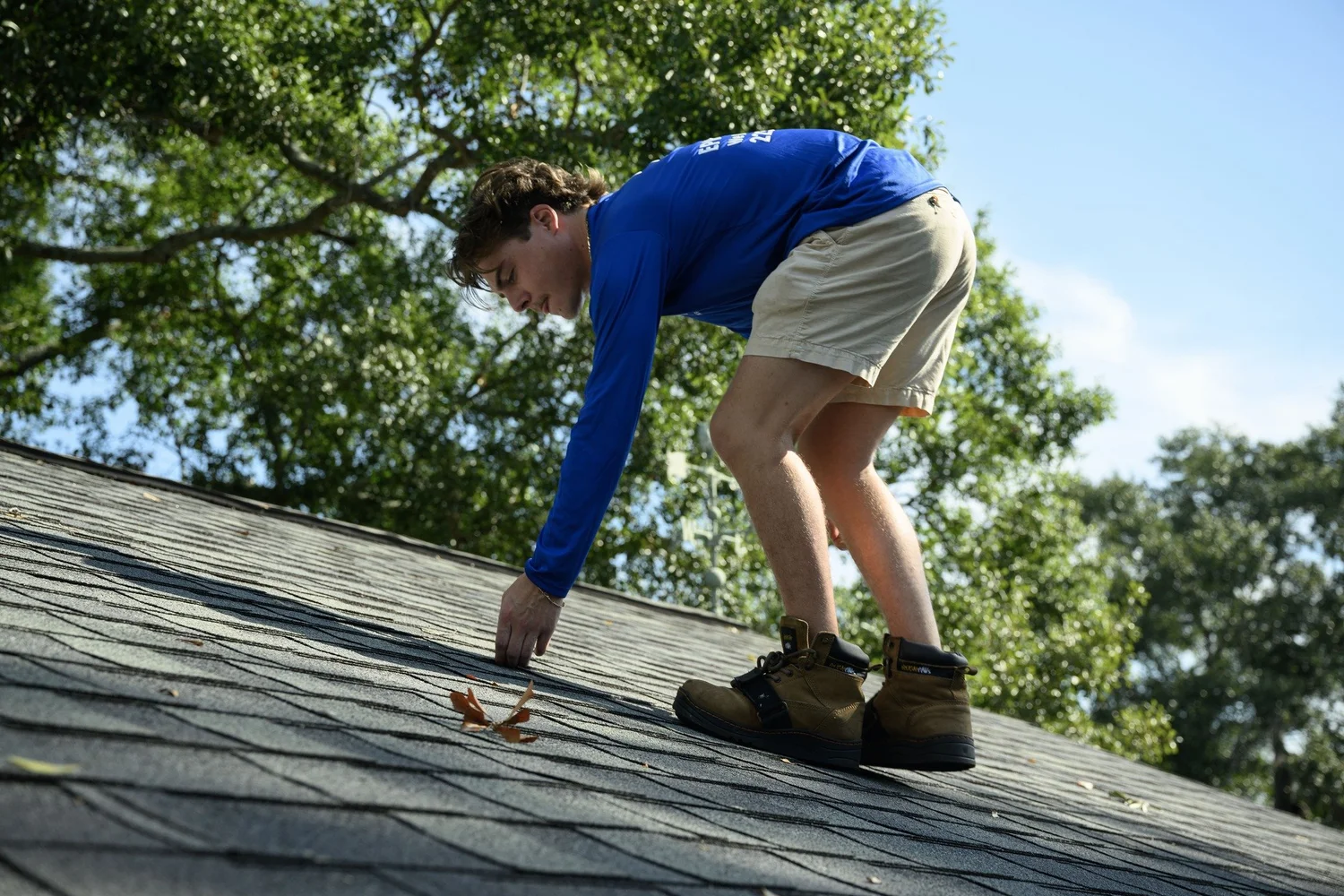
As soon as the stain appears, ideally before anyone clears the roof. Leaves left in place show where the water stood, and a fresh trail in the attic is easier to follow. Please stay off the roof yourself; a wet, leaf-covered slope is slippery.
Tracing a Debris Leak in Baton Rouge, Step by Step
A clogged valley can make a sound pipe boot look guilty, so drainage paths come first. A Baton Rouge leak visit runs in five steps:
Your timeline.
Does it leak each spring, only in long rains, or in any storm? Which room, and how soon after the rain begins? Those answers point toward debris or a failed part before anyone climbs.
The attic trace.
We follow water marks on the rafters and the underside of the deck, uphill from the ceiling stain to the area where water entered.
Drone photos of the drainage paths.
Valley flow lines, chimney backs, wall corners, and the full eave are photographed with the debris still in place, so you see the roof as we found it.
Infrared and moisture readings.
On a house with prior leaks, the infrared camera and moisture meter map the wet decking and the extent of its moisture.
A controlled water test when doubt remains.
We run water down the suspect section and watch where it goes. If it stays dry once the water can drain, the dam was the likely cause and the repair is about drainage. If it leaks anyway, a flashing or shingle failure moves to the top of the list.
The photos, readings, and written estimate reach you within 2–5 business days.
One Leak Source or Several: Baton Rouge Prices
Fixing one source costs $400–$1,800: reflashing the back of one chimney, relining one valley, or replacing the starter course and drip edge along one eave. When backed-up water has reached the deck in several places, or a valley and a chimney both leak, expect $2,000–$5,000, with a separate price and photo for each source.
Our written workmanship warranty applies to the repair itself, on terms listed in the scope, and is shorter than what a new roof carries. Where the trail ends at a split boot on an open slope, with no leaves involved, the fix is a plain roof repair in Baton Rouge job.
Catch a Baton Rouge Leak in Its Season
Which room shows the stain, when in the year it started, and whether trees hang over that side of the house: those answers point us uphill of that room before we arrive. The number is 225-396-8122.
137 Girod Street, Suite 3, Mandeville, LA 70448