
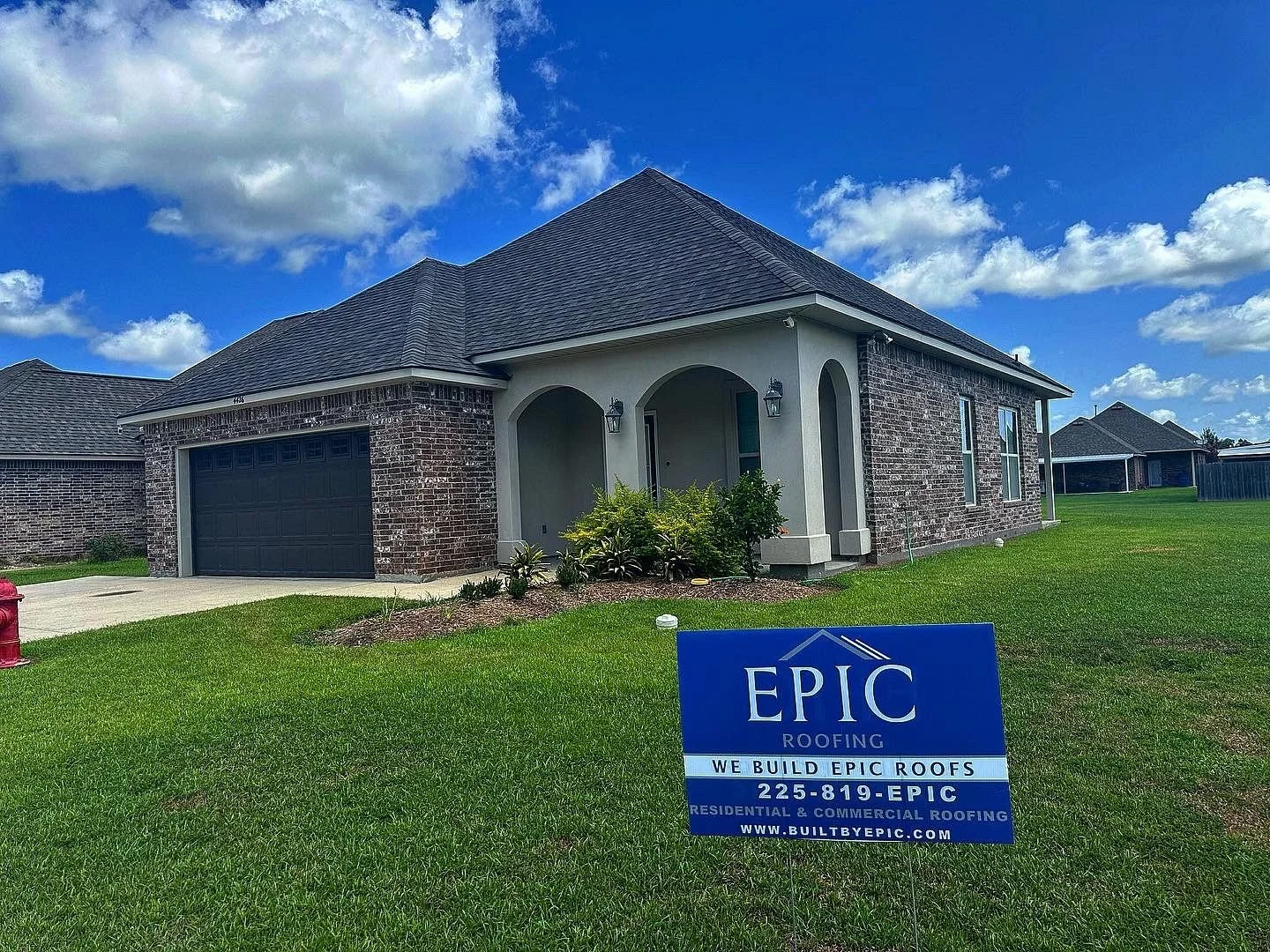
Roof Replacement in Central, LA
The City of Central's roofing permit guide draws a line at 100 square feet of new decking. We size up your deck before the estimate goes out, so you know which side of that line your reroof is likely to land on.
Under the roofing permit guide Central has published, if a reroof replaces more than 100 square feet of decking, or any rafter at all, the city wants construction drawings before that part of the job goes ahead. A 4x8 sheet of plywood covers 32 square feet, so three bad sheets stay under the line, and a fourth puts you over it.
That makes the deck the first thing we study on any Central Roofing job, from the attic side and from the roof surface, before we write a price. Epic Roofing is an owner-run Mandeville company, and our own crew does the work on your roof. A roof replacement with us means taking the old roof down to the bare wood, so the deck count is something we plan for from the first visit.
Where a Central Reroof Turns Into a Plan Review
The city asks two structural questions on its roofing application: Will any rafter be replaced, and how many square feet of decking? Cross either threshold, and a design professional must prepare drawings showing the design wind speed for the house, the load path from the ridge down to the foundation, and where the braced walls are located. A span longer than 18 feet requires certification by an engineer or architect. None of that is unusual work, but it adds a step, and it is far easier to plan for at the estimate than to discover with the shingles stripped.
The same application asks whether the old roofing is coming off. If the answer is no, Central requires an engineer's stamped load approval, which is one more reason our reroofs start with a full tear-off.
Central's biggest building decade was the 1970s; about a quarter of its homes and roughly a third of the houses in the city were built before 1980. Plywood and board sheathing that has carried decades of attic heat and the odd slow leak can have more soft spots than a single sheet or two. For those houses, the deck count is a permit question as well as a line item in the price.
What Your Central Estimate Should Already Answer
Before you sign, look for each of these in plain numbers or a clear yes or no.
- How much decking to expect: We walk the roof for soft or springy areas, look at the underside of the deck from the attic, and put a moisture meter on any stained wood. What we find goes on the estimate with photos, so you can see how close the job may come to the 100-square-foot line.
- Rafter condition: A sagging, cracked, or sistered rafter seen from the attic gets flagged in writing, because one rafter replacement brings in the drawing requirement even if the decking is sound. The application includes a box for "Yes," "No," or "Unknown" on rafters, and our goal is a firm answer before you sign.
- Whether drawings are likely: If the decking or rafters extend past the threshold, we let you know in the estimate, since the city requires drawings before that part of the work proceeds.
- Ventilation, flashing, fascia and soffit: The city form asks about changes to each one, and whether the job is an entire or partial replacement. We settle those at the estimate and fill in the form from the same answers.
- Included sheets and the rate after that: The price covers a stated number of replacement sheets and names the rate for each one past that, so extra wood found at tear-off is priced before it is needed.
Decking and Drawings in Central, Question by Question
There are dark stains on the decking in my attic. Will the city want drawings?
Probably not for the stains alone. A stain is a record of water, and the wood under it may still be firm. We probe it and take a moisture reading, and only wood that has gone soft or delaminated counts toward the square footage you replace.
What if the crew finds bad wood beyond what the estimate expected?
Work on that area pauses while we photograph it and show you. If the new total stays under 100 square feet, we replace it at the per-sheet rate you already agreed to. If it would cross that line, the city's drawing requirement applies before that part of the work continues, and we put the next step and its cost in writing.
Do I have to be home when the city inspects?
The application lets you choose a field inspection on the day of construction or a submittal of geo-stamped photos of the decking, underlayment, and roofing material. Which route a job takes is settled on the permit application.
Can a Central homeowner get a Fortify Homes grant toward the new roof?
Louisiana awards those grants, up to $10,000, by lottery, and the state picks the eligible parishes for each round. East Baton Rouge was not among the parishes on the Round 9 list, which put Central owners in the same spot as anyone pricing a roof replacement in Baton Rouge. Should a future round include the parish, approval has to come through before any work starts. The FORTIFIED standard is open to any Central reroof, grant or not.
Does anything have to go up at the house before work starts?
The permit. Work starts once the city issues it and posts it where it can be read from the street and kept out of the weather.
How many days will the crew be on my roof?
Usually one to three for asphalt shingles. When the estimate indicates that drawings are needed, their review precedes the start date.
A Central Reroof Priced Around the Deck
For Central homes in the 2,000 to 2,500-square-foot range, expect $13,000 to $23,000 for a full replacement. Within that band, a Central estimate spells out the decking: the included sheets and the per-sheet rate beyond that. The permit appears as a separate line. If you would like to spread the cost, GoodLeap or Hearth financing can cover a replacement, with a soft-pull pre-qualification that has no bearing on your credit.
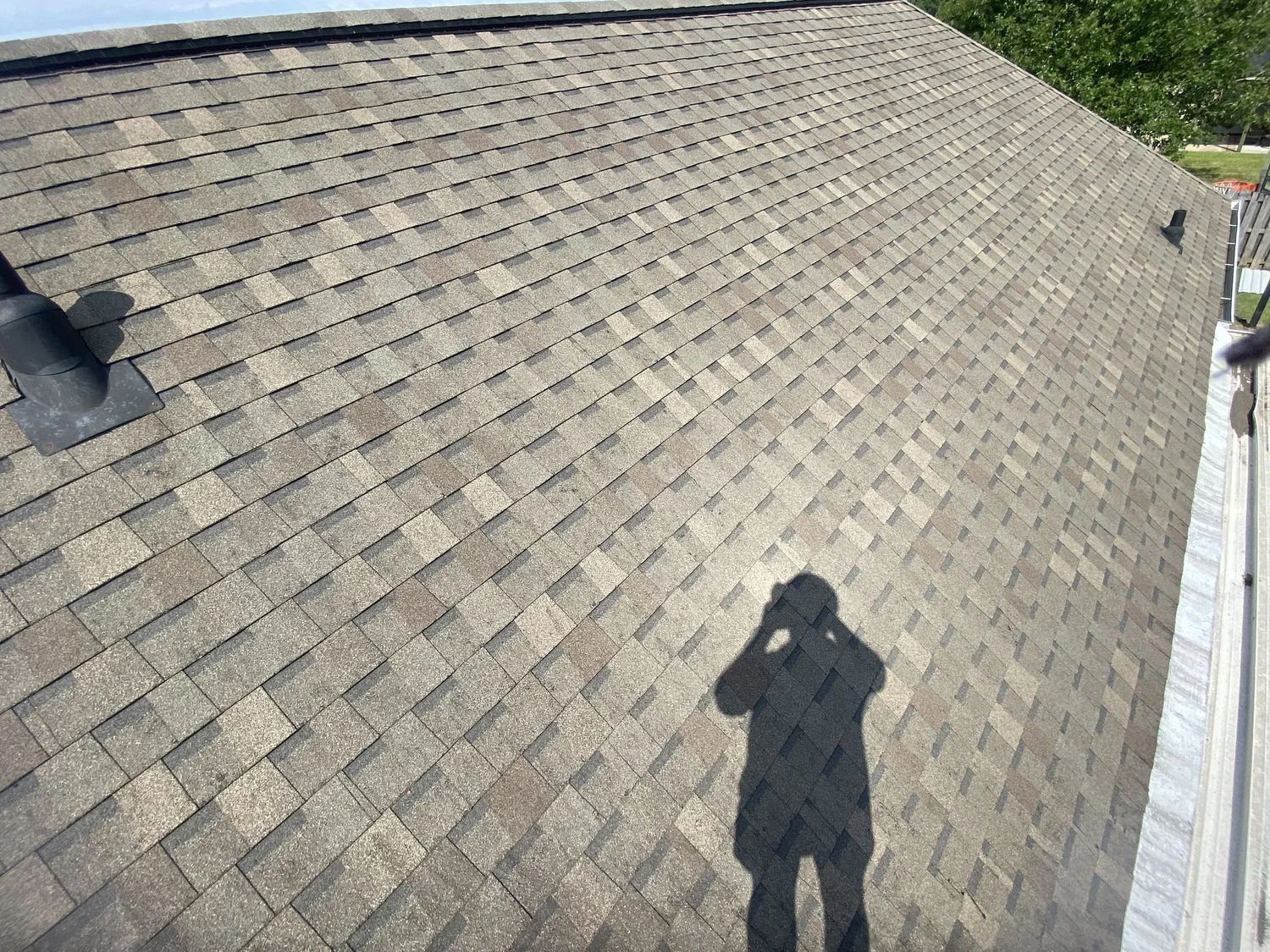
You get the written estimate, with the drone and attic photos behind it, within 2–5 business days of the free on-site visit. We do not ask for a deposit at the consultation.
Built for Central's Paperwork
An owner-run company:
Joey Noto earned his LSU Construction Management degree in 2006, worked for a decade in commercial construction in Baton Rouge, and founded Epic in 2020. Commercial construction runs on drawings and inspections, the same kind of paperwork a Central plan review involves.
No subcontractors:
Epic Roofing’s own crew strips the old roof and nails down the new deck and shingles.
Licensed and credentialed:
Epic Roofing holds Louisiana licenses RL886377 (residential) and CL69991 (commercial), is a CertainTeed ShingleMaster and McElroy Metal Partner, and its owner holds three IBHS FORTIFIED credentials.
Proof of the work.
Each stage is logged in CompanyCam, and the 5-year transferable workmanship warranty is written into the contract.
When the attic shows one wet spot with firm wood around it, a roof repair is the smaller job to price first, and the 100-square-foot question never comes up.
Count the Sheets Before You Sign
Call 225-396-8122 to have the deck counted for free. We look at it from both sides and put the expected decking, any rafter concerns, and the price in writing.
137 Girod Street, Suite 3, Mandeville, LA 70448