
Asphalt vs Metal Roof in Louisiana: Cost, Lifespan, and Hurricane Performance
Asphalt costs about half as much upfront ($4.50-$8.50 vs $10-$16 per square foot installed on the Northshore in 2026), but metal lasts 2-3 times longer (40-70 years vs 22-28 years for architectural asphalt in the Louisiana climate). The right answer depends on the homeowner's ownership horizon. Under 15 years old: asphalt with the FORTIFIED upgrade is almost always the smart-money choice. Over 20 years, standing seam metal has started winning the total-cost-of-ownership math.
A Mandeville homeowner is replacing a 24-year-old architectural asphalt roof. Two contractors propose asphalt at $16,500 installed. A third proposes standing seam metal at $32,000. The metal quote is roughly double. The metal contractor pitches "40 years vs 25." The homeowner is doing math at the kitchen table, trying to decide whether the metal upgrade pencils out.
Most national articles answer this question by comparing upfront cost and lifespan in isolation. The honest Louisiana answer requires three more variables: hurricane wind rating differential under sustained tropical-storm exposure, FORTIFIED program eligibility (which applies to both materials), and the homeowner's actual ownership horizon. What follows is the complete comparison Northshore-specific.
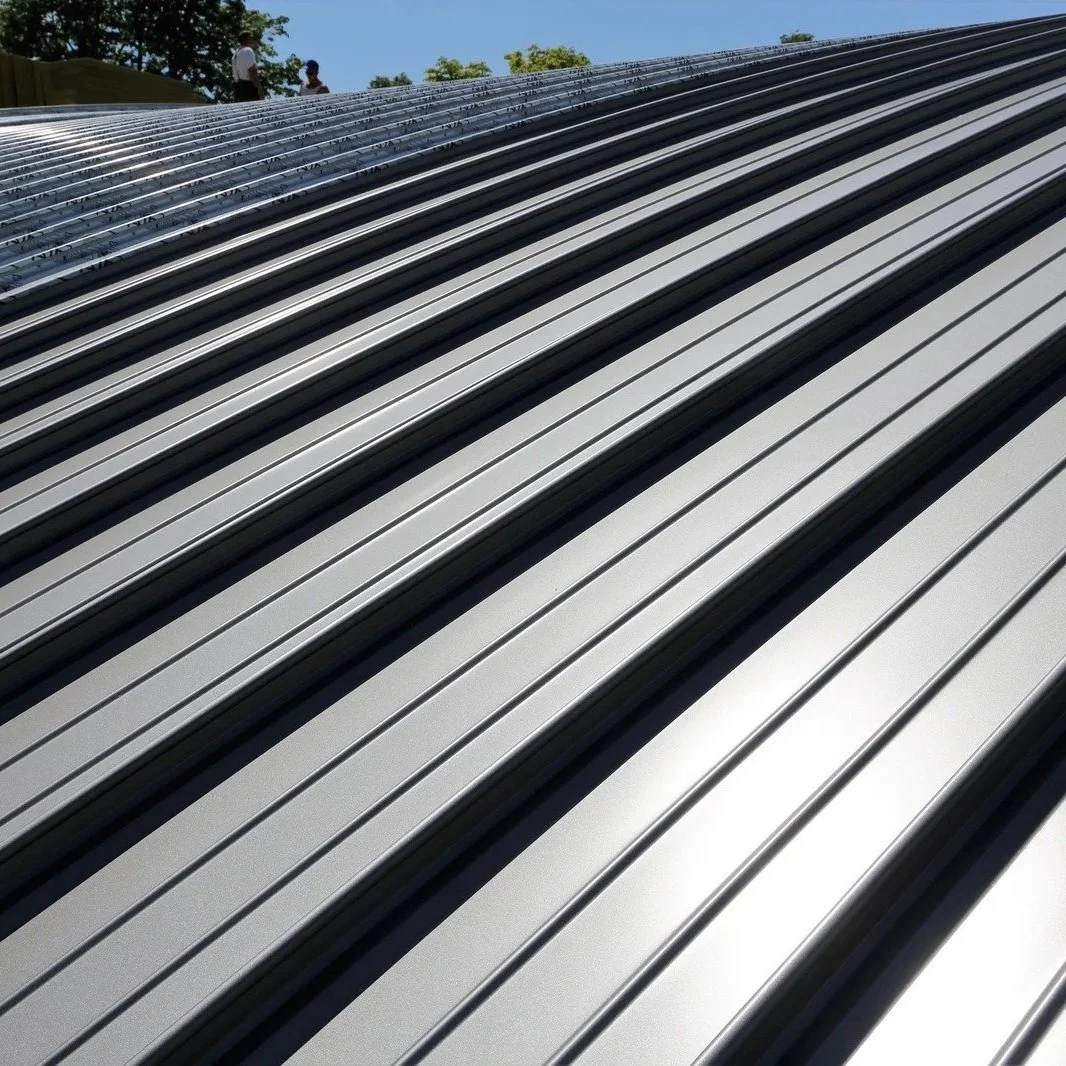
Standing seam metal roof installation provides Louisiana homeowners superior hurricane resistance, durability, and long-term protection against extreme weather conditions.
What "Per Square" Actually Measures
A square is 100 square feet of roof surface. Industry terminology has used "square" as the standard unit for roofing for over a century. A 25-square roof has 2,500 sq ft of roof surface. Most Northshore single-family homes have 17-34 squares of roof surface, depending on home size and complexity.
The roof surface is not the same as the house footprint. A 2,000 sq ft house with a 6/12 pitch produces about 22-27 squares of roof surface, depending on overhangs and complexity. A 2,000 sq ft house with a 12/12 pitch and complex hips/valleys can produce 30+ squares of surface.
The Side-by-Side Comparison
| Factor | Architectural Asphalt | Standing Seam Metal |
|---|---|---|
| Installed cost / sq ft (Northshore 2026) | $4.50-$8.50 | $10.00-$16.00 |
| Real Louisiana lifespan | 22-28 years | 40-70 years |
| Wind rating (manufacturer-rated) | 110-130 mph (Class 4) | 140-160 mph (24-26 ga standing seam) |
| Hail performance | Class 4 IR resists 2" hail | Visible denting from 1.5"+ hail (functional rating intact) |
| Weight | ~250 lbs / square | ~70-130 lbs / square |
| Energy efficiency (cooling) | Standard or Cool Roof option | Naturally reflective (5-25% summer cooling savings) |
| FORTIFIED program eligible | Yes (most common path) | Yes (separate IBHS metal standard) |
| Insurance discount eligible | Yes (Class 4) — La R.S. 22:1483 | Yes — some carriers; verify by policy |
| Repair complexity | Easy — most contractors qualified | Specialized — smaller contractor pool |
| Resale value impact | 60-70% ROI | 60% ROI (climate-dependent appeal) |
Cost — The Upfront Math
On a typical 2,500 sq ft Northshore home (25-30 squares of roof surface), the installed cost difference is significant:
| Material | 25-Square Roof | 30-Square Roof |
|---|---|---|
| 3-tab asphalt | $8,750-$12,500 | $10,500-$15,000 |
| Architectural asphalt (standard) | $11,250-$17,500 | $13,500-$21,000 |
| Class 4 architectural asphalt | $13,750-$21,250 | $16,500-$25,500 |
| FORTIFIED Roof (asphalt) | $15,250-$23,250 | $18,000-$27,500 |
| Standing seam metal (24-26 ga) | $25,000-$40,000 | $30,000-$48,000 |
| Premium metal (copper, zinc) | $50,000+ | $60,000+ |
Standing seam metal runs roughly 2-2.5x architectural asphalt installed cost on the Northshore. The premium pays for thicker material (24-26 gauge steel vs 1/8" asphalt), specialized installation labor (smaller qualified contractor pool, longer learning curve, custom panel fabrication), and longer expected lifespan that justifies the heavier upfront investment.
Lifespan — Real Northshore Experience
Manufacturer-stated lifespan and real Louisiana lifespan diverge for both materials. The Gulf Coast climate (UV intensity, humidity, hurricane exposure) shortens real-world lifespan vs published warranty.
Architectural asphalt (real Northshore lifespan)
Manufacturer warranty: 30 years or "lifetime." Real Northshore lifespan: 22-28 years on a properly installed and maintained roof. Heat and humidity reduce shingle lifespan by approximately 15-20% below national climate averages. UV is the largest single accelerator — Louisiana shingle granule loss runs 15-20% faster than the same shingle in the upper Midwest.
Maintenance discipline matters disproportionately. Homes with annual inspection, every-7-year pipe boot replacement, and proper attic ventilation hit 28-30 years on a 30-year-rated shingle. Homes with deferred maintenance often need replacement at 18-22 years.
Standing seam metal (real Northshore lifespan)
Manufacturer warranty: 30-50 years on the metal coating, structural lifespan typically 50-70+ years. Real Northshore lifespan: 40-70 years for a properly installed standing seam in 24-26 gauge. Salt exposure on lakefront and waterfront properties accelerates coating wear; Galvalume and aluminum substrates handle salt better than galvanized steel.
What ages first on metal: The paint or the coating system? Standing seam metal coatings typically need recoating after 25-35 years, even when the underlying metal is structurally sound. Recoating cost runs $3-$5 per square foot installed. Total ownership math should account for one mid-life recoat on a metal roof expected to last 50+ years.
Hurricane and Wind Performance — The Louisiana Variable That Matters Most
Hurricane Ida (2021), Hurricane Laura (2020), and Hurricane Francine (2024) provided real-world performance data on both roof types across Louisiana. Three observations from post-storm inspections:
Observation 1 — Properly installed standing seam metal outperformed architectural asphalt under sustained Cat 2+ winds
Manufacturer wind ratings reflect this: 24-26 gauge standing seam metal carries 140-160 mph wind ratings vs 110-130 mph for Class 4 architectural asphalt. Under direct Cat 2+ landfall conditions, the wind-rating differential matters. Properly installed metal handles winds that pull asphalt edges off.
Observation 2 — Under tropical-storm-force winds (most Northshore exposure), the differential closes
Most Northshore hurricane exposure produces sustained tropical-storm-force winds (35-50 mph) with higher gusts, rather than direct Cat 2+ landfall conditions. Under these moderate sustained winds, properly installed Class 4 architectural asphalt with FORTIFIED-grade installation performs comparably to standing seam metal. The wind-rating gap becomes meaningful only at the high end of the wind spectrum.
Observation 3 — Installation quality matters more than material choice
Both materials fail when poorly installed. Asphalt installed without proper edge components, ring-shank nails, or sealed deck blows off in winds well below the manufacturer's rating. Standing seam metal installed without proper clips and panel fastening lifts in the same winds. The contractor's skill and adherence to manufacturer specifications have more impact on real-world wind performance than the material category itself.
Standing seam metal hail performance is misunderstood. Metal roofs do dent visibly from hail 1.5" or larger — but the dents are usually cosmetic, not functional. The metal continues to shed water. Insurance carriers sometimes apply cosmetic damage exclusions to metal roofs specifically because dents are visible but not leak-causing. Verify the carrier's specific position before assuming hail dents will trigger a covered claim.
FORTIFIED Eligibility — Both Materials Qualify
Louisiana's FORTIFIED Roof program applies to both asphalt and metal roofs. The IBHS standards differ slightly by material — FORTIFIED Roof for asphalt requires a sealed deck, ring-shank nails, a 6-nail high-wind pattern, and enhanced edge components; FORTIFIED Roof for metal requires specific clip and fastener patterns appropriate to standing seam systems, plus the same sealed deck.
The Louisiana Fortify Homes Program (LFHP) Roof Strong grant (up to $10,000) and the FORTIFIED state income tax credit (up to $10,000, alternative pathway under La R.S. 47:6044(G)) are available for either material. The mandatory wind/hail premium discount under La R.S. 22:1483 also applies to either FORTIFIED-designated material.
Most FORTIFIED-approved Louisiana contractors specialize in asphalt FORTIFIED retrofits. The metal FORTIFIED contractor pool is smaller. Homeowners pursuing FORTIFIED metal should verify the specific contractor's experience with metal FORTIFIED installations, specifically rather than assuming general FORTIFIED credentialing transfers.
Total Cost of Ownership — The 40-Year Math
On a 25-square Northshore home, comparing total ownership cost over a 40-year horizon:
| Cost Component | Asphalt (FORTIFIED) | Metal (Standing Seam) |
|---|---|---|
| Initial install (year 0) | $18,000 | $32,000 |
| Recoat (year 30 for metal) | $0 | $8,000 |
| Replacement (year 25 for asphalt) | $22,000 | $0 |
| Maintenance over 40 years | $2,500 | $1,500 |
| FORTIFIED grant or tax credit | -$10,000 | -$10,000 |
| Insurance discount over 40 yrs (~$1,000/yr) | -$40,000 | -$40,000 |
| TOTAL 40-YEAR NET | -$7,500 | -$8,500 |
Over a 40-year ownership horizon, the two materials produce similar net costs. Metal pulls slightly ahead because it avoids the $22,000 mid-life replacement, but the $14,000 higher upfront cost consumes most of the long-term advantage. The decision is not primarily about long-run total cost — both materials are economical. The decision is about ownership horizon, aesthetic preference, and cash flow timing.
When Metal Wins on the Northshore
Scenario 1 — Owner plans to stay 20+ years
The metal premium is recovered through avoided replacement costs. Homeowners planning multi-decade ownership capture the full lifespan benefit. Forever-home residents and multi-generational properties are a natural fit.
Scenario 2 — High annual insurance premium (>$5,000)
Higher premiums make the FORTIFIED discount more valuable in absolute dollars. Combined with metal's slightly higher wind rating ceiling, homeowners with substantial premiums see better recurring savings on metal-FORTIFIED installations.
Scenario 3 — Energy-conscious homeowner with summer cooling load
Standing seam metal's reflectivity significantly reduces summer attic temperatures, resulting in 5-25% cooling cost savings on Louisiana summer electric bills. Homeowners with electric utility costs above $300/month in peak summer see a meaningful recurring offset.
Scenario 4 — Coastal or waterfront exposure
Salt-air environments accelerate asphalt shingle granule loss. Standing seam metal in aluminum or Galvalume substrates handles salt exposure better. Mandeville lakefront and Madisonville waterfront properties see this differential most clearly.
When Asphalt Wins on the Northshore
Scenario 1 — Owner plans to stay under 15 years
Asphalt's lower upfront cost is rarely recovered through metal's longer lifespan when ownership is short. The 60% resale ROI is similar for both materials, so the upfront premium does not translate to proportional resale uplift.
Scenario 2 — Tight upfront budget
$18,000 vs $32,000 is a meaningful cash flow difference even when long-term math favors metal. Asphalt FORTIFIED with the Roof Strong grant ($8,000 net out-of-pocket) is far more accessible than metal FORTIFIED ($22,000 net out-of-pocket).
Scenario 3 — HOA aesthetic restrictions
Some Northshore subdivisions and HOAs restrict metal roofing for aesthetic reasons. Verify HOA covenants before assuming metal is on the table. Where restrictions apply, asphalt is the only option regardless of ownership horizon or premium math.
Scenario 4 — Smaller contractor pool concern
Standing seam metal requires specialized installation. The Northshore metal-roofing contractor pool is roughly one-fifth the size of the asphalt-roofing contractor pool. After major hurricanes, metal repair queues stretch longer than asphalt repair queues because fewer crews can do the work.
Where This Doesn't Apply
Commercial flat roofs
Commercial roofing is a separate decision space — TPO, EPDM, modified bitumen, PVC are the relevant materials, not asphalt vs metal. Standing seam metal does appear on commercial sloped sections and architectural commercial buildings, but the comparison framework above applies to residential.
Historic-district homes
Some Louisiana historic districts (parts of New Orleans, certain Covington and Mandeville historic-overlay areas) require specific roofing aesthetics that constrain material choice. Specialty materials (slate, clay tile, copper) sometimes apply. The asphalt-vs-metal binary does not capture historic constraints.
Mobile homes and manufactured housing
Standard residential metal vs asphalt comparison applies, but FORTIFIED Roof eligibility differs (some FORTIFIED programs exclude manufactured housing). Insurance discount eligibility under La R.S. 22:1483 also varies for non-permanent-foundation structures.
Frequently Asked Questions
Worth it for homeowners with 20+ year ownership horizons, high annual insurance premiums (>$5,000), or salt-exposed waterfront properties. Less compelling for short-horizon owners or budget-constrained projects where Class 4 architectural asphalt with FORTIFIED upgrade captures most of the wind/hail benefit at half the cost.
Standing seam metal installed over standard residential decking (plywood or OSB) plus underlayment is roughly comparable to asphalt for interior noise. The "metal roofs are loud" concern stems from older installations on barns and outbuildings without decking. Standard residential metal installations in 2026 produce noise levels indistinguishable from asphalt for most homeowners.
Technically yes, but rarely sensible. Different lifespans mean the two sections need replacement on different schedules. Aesthetic transition between materials is challenging. Most Northshore residential roofs use a single material throughout.
Sometimes. Solar panel warranties generally allow metal roof compatibility (often preferred). Skylight warranties sometimes require specific flashing kits for each roof material; replacing the flashing kit during a metal installation is standard practice and helps avoid warranty issues.
Asphalt: typically 1-3 days for a Northshore single-family home. Standing seam metal: typically 3-5 days due to custom panel fabrication, more precise installation, and clip-fastener system complexity. Both timelines extend after major storms when contractor scheduling tightens.
Pick Based on Ownership Horizon, Not Just Upfront Cost
Asphalt and metal are both legitimate Northshore residential roofing choices in 2026. Asphalt wins for most short-to-medium ownership horizons, budget-conscious projects, and HOA-restricted neighborhoods. Metal wins for long-term owners, high-premium policies, salt-exposed properties, and homeowners who value the summer cooling and aesthetic differentiation. The decision is primarily about ownership horizon and cash flow timing, not about which material is universally "better." Class 4 architectural asphalt with FORTIFIED upgrade captures most of the hurricane and insurance-discount benefit for homeowners who do not want to commit to the metal premium.
