
How Built-Up Roofing (BUR) Works: A Layer-by-Layer Breakdown
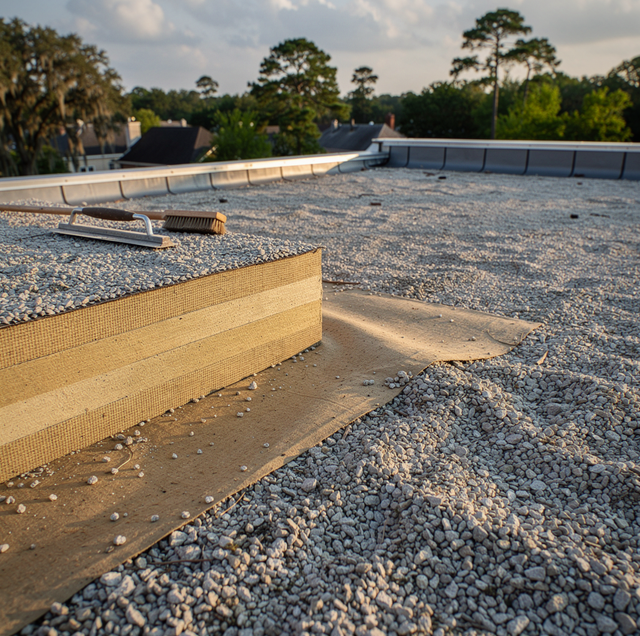
Most people picture a flat roof as one continuous sheet of material stretched across the deck. Built-up roofing, often abbreviated as BUR, operates on a completely different principle. Instead of one membrane doing all the work, a BUR system is built from several layers stacked one on top of another, each layer contributing something different to the overall system. It's one of the oldest flat-roofing methods still in regular use, and understanding why it's built the way it is explains both its strengths and its limits.
This piece walks through what's actually inside a BUR system, why the layering matters more than any single component, how long a properly built system tends to last, what upkeep it needs, and how it stacks up against the other low-slope roofing options a building owner is likely to be weighing it against.
What A Built-Up Roof Is Made Of
A BUR system is exactly what its name suggests: it's built up, course by course, directly on the roof deck rather than installed as a single prefabricated sheet. The core of the system alternates between two materials. The first is bitumen, either hot asphalt or coal tar, applied as a hot liquid or, in some modern versions, as a cold adhesive. The second is a reinforcing fabric, called a ply sheet, usually made of fiberglass or an organic felt saturated with more bitumen.
A roofer applies a layer of bitumen, rolls out a ply sheet on top of it while it's still workable, applies another layer of bitumen, rolls out another ply sheet, and repeats that sequence three to five times depending on the specification. Each ply sheet is fully embedded in bitumen above and below it, so by the time the last layer goes down, what looks like a stack of separate materials has actually fused into a single continuous, saturated mat. On top of all that, the system gets a surfacing layer, most often loose gravel set into a final flood coat of bitumen, or a factory-made mineral-surfaced cap sheet that gets rolled on as the final ply.
Why The Layering Is The Whole Point
The reason BUR has stayed in use for over a century isn't that any one of its materials is exceptional. Asphalt-saturated felt on its own would fail quickly under sun and foot traffic. The reason the system works is redundancy: no single layer is responsible for keeping water out on its own.
A single-ply membrane roof depends on a single sheet remaining intact across its entire surface. Puncture it in one spot, and water has a direct path to the deck below. A BUR system spreads that same job across three, four, or five separate plies, each embedded in its own layer of waterproof bitumen. If something punctures the top surfacing layer, whatever is below it, typically another two or three plies of bitumen-saturated fabric, is still standing between that puncture and the roof deck. Water has to work through several independent barriers rather than just one, and each of those barriers is thick and saturated enough that it isn't trivial to breach.
This layered redundancy is also why BUR handles minor surface damage more gracefully than a lot of alternatives. A small gouge, a dropped tool, or years of rooftop foot traffic from HVAC service calls will wear at the surface layer, but they rarely translate into an active leak the way a single puncture through a thin single-ply sheet would. The system was designed on the assumption that the top layer would take abuse over the years, and it was built with sufficient thickness beneath to absorb it without immediately compromising the entire roof.
What The Cap Layer Actually Does
The visible top of a BUR system, whether it's loose gravel or a mineral-surfaced cap sheet, isn't just cosmetic. It serves two distinct jobs. First, it protects the bitumen and ply sheets underneath from direct ultraviolet exposure. Bitumen degrades when it's exposed to the sun for extended periods, becoming brittle and losing the flexibility that lets the roof handle thermal movement without cracking. A gravel or mineral cap blocks most of that UV exposure from ever reaching the bitumen layers.
Second, the cap layer adds physical protection against foot traffic, hail, and general wear. Loose gravel embedded in a flood coat also adds real weight to the roof assembly, which helps resist wind uplift at the edges and corners, where flat roofs are most vulnerable during high-wind events. A mineral-surfaced cap sheet trades some of that ballast weight for a factory-controlled, more uniform surfacing that's easier to inspect and patch in specific spots without disturbing the surrounding gravel.
Either way, the cap is the sacrificial layer. It's expected to take the brunt of sun, weather, and traffic over the life of the roof, and it's designed to be repaired or recoated as it wears, rather than requiring the whole system to be torn off the moment surface wear shows up.
How Long A Built-Up Roof Typically Lasts
A properly installed BUR system, given reasonable maintenance, commonly lasts twenty to thirty years, and some well-maintained systems run longer than that. That lifespan comes with a few conditions attached. The number of plies matters: a three-ply system generally has a shorter service life than a four- or five-ply system, simply because there's more material redundancy to wear through before problems reach the deck. Installation quality matters just as much; ply sheets that weren't fully embedded in bitumen, or were installed with gaps or wrinkles, create weak points that appear as blisters or splits well before the rest of the roof shows its age.
Climate exposure plays a role too. Roofs that experience intense heat and ultraviolet exposure for much of the year put greater stress on the bitumen's flexibility over time, which is part of why reflective or gravel surfacing matters so much for a BUR system's long-term performance. Roofs that go through repeated freeze-thaw cycles face a different kind of stress, as trapped moisture expands and contracts within the layers. A roof that's been recoated on a reasonable schedule tends to outlast one that was left to weather without any surface renewal, because the cap layer is doing exactly what it was designed to do: absorbing the wear so the structural plies underneath don't have to.
What Maintenance A BUR Roof Actually Needs
BUR systems reward routine attention more than almost any other flat-roofing option, largely because their layered design makes them easy to patch locally rather than needing a wholesale replacement at the first sign of trouble. Twice-a-year inspections, plus a walk-through after any major storm, catch most problems while they're still small. Look for blisters, which are pockets where a layer has separated and trapped air or moisture; splits, usually at seams or where the roof transitions to a wall or parapet; and bare spots where gravel has shifted or worn away, exposing the bitumen underneath to direct sun.
Drainage deserves particular attention on any flat or low-slope roof. Standing water that doesn't clear within a day or two after rain puts sustained pressure on every layer beneath it and accelerates aging at that spot specifically. Clearing debris from drains and scuppers, checking that the roof still slopes as designed, and addressing ponding early are among the most effective steps a building owner can take to extend a BUR system's service life.
Recoating the surface, whether that means adding a fresh flood coat and gravel or applying a reflective coating over a cap sheet, is typically recommended on a periodic cycle well before the system reaches the end of its expected life. That recoating step protects the bitumen layers from continued UV exposure and can meaningfully extend the timeline before a full tear-off and replacement becomes necessary.
When BUR Is The Right Fit Versus Other Flat-Roof Options
BUR isn't the only option for a low-slope roof, and it isn't automatically the best fit for every building. Single-ply membranes, such as TPO or EPDM, install faster, weigh less, and often cost less upfront, making them attractive for simple roofs without many penetrations or rooftop equipment. Modified bitumen systems borrow some of BUR's layered logic but use factory-made rolls reinforced with polymers, striking a middle ground between BUR's redundancy and single-ply's faster installation.
Where BUR still holds a real advantage is on roofs with heavy foot traffic, roofs that will see repeated maintenance access for HVAC or other rooftop equipment, and buildings where long-term durability against physical wear matters more than installation speed. The thickness and redundancy that make BUR heavier and slower to install are the same qualities that make it forgiving of the kind of day-to-day abuse a busy commercial roof takes over its lifetime. A roof with dozens of penetrations, frequent service visits, or a long expected ownership horizon is often a better match for a built-up system than for a thinner single-ply alternative.
The tradeoff runs the other way, too. A structure that can't support the added weight of a gravel-ballasted system, or a project where installation speed and lower initial labor time matter more than maximum service life, usually points toward a single-ply or modified bitumen option instead. A roofing contractor who's walked the deck, checked the structural load limits, and looked at how the roof is used day-to-day is in the best position to say which system actually fits a given building, rather than which one is simply installed most often.
Frequently Asked Questions
Built-up roofing is assembled on site from alternating layers of bitumen and ply sheets, finished with a gravel or mineral cap. Modified bitumen is a factory-manufactured roll product reinforced with polymers that is installed in fewer layers, generally offering faster installation with less layered redundancy than a full BUR system.
Most systems use three to five plies, each fully embedded in its own layer of bitumen, topped with a surfacing layer of gravel or a mineral cap sheet. More plies generally mean more redundancy against leaks and a longer expected service life.
Yes, in most cases. Because the system is layered, damage is often limited to the surfacing layer or the plies closest to the surface, which can be patched or recoated without disturbing the layers underneath. Widespread blistering, deck-level moisture, or extensive splitting are the signs that point toward replacement rather than a patch.
The cap layer blocks ultraviolet exposure that would otherwise dry out and crack the bitumen underneath, and it takes the physical wear from foot traffic and weather so the structural plies don't have to. Loose gravel also adds ballast weight that helps resist wind uplift at roof edges and corners.
Twice a year is a reasonable baseline, with an added walk-through after any major storm. Catching blisters, bare spots, or standing water early keeps small issues from turning into deck-level leaks that require a larger repair.
Brief ponding after rain isn't unusual on a flat or low-slope roof, but water that sits for more than a day or two puts sustained stress on every layer beneath it and accelerates aging at that spot. Persistent ponding usually points to a drainage or slope issue that's worth addressing directly rather than ignoring.
Schedule a flat-roof inspection — get a clear read on your BUR system's condition and remaining service life before small issues turn into leaks. Epic Roofing LLC serves Mandeville, Covington, and Baton Rouge. Call (225) 819-3742.