
Why Shingles Curl or Buckle: 6 Causes and the Fix
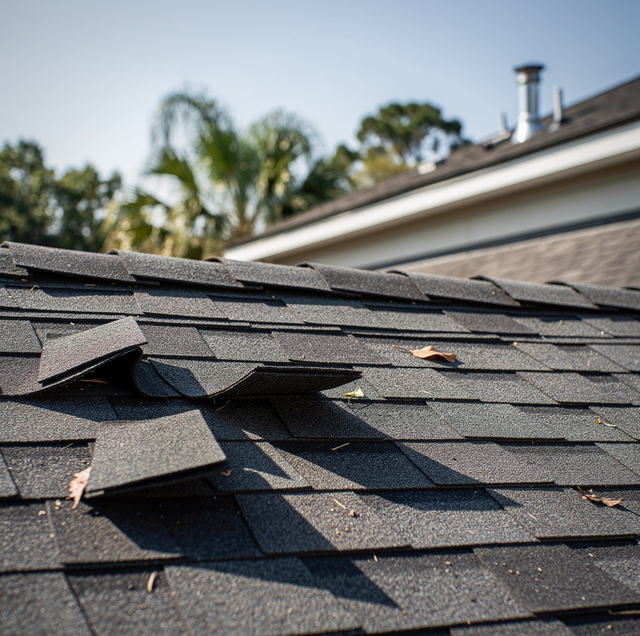
Quick Answer: Shingles curl when the asphalt dries out, and the shingle loses its flatness, usually from age, heat, or a poorly ventilated attic cooking them from below. They buckle when something under them moves or wrinkles, like a shifting deck board, a ridge in the underlayment, or trapped moisture pushing up. Curling from age often means the roof is near the end of its life; buckling from a single underlayment or deck issue can sometimes be repaired.
You are looking up at the roof, and something is off. Some shingles have edges that turn up like the corner of an old photograph, and a few rows ripple in long waves instead of lying flat. Both are the roof telling you the shingles are no longer sitting the way they were installed, and both have specific causes worth understanding before anyone quotes you a fix.
Curling and buckling look similar from the ground, but they come from different problems. One is usually about the shingle itself aging or drying out. The other is usually about what is happening under the shingle, in the deck or the layer of underlayment beneath it. Reading which is which tells you a lot about how serious the situation is.
Curling Versus Buckling: What You Are Actually Seeing
The two words get used loosely, so it helps to separate them.
Curling is a shingle that is no longer flat along its own edges or corners. The distortion belongs to the individual shingle. Buckling is different: the shingle itself may still be flat, but it has been pushed up into a ridge or wave because something beneath it is no longer flat. Buckling usually runs in a line across several shingles, tracing whatever moved underneath.
From the ground or a window, you can tell the two apart. Lifted edges and corners on individual tabs point to curling, while long ridges or waves running in a straight line across many shingles point to buckling below the surface.
The Two Faces of Curling: Cupping and Clawing
Curling itself comes in two shapes, and roofers name them for what they look like.
Cupping: Cupping is when the edges of a shingle turn upward while the middle stays down, so the tab takes on a shallow bowl or cup shape. It tends to come from the shingle drying out and shrinking at the surface, often driven by heat building up underneath. When the underside of a shingle runs hotter than the top for years, the material ages unevenly and the edges pull up.
Clawing: Clawing is the reverse: the center of the shingle rises, or the tab pulls down at the edges so the middle bulges, giving it a clawed, grabbing look. This is more often a sign of an older shingle whose layers are aging at different rates, or a shingle installed over an uneven surface. Both cupping and clawing mean the shingle has lost the flat, sealed profile it needs to shed water cleanly, and both leave the raised edges exposed to wind.
Heat And Ventilation: Cooking Shingles From Below
Asphalt shingles are designed to take sun on their face. What they are not built to handle is being baked from underneath, and that is where attic ventilation comes in.
A roof needs a balanced flow of air through the attic: cool air drawn in low near the eaves and warm air pushed out high near the ridge. When that flow is blocked by insulation stuffed into the eaves, painted-over or missing vents, or a system that was never balanced, heat and moisture stall in the attic and build against the underside of the deck. The shingles then bake from both sides at once. That trapped heat is one of the fastest ways to age a shingle prematurely and drive the edges into a cupped curl years before the material would otherwise wear out.
This is the two-sided part homeowners miss. Sun and ultraviolet light hit the surface and dry the shingle from above in every warm month. A poorly vented attic adds heat from below year-round. The combination ages the shingle far faster than either one alone, which is why a hot, sealed-up attic can turn a roof old before its time regardless of the season outside.
Moisture, Decking, And Underlayment: The Buckling Story
Where curling is mostly about drying out, buckling is mostly about movement.
Under the shingles sits a layer of underlayment, and under that, the wood deck. If the underlayment was installed with a wrinkle or ripple in it, or if it absorbed moisture and expanded after it went down, that ridge telegraphs straight up through the shingles as a long, straight buckle. The shingle is flat; it is simply riding over a bump.
The deck causes the same effect a different way. Wood decking expands and contracts as moisture and temperature change through the year, and in cold cycles the boards move and stiffen as well. If the boards were butted too tightly with no gap, or if a leak has let moisture into the plywood or planks, the wood swells and shifts. As it moves, it lifts the shingles above it into ridges. So buckling often traces a leak, a poorly gapped deck, or wet sheathing rather than any problem with the shingles themselves. This is why heat and ultraviolet drive the drying kind of damage, while moisture and cold-weather movement in the wood drive the buckling kind, two different mechanisms working in different parts of the roof.
Nailing And Installation Errors
Not every curled or buckled shingle is about age or weather. Some were set up to fail on day one.
Nailing is the usual culprit. Every shingle has a defined nailing zone, and a fastener driven too high above that line, too low, overdriven so the head cuts into the mat, or underdriven so it stands proud, all leave the shingle poorly anchored. A high nail in particular lets the tab below flap and lift instead of lying locked down, and that loose edge curls and catches wind. Nails driven crooked or into a gap between deck boards hold nothing at all.
Two more installation issues show up as buckling. Shingles need a small expansion allowance; butted too tightly against each other with no room to move, they push into ridges as they warm and expand. And felt or synthetic underlayment laid loose or wrinkled, rather than pulled flat, builds the ripple that later shows through the finished roof. These are workmanship failures, not material failures, which is one reason a careful installer and correct fastening matter as much as the shingle brand.
Stacked Roofs And End Of Life
Two more causes are worth naming because they change what the fix has to be.
A second layer of shingles installed over an old roof is a common source of curling. The new shingles are laid over the bumps, curls, and worn texture of the old ones instead of a clean flat deck, so they never sit truly flat and tend to distort early as they follow the surface underneath. A roof shingled over an existing layer often shows this within a few years.
And sometimes the cause is simply age. Asphalt shingles slowly shed the granules that shield their surface, and as that mineral layer thins, the exposed asphalt dries, hardens, and loses flexibility. Widespread cupping and clawing across the whole roof, alongside bald patches where granules have washed away, is the classic signature of a shingle at the end of its service life. When curling covers most of the roof rather than a few spots, it is usually reporting overall wear, not a single fixable defect.
Is It Repairable, Or Is The Roof Telling You Something
The practical question is whether you are looking at a spot repair or a replacement, and the pattern answers most of it.
A small, contained problem- a few buckled shingles over one wrinkled length of underlayment, a patch of high-nailed tabs, a localized area above a fixed leak- can often be repaired by replacing the affected shingles and correcting what is underneath. Buckling from a single identifiable cause is frequently the repairable kind.
Widespread curling is the warning sign. When cupping and clawing show up across most of the roof, especially with granule loss, the shingles have generally aged past the point a repair can restore, and patching a few is throwing good money at a roof that is failing everywhere. Curling driven by an attic ventilation problem sits in between: the shingles already curled will not lie back down, but fixing the ventilation protects whatever roof goes on next, so the ventilation gets corrected either way.
How A Roofer Inspects Curling And Buckling
A roofer works the problem from more than one angle, and the attic is as important as the roof surface.
From the ground and from inside, the inspection starts by mapping the pattern: where the distortion is, whether it is edges or ridges, and whether it is isolated or everywhere. That pattern already narrows the cause. The attic tells the rest of the story from below, which is why a good inspection goes up there. Inside, a roofer checks whether the vents are open and balanced, feels for trapped heat, and looks for the dark stains, damp sheathing, or daylight that reveal a leak or a moisture problem driving the movement above.
Only then does surface work happen, and that part belongs to a professional with proper fall protection, not a homeowner on a ladder. Leave the surface to someone trained and equipped for it.
Walking a roof is dangerous, and curled or brittle shingles break easily underfoot, which can turn one bad shingle into a new leak. Leave the surface to a professional with proper fall protection; your safe role is the ground, the windows, and the attic.
Frequently Asked Questions
Once asphalt shingles have cupped or clawed, the material has hardened and set in that shape, and it will not return to flat. In cool weather, a curled shingle also grows brittle enough to crack if bent, so trying to press one down often snaps it. A roofer may hand-seal a small number of lifted tabs with a dab of roofing cement under the corner as a short-term measure against wind, but that is a temporary hold on the edge, not a repair that restores the shingle.
Fresh architectural shingles can look slightly uneven for the first days or weeks until the sun warms them and the factory sealant strip activates and bonds each course down flat. Give a new roof a few warm days to lay in. If shingles are still ridged or lifted a month or two after installation, that is past the normal settling window and points to an underlayment wrinkle, a deck issue, or a nailing problem worth calling the installer back to check.
It can, at the margins. Darker shingles absorb more solar energy and run hotter at the surface than lighter ones, and sustained heat is one of the drivers of drying and cupping, so a dark roof over a poorly vented attic faces a harsher heat load than a light one in the same spot. Ventilation still matters far more than color, but on two otherwise identical roofs, the darker one tends to see heat-driven aging show up a little sooner.
Curling raises the risk even when the roof is not leaking yet. Shingles shed water because they lie flat and overlap tightly; a lifted edge breaks that overlap and lets wind-driven rain travel sideways underneath, and the same raised edge gives wind a grip to tear the tab off in a storm. So curling is not only cosmetic. It is a roof whose first line of defense has opened up, which is why it is worth addressing before a leak forces the issue.
Correcting ventilation will not uncurl shingles that have already distorted, but it slows further damage by pulling the trapped heat off the underside of the deck. The key detail is balance: adding exhaust high at the ridge without enough intake low at the eaves can actually pull air from inside the house instead of the outdoors, so intake and exhaust have to be sized together. Done right, better airflow protects the rest of the roof and any future roof, which is why roofers treat it as a fix for the cause even after the visible curling is set.
No, the failure modes are specific to the material. Asphalt shingles curl because their asphalt dries and shrinks; metal roofing instead can oil-can, showing shallow waviness in flat panels from thermal expansion when fasteners or clips do not allow the metal room to move. Wood shakes cup and split as they weather. The shared thread across all of them is that a roof surface distorts when it cannot expand, contract, or shed heat the way it was designed to, but the specific shape and cause differ by material.
Have a roofer read the pattern before it turns into a leak — a free inspection tells you whether it is a spot repair or a roof near the end of its life. Epic Roofing LLC serves Mandeville, Covington, and Baton Rouge. Call (225) 819-3742.