
How Hurricanes Damage Roofs and How to Prepare Now
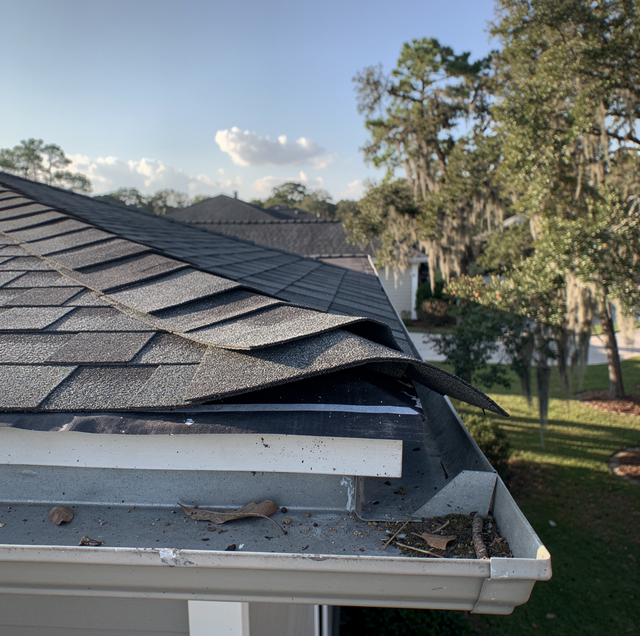
You stand in the driveway the morning after a storm, scanning the roofline for anything out of place. A few shingles are missing near the corner. A soffit panel hangs loose. Nothing looks catastrophic from the ground, but you know roof damage doesn't always announce itself right away. Understanding how hurricanes actually attack a roof, mechanism by mechanism, makes it easier to spot trouble early and to know what to shore up before the next storm forms.
Hurricane damage isn't random. Wind, rain, and pressure act on a roof in predictable ways, and most of those failure points can be addressed months ahead of a storm. Here's what happens up there when the wind picks up, and what you can do about it now.
Wind Uplift Hits Hardest At Edges And Corners
Picture a roof as a lid on a box. When wind moves across a flat surface, it speeds up and creates lower pressure just above it, similar to air flowing over an airplane wing. That drop in pressure pulls upward on the roof surface itself. The effect isn't even across the whole roof. It's strongest at the perimeter, the ridge, and especially the corners, where wind wraps around the building and accelerates.
That's why hurricane damage so often starts at the edge of the roofline rather than in the middle of a slope. A shingle that's held down fine for a decade of ordinary wind can lift the moment gusts hit 70 or 80 miles an hour at a corner, because the uplift force at that spot is disproportionately higher than what the field of the roof experiences. Once one shingle lifts, wind gets underneath it and starts working on the next one.
This is also why fastening patterns matter more than most homeowners realize. Roofs built or re-roofed with reinforced nailing at the perimeter and starter strips and ridge caps rated for higher wind speeds resist that initial edge lift far better than roofs where standard fastening was used throughout. A ground-level walk around your home to look for shingles that already appear lifted, curled, or loose at the eaves and rakes is a reasonable first check before a season starts. If you spot lifted edges, that's a sign the roof has an existing weak point worth having inspected.
Shingle And Underlayment Layers Fail In Sequence
A roof isn't one material; it's a system of layers, and hurricanes tend to peel through them in order. The shingles are the first line of defense. Underneath sits the underlayment, a water-resistant barrier that's supposed to keep the roof dry even if individual shingles are damaged or blown off. Below that is the roof deck itself, the plywood or OSB sheathing that everything else is fastened to.
Wind that lifts and removes shingles doesn't necessarily stop there. Once shingles are gone, the underlayment is exposed directly to wind and rain, and older or poorly fastened underlayment can tear or lift in the same way. If that layer fails, too, wind-driven water reaches the deck, and sustained soaking can lead to swelling, delamination, and, eventually, structural softening of the sheathing.
This layered failure is part of why storm damage often looks worse a few weeks after a hurricane than it did the day after. Missing shingles are obvious. A compromised underlayment or a deck that's begun to absorb moisture isn't visible from the ground, and in the attic it may appear only as a faint odor or slightly damp insulation before any stain appears on the ceiling. Roofs with newer, higher-quality underlayment and properly sealed deck seams hold up better through this sequence because even if the top layer takes damage, the layer underneath still does its job.
Interior ceiling stains that show up days or weeks after a storm often trace back to underlayment or deck damage that started during the wind event, not a new leak.
Wind-Driven Rain Intrudes Through Small Openings
Hurricanes rarely deliver rain straight down. Sustained winds push rain sideways and even upward at steep angles, which means water reaches parts of a roof assembly that ordinary rain never touches. Rain driven horizontally can work its way under shingle tabs, around flashing, and into vents that are designed to shed water falling vertically but not water arriving sideways under pressure.
Flashing around chimneys, vent pipes, and roof-to-wall transitions is a frequent entry point. These are the seams in the system, where wind-driven rain can find its way in even when the surrounding shingles are intact. A flashing detail that's held up fine through years of normal rain can still let water through once wind pressure is added to the equation, because the physics of the water intrusion changes entirely when rain is moving horizontally instead of falling.
Addressing this ahead of storm season usually means having flashing, boots, and seals checked and resealed where needed, rather than waiting for a leak to show up during the next event. It's a smaller, less visible task than a full roof replacement, but it closes off one of the more common paths water takes into a home during a hurricane.
Flying Debris Turns Minor Damage Into Structural Openings
Hurricanes generate two kinds of debris that matter for roofs: wind-borne material from off the property, and material that comes loose from the property itself, like tree limbs, fence sections, or an unsecured patio item. Either way, the impact does two things at once. It can puncture shingles and underlayment directly and dislodge material near the point of impact, even without punching all the way through.
A puncture is a different kind of failure than wind uplift. Instead of a gradual peeling process, it creates an immediate opening straight down to the deck, and sometimes through it. Once that opening exists, every subsequent hour of the storm pushes more wind-driven rain directly into the structure through that single point. Class 4 impact-resistant shingles are tested against hail impact and generally hold up better than standard shingles against blunt strikes, which matters where hail and storm debris both come into play.
Trimming back overhanging limbs and securing loose yard items before a storm reduces the amount of debris that originates from your own property, which is the part of this risk you actually have some control over.
Pressure Differences Push From The Inside Out
There's a mechanism that surprises a lot of homeowners: damage that starts inside the house, not on the roof itself. If a window or garage door fails during a hurricane, wind that would otherwise flow over the building suddenly has a way in. Once inside, that air has nowhere to go but up and out, and it pushes against the underside of the roof deck hard enough to add uplift force on top of what the wind outside is already generating.
This internal pressurization effect is why storm-damage assessments often ask whether any openings failed during the event. A roof that was properly fastened and could have withstood the external wind load on its own may still suffer serious damage if the building envelope was breached elsewhere and internal pressure built up beneath the roof deck.
The prep angle here is less about the roof and more about everything connected to it. This is why storm-hardening a house is a whole-envelope question, not only a roof question.
Never go onto a roof to inspect it during or immediately after a hurricane. Wet surfaces, weakened decking, and downed lines make this hazardous. A ground-level visual check is reasonable; anything beyond that is a job for a professional with the right equipment.
FORTIFIED-Style Construction Addresses These Failure Points Directly
Once you understand the individual mechanisms above- wind uplift at edges, layered material failure, wind-driven rain at seams, debris impact, and internal pressurization- it makes sense that a construction standard built around hurricane resistance would target each one specifically. That's the idea behind FORTIFIED-style roofing standards: sealed roof decks that resist water intrusion even if shingles are lost, reinforced edge and ridge fastening to resist uplift, and attention to how the roof ties into the rest of the structure so that pressure and wind loads transfer as intended.
None of this is a guarantee against all storm damage. High enough wind speeds or large enough debris can still cause problems on any roof. This kind of construction reduces the number of ways a roof can fail during a given storm and limits how far damage spreads once something does go wrong. A sealed deck, for instance, means a few missing shingles are far less likely to turn into a soaked, sagging deck before repairs can happen.
A Pre-Season Inspection Finds Weak Points Before Wind Does
Every mechanism described above has a version that's already present on your roof in a smaller, quieter form, before a storm ever arrives. A shingle that's slightly lifted at a corner. A flashing seal that's started to crack. A soffit panel with a fastener working loose. None of these are emergencies on a calm day. All of them are exactly the kind of vulnerability that a hurricane finds and exploits.
A roof inspection ahead of storm season focuses on checking these specific points: fastening at the edges and ridge, the condition of flashing and seals, the state of the underlayment where it's visible, and the soffit and fascia that protect the roof's edge and ventilation. Catching a loose section of fascia or a cracked seal in July is far less disruptive than discovering it mid-storm in September. If a storm does cause damage despite preparation, a follow-up inspection and written documentation of what the storm did gives you a clear record while the details are still fresh.
Preparing a roof for hurricane season isn't a single action so much as a short list of specific checks, each tied to one of the ways wind and water actually attack the structure. Taken together, they turn a roof from a passive target into a system built to hold up under pressure it was designed to handle.
Frequently Asked Questions
On an older or standard-fastened roof, lifting can begin once gusts reach roughly 70 to 80 miles an hour at a corner or edge, though the exact number shifts with roof age, fastening pattern, and shingle type. It's worth knowing that manufacturer wind ratings, the 110 mph or 130 mph numbers printed on shingle packaging, come from a controlled lab test where new shingles are sealed down and hit with steady, uniform wind, not the gusty, angled, uneven loading a real storm produces on a roof that's already been through a few years of weather. That gap is why a shingle rated for 130 mph can still show damage well below that number once it's actually installed on a house.
Yes. Attic-level clues such as a musty odor, compressed insulation, or faint water rings on the rafters often appear before any stain reaches the ceiling below, which is why a thorough post-storm check includes a look inside the attic, not just the roof exterior.
Older roofs typically have fasteners that have loosened slightly over time due to thermal cycling, and shingle adhesive strips that bond less effectively than when new, both of which reduce the wind speed required to initiate uplift.
Clogged or damaged gutters can back up water along the roof edge during heavy wind-driven rain, creating another path for water intrusion beyond the mechanisms already at play on the roof surface itself.
Metal panels experience the same edge and corner uplift forces, but the failure mode is different. Instead of individual shingles peeling, whole panels can loosen at their seams or fastening points if those weren't installed to withstand higher wind loads.
Yes. A soffit panel that comes loose in high wind can open a pathway for air to enter the attic from underneath, pressurizing that space in much the same way a failed window pressurizes a living area, so a loose or aging soffit is worth addressing before storm season rather than after.
Schedule a pre-season roof inspection — catch loose fastening, worn flashing, and other hurricane vulnerabilities before wind finds them. Epic Roofing LLC serves Mandeville, Covington, and Baton Rouge. Call (225) 819-3742.
