
Roof Leaking Only in Heavy Rain? What's Going On
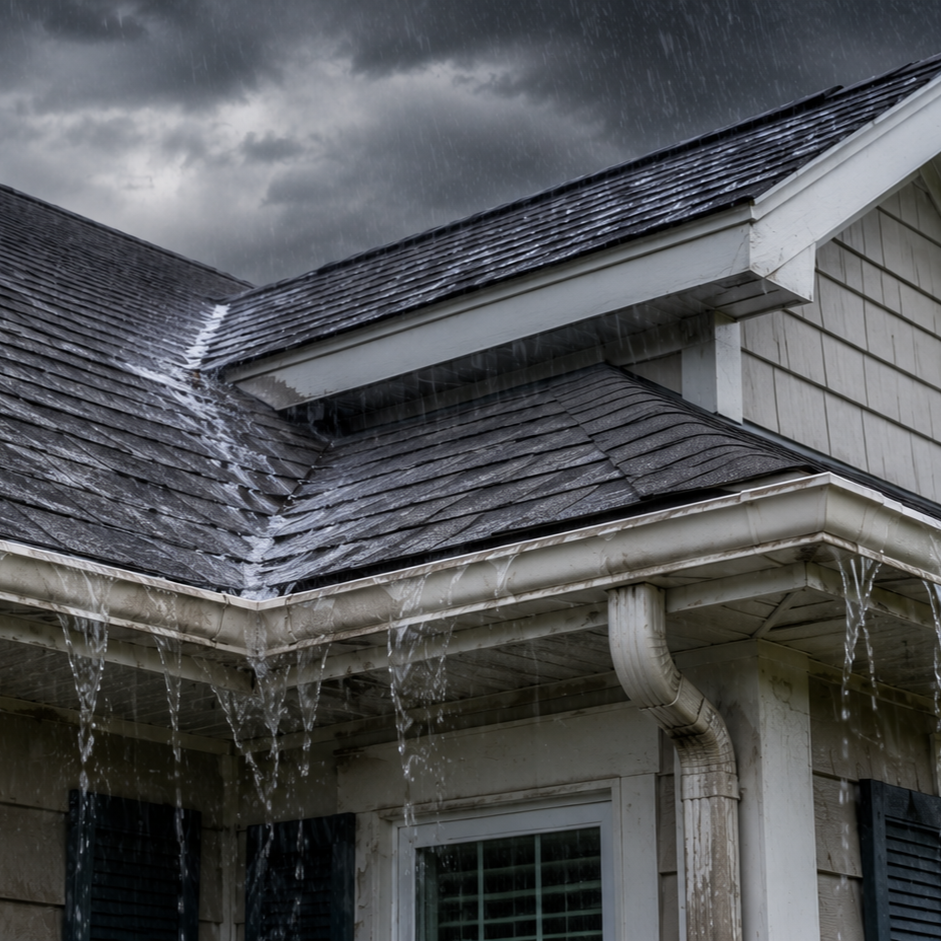
Quick Answer: A roof that leaks only in heavy rain usually has a vulnerability that lighter rain doesn't expose. Common causes include damaged or worn flashing around chimneys, vents, valleys, and skylights; wind-driven rain being forced under shingles or through gaps it wouldn't reach in a gentle rain; a high volume of water overwhelming a marginal spot, clogged gutters, or poor drainage; small cracks or worn areas that only let water in under heavy flow; and water pooling on low-slope areas. The leak shows up in heavy rain because that's when there's enough water, wind, and pressure to exploit the weak point. Because even an occasional leak lets water damage the structure, it's worth finding and fixing rather than ignoring between storms.
A roof that stays dry through light rain but leaks during a downpour is a common and tricky problem. It's easy to ignore between storms since it only happens occasionally — but that occasional leak is still letting water into your home, and the cause won't fix itself. Understanding why heavy rain triggers a leak that lighter rain doesn't helps you find the vulnerability and address it. Here's what's usually going on.
Why Heavy Rain Exposes a Leak
The reason a leak shows up only in heavy rain is that heavy rain brings conditions lighter rain doesn't: a much higher volume of water, often strong wind driving the rain sideways, and more pressure forcing water into gaps. A roof vulnerability — a worn spot, a gap in the flashing, a marginal seal — might shed light rain fine but get overwhelmed when a downpour hits it with that volume, wind, and pressure. So the leak isn't random; heavy rain is simply the condition that exploits a weak point the roof has. The challenge is that because it only leaks under those conditions, the vulnerability can be harder to pinpoint, but it's there.
Cause One: Flashing Problems
A very common cause of leaks, especially in heavy rain, is damaged or worn flashing. Flashing is the metal that seals the joints and penetrations in a roof — around chimneys, vents, skylights, and in the valleys where roof planes meet. These transition points are vulnerable, and when the flashing is damaged, corroded, lifted, or improperly sealed, water can get in. In heavy rain, the volume and wind can force water through compromised flashing that would stay sealed in lighter rain. Because flashing protects the roof's most leak-prone spots, flashing problems are a frequent source of heavy-rain leaks.
| Cause | Why it leaks in heavy rain |
|---|---|
| Damaged/worn flashing | Volume and wind force water through joints |
| Wind-driven rain | Pushes water under shingles or through gaps |
| High water volume | Overwhelms a marginal spot or drainage |
| Clogged gutters/poor drainage | Water backs up and finds its way in |
| Small cracks or worn areas | Only let water in under heavy flow |
| Pooling on low-slope areas | Standing water finds gaps |
Cause Two: Wind-Driven Rain
Heavy storms often come with strong winds, and wind-driven rain is a key reason leaks appear in heavy rain specifically. Wind can drive rain sideways and upward, forcing water under shingles, behind flashing, and into gaps it would never reach in a calm, gentle rain. So a roof that's fine in vertical light rain can leak when wind pushes water into and under its components. This is why some leaks correlate not just with heavy rain but with windy storms — the wind is forcing water past defenses that handle ordinary rain. Damaged or lifted shingles are especially vulnerable to wind-driven rain getting underneath.
Cause Three: Volume, Drainage, and Worn Spots
The sheer volume of water in a downpour can expose problems that low flow doesn't. Clogged gutters or poor drainage can cause water to back up and overflow, where it can get into the roof or fascia, a problem that only shows up when there's enough water. A marginal area — a small crack, a worn patch, an aging seal — might only let water through when a high volume is flowing over it under heavy rain. And on low-slope roof areas, heavy rain can cause water to pool, and standing water can find its way through gaps. So the volume of heavy rain stresses drainage and weak spots in ways lighter rain doesn't, revealing leaks that stay hidden otherwise.
Why You Shouldn't Wait for It to Get Worse
It's tempting to ignore a leak that only happens in heavy rain, since it's not constant — but that's a mistake. Every time it leaks, water is getting into your home and can damage the structure: the roof decking, framing, insulation, and interior, and it can lead to mold. The damage accumulates with each heavy rain, even though the leak is intermittent. And the vulnerability causing it will only worsen over time. So a heavy-rain leak should be found and fixed rather than tolerated between storms. Because these leaks can be tricky to pinpoint — the water may travel from the entry point before showing up inside — and because roof inspection should be done safely, a roofing professional can locate the source and repair it. Catching it early, before more water damage occurs, is the goal.
Frequently Asked Questions
Because heavy rain brings conditions, lighter rain doesn't — a much higher volume of water, often strong wind driving the rain, and more pressure forcing water into gaps. A roof vulnerability like a worn spot or compromised flashing might shed light rain but get overwhelmed in a downpour. So the leak appears in heavy rain because that's when there's enough water, wind, and pressure to exploit the weak point.
Damaged or worn flashing is a very common cause. Flashing seals the joints and penetrations — around chimneys, vents, skylights, and valleys — which are the roof's most leak-prone spots. When flashing is damaged, corroded, lifted, or poorly sealed, heavy rain's volume and wind can force water through it even when it stays sealed in lighter rain. Wind-driven rain and clogged drainage are other frequent causes.
Wind drives rain sideways and upward, forcing water under shingles, behind flashing, and into gaps it would never reach in calm, gentle rain. So a roof that handles vertical light rain can leak when wind pushes water into and under its components. This is why some leaks happen specifically in windy storms — the wind forces water past defenses that handle ordinary rain, especially where shingles are damaged or lifted.
Yes. Clogged gutters or poor drainage can cause water to back up and overflow during heavy rain, where it can get into the roof or fascia — a problem that only appears when there's enough water volume. So in a downpour, drainage issues can contribute to leaks that don't occur in light rain. Keeping gutters clear and drainage working helps prevent this kind of heavy-rain leak.
Yes, even an intermittent leak is worth addressing. Every time it leaks during heavy rain, water gets into your home, can damage the decking, framing, insulation, and interior, and can lead to mold. The damage accumulates with each storm, and the vulnerability causing it worsens over time. So a heavy-rain leak shouldn't be tolerated between storms — it should be found and fixed before more water damage occurs.
Because it only leaks under specific conditions (heavy rain, often with wind), and the water may travel from where it enters the roof before showing up inside, making the entry point hard to pinpoint. This is why locating these leaks can be tricky and is best done by a roofing professional, who can safely inspect the roof, trace the source, and repair it, rather than guessing at the spot inside where the water appears.
Find the Weak Point Before More Water Gets In
A roof that leaks only in heavy rain has a vulnerability — often worn flashing, wind-driven rain finding gaps, or drainage and worn spots overwhelmed by volume — that downpours exploit. Because it's intermittent, it's easy to ignore, but each heavy rain lets in water that damages the structure, and the problem won't fix itself. Have the source located and repaired by a professional rather than tolerating it between storms, since catching it early prevents accumulating water damage.
Roof that only leaks when it pours? — Get the source located and repaired before the water damages your home. Epic Roofing LLC serves Mandeville, Covington, Baton Rouge. Call (225) 819-3742.
