
What Is a FORTIFIED Roof? The Real Math for Louisiana Homeowners
A FORTIFIED roof costs $1,500-$3,500 more than a standard roof replacement and qualifies for a Louisiana-mandated insurance discount of 15-25% on the wind/hail portion — typically $750-$1,500 a year on a Northshore home. With a $10,000 grant from the Louisiana Fortify Homes Program, the upgrade pays for itself in about 5 years. Without the grant, payback is closer to 13 years.
The insurance bill came in this year, and it was higher again. The homeowner is paying more than $4,000 to insure a house worth less than it was a year ago, and the agent mentioned something about a FORTIFIED roof and a discount. The question is whether that is actually worth doing or just another upsell.
A FORTIFIED roof is real. The discount is mandated by Louisiana law. The grants are real money. The program has paid for roughly 1,800 grants across the state since launching in October 2023. Whether it makes sense for a specific house depends on the premium, the roof's age, and the parish. Here is how the math actually works.
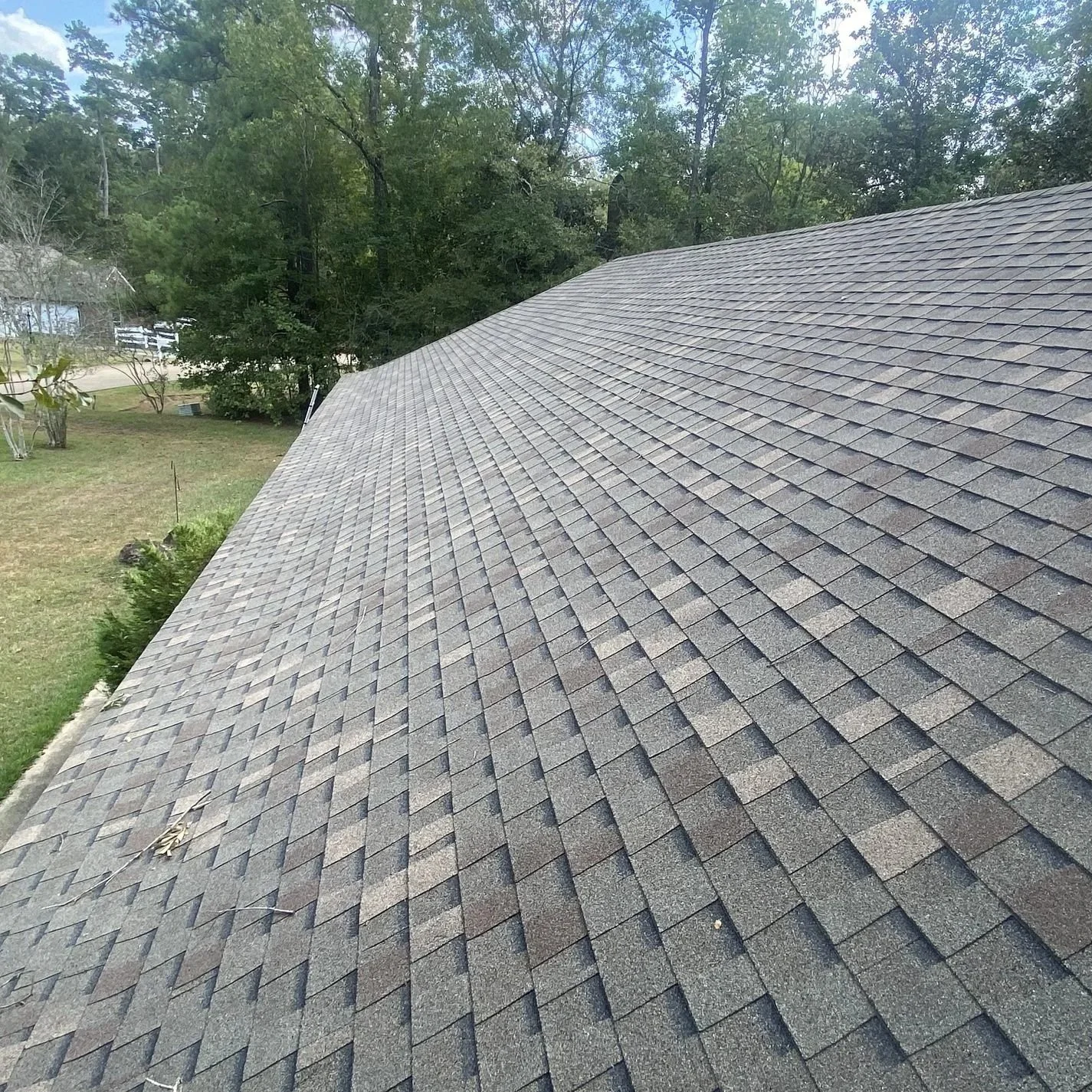
FORTIFIED roof system with reinforced shingles and sealed decking helps Louisiana homeowners reduce hurricane damage risk and insurance costs.
What a FORTIFIED Roof Actually Is
It's not a stronger shingle. It's a system of installation upgrades developed by the Insurance Institute for Business and Home Safety — a research nonprofit funded by the insurance industry — to address the specific weaknesses in residential roofs that fail during hurricanes.
Four things separate a FORTIFIED roof from a standard one.
A sealed roof deck
Before the shingles go on, a secondary water barrier covers the plywood. If the shingles blow off in a 130-mph gust, the deck stays watertight. This eliminates the most expensive failure in any hurricane — wind-driven rain pouring through exposed decking and destroying everything inside the house.
Ring-shank nails in a hurricane pattern
Not smooth-shank nails, not the standard 4-nail attachment. FORTIFIED uses 6 nails per shingle in a specific spacing pattern, with denser nailing on edges and ridges. The wind uplift resistance jumps from around 70 mph (standard) to 130-150 mph (FORTIFIED).
A reinforced edge
Enhanced drip edge, starter strip, and edge flashing work together to address the "peel-back" failure — when wind gets under the leading edge of the roof and lifts shingles off in sheets. Most hurricane shingle failures start at the edge. The FORTIFIED edge detail stops it.
Impact-rated shingles
UL 2218 Class 3 or 4. These resist hail damage and reduce the frequency of routine claims that drive premiums up over time.
The certification comes from an independent IBHS-certified evaluator — not the roofer. The roofer installs according to the standard. The evaluator inspects and issues the certificate. The certificate is what unlocks the insurance discount and the tax benefits.
There are three FORTIFIED levels — Roof (Bronze), Silver, and Gold. The base FORTIFIED Roof designation qualifies for Louisiana's mandatory insurance discount under Act 533. Silver and Gold offer additional protection, but the discounts vary by insurer and aren't guaranteed.
How Much Does It Save on Insurance?
The Louisiana Legislative Auditor tracked actual savings for homeowners who completed the program. The median household saw its annual premium drop from $5,625 to $4,375 — a $1,250 reduction or 22%. Only 3.3% of participants saw their premiums go up.
Under Act 533 (2024), every admitted insurer in Louisiana is required by law to offer an actuarially justified discount on FORTIFIED Roof-certified homes. Louisiana law requires the IBHS FORTIFIED Roof certificate as the documentation that triggers the mandated wind-portion premium discount under La. R.S. 22:1483.1. No additional forms are required. No "loss mitigation worksheets." Just the certificate.
The discount typically applies to the wind and hail portion of the premium — the largest and fastest-growing part of any Louisiana homeowner's policy. Some insurers offer over 50% off that portion specifically.
What It Costs to Get a FORTIFIED Roof
A standard 2,500 sqft asphalt shingle roof replacement on the Northshore runs $12,000-$18,000 in 2026. Adding the FORTIFIED upgrade costs another $1,500-$3,500, depending on the home and the contractor. So the total install ranges from $14,000-$23,000 for FORTIFIED.
The Louisiana Legislative Auditor reported the median FORTIFIED upgrade cost across the state at $16,229. After a $10,000 grant from the Louisiana Fortify Homes Program, the median homeowner paid $6,229 out of pocket.
| Cost Component | Amount |
|---|---|
| Median FORTIFIED upgrade (full install) | $16,229 |
| Louisiana Fortify Homes Program grant | Up to $10,000 |
| Out of pocket after grant | $6,229 |
| Annual insurance savings | $750-$1,500 (15-25%) |
| Payback period after grant | ~5 years |
| Payback period without grant | ~13 years |
The Louisiana Incentive Stack
Louisiana has built one of the strongest support systems in the country for FORTIFIED upgrades. Most homeowners qualify for at least three of these.
The Louisiana Fortify Homes Program (LFHP) grant — up to $10,000 toward a FORTIFIED Roof upgrade. Lottery-based application windows that fill within hours when they open. Requires a homestead exemption, primary residence, and active wind insurance.
The Louisiana state income tax credit — up to $10,000 for IBHS-certified FORTIFIED Roof installations completed on or after July 1, 2025. Subject to a $10 million annual cap statewide on a first-come, first-served basis.
The Construction Code Retrofitting Deduction — 50% of the install cost up to $10,000, deductible against Louisiana income taxes. Effective for taxable periods beginning January 1, 2026.
The mandatory insurance discount under Act 533. This is the recurring savings that pays the upgrade back over time.
For lower-income households, two additional grants stack: the FHLB FORTIFIED Fund grant (up to $15,000 for households at or below 80% Area Median Income), and CDBG grants run by Rebuilding Together New Orleans (up to $35,000 for income-qualified households in Orleans Parish).
Do not start FORTIFIED work before the grant is awarded. The Louisiana Fortify Homes Program disqualifies any project where work began before grant acceptance. Either wait for grant approval or commit to paying the full cost out of pocket from the start.
How the Grant Process Actually Works
The Louisiana Department of Insurance opens application windows throughout the year. Spots fill quickly — sometimes within hours — so registration ahead of time and document prep matter.
Get eligible first. Primary residence with homestead exemption. Active homeowners insurance with wind coverage. Home in good repair, no significant existing damage. Not a new construction, condo, or mobile home — those don't qualify.
Apply during an open window. Required documents: homestead exemption tax bill, driver's license, insurance declarations page, and flood policy if applicable. Everything uploads the moment the window opens.
If selected, schedule an on-site inspection with a FORTIFIED Evaluator within 15 days. The evaluator confirms the home is suitable.
Choose a FORTIFIED-approved contractor from the LDI list. Get at least three bids — the program requires it. Verify the lead installer holds a current FORTIFIED Roofer credential, not just the company.
Complete the install. The evaluator returns to verify everything meets the standard.
IBHS issues the certificate. The homeowner submits it to the insurance agent for the discount at the next renewal.
Apply for the state income tax credit if the installation was on or after July 1, 2025.
The whole process takes 4-6 months from grant approval to certificate in hand, depending on contractor scheduling and weather.
The LFHP grant is paid directly to the contractor upon completion—not to the homeowner. The contractor invoices the program upon issuance of the FORTIFIED certificate. The homeowner pays any cost above the $10,000 grant amount.
When a FORTIFIED Roof Is Worth It
Strong yes for any homeowner in a coastal or near-coastal parish — Orleans, Jefferson, St. Tammany, St. Charles, Plaquemines — paying more than $3,000 a year in premium. The discount applies to a larger base, the dollar savings are bigger, and the wind risk that drives the premium is exactly what FORTIFIED addresses.
Strong yes for any roof 15+ years old already due for replacement. The incremental upgrade cost above a standard replacement is small — $1,500-$3,500 — and the grant covers most of it.
Maybe for low-premium homeowners (under $2,000/year) in a less hurricane-exposed parish. The percentage discount is the same, but the dollar savings do not justify the upgrade cost as quickly.
Probably not if the insurer is in the surplus lines market. Non-admitted carriers are not subject to Act 533. Verify with the agent first whether the specific carrier offers the FORTIFIED discount before committing to the upgrade. Some do it voluntarily, some do not.
Probably not for homeowners planning to sell within 18 months. The upgrade adds resale value, but the recurring savings do not accumulate enough to make the math work in such a short window.
Choosing a FORTIFIED Contractor
Check the Louisiana Department of Insurance-approved contractor list at ldi.la.gov. Only contractors on that list can access grant funds directly.
Verify the lead installer — the actual person on the roof — holds a current FORTIFIED Roofer credential. The company having the credentials is not enough. The lead installer needs the credentials, or the installation will not be certified.
Get three bids. The program requires it, and the prices vary more than expected. The lowest bid is not always the right one — ask about the specific products each contractor uses for the sealed deck, the nailing pattern they follow, and whether their FORTIFIED Roofer credential is current.
Frequently Asked Questions
A regular roof uses standard 4-nail shingle attachment and no sealed deck membrane. A FORTIFIED roof uses 6 ring-shank nails per shingle, a sealed deck under the shingles, enhanced edge flashing, and impact-rated shingles. The wind resistance roughly doubles.
The median saving is $1,250 a year — about 22% of the average Louisiana homeowner's premium. Some homeowners save more depending on the parish and insurer. Under Act 533, every admitted Louisiana insurer must offer an actuarially justified discount.
Five years. Re-certification requires another inspection by an IBHS-approved evaluator.
Yes. The grant funds the upgrade, but the certification is available independently. The homeowner pays full cost, hires a FORTIFIED-approved contractor, gets the certificate, and claims the insurance discount and tax credit. The math works out longer — about 13 years payback instead of 5 — but the discount and tax benefits still apply.
Yes. The certificate stays with the property and transfers to the buyer at closing. It is a feature in the listing — buyers value the recurring insurance savings, and most insurers keep the discount for the new owner.
The Louisiana Fortify Homes Program (formerly Roof Strong) has ongoing state funding through Act 79 — $5 million annually from surplus lines taxes, plus periodic budget appropriations. Application windows open multiple times per year. Check ldi.la.gov for the current schedule.
Roof (Bronze) is the roof-only upgrade and the level Louisiana's mandatory discount applies to. Silver adds windows, doors, and attached structures. Gold is whole-structure storm hardening, including walls and foundation connections — typically pursued during new construction, rarely as a retrofit.
Don't Wait for the Drip
A roof leak does not fix itself. Every storm makes it worse, and Louisiana gets a lot of storms. The ceiling stain is the visible end of a problem that has been working through the decking, insulation, and framing for weeks before anyone noticed. Catch it early. Document everything. Get a real diagnosis before anyone touches a tube of caulk.
