
What a Roof Coating Does: The Layer That Buys You Years
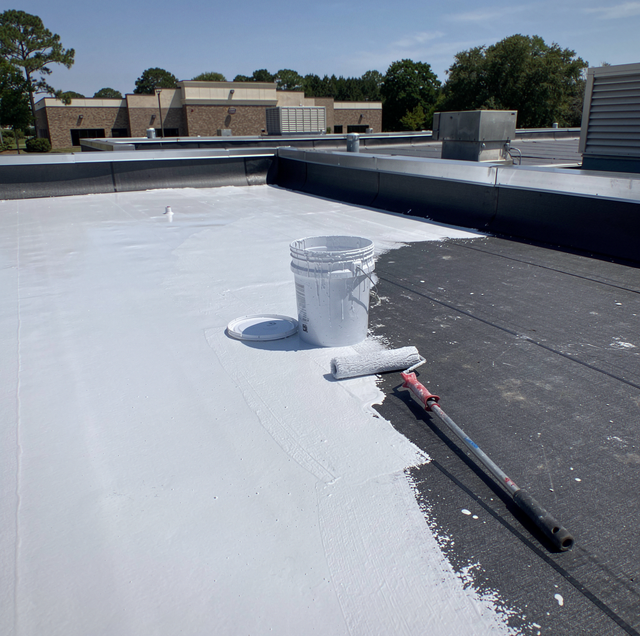
Quick Answer: A roof coating is a fluid-applied, rubbery layer rolled or sprayed over your existing low-slope roof. It forms one continuous membrane with no seams, seals small leaks, reflects heat off the roof, and can add years of service life so you delay a full tear-off. It restores a sound roof; it does not rescue one that is soaked, structurally failing, or hiding wet insulation.
If you manage a commercial building with a flat or low-slope roof, you have probably heard a contractor mention "coating" the roof instead of replacing it. It sounds too easy, so it is worth understanding what the product actually is, what physical problems it solves, and where it quietly fails when the wrong roof gets the wrong system. This is the plain-English version so that you can tell a real recommendation from a sales pitch.
What a Roof Coating Actually Is
A roof coating is a liquid that goes on wet and cures into a flexible, rubbery skin over your current roof. A crew rolls or sprays it across the entire surface, and once it dries, it forms a continuous membrane bonded to the underlying surface. Because it is applied as a fluid and cures in place, there are no laps or joints across the roof field, and joints are exactly where most low-slope roofs start to leak.
The coating goes over roofs you already have: TPO, EPDM (the black rubber membrane), modified bitumen, metal, or an older built-up "tar and gravel" roof. The cured layer is elastomeric, meaning it stretches and returns instead of cracking as the roof deck expands in heat and contracts in cold. That flexibility is the whole point. A roof moves every single day, and a brittle surface eventually splits along that movement.
Think of it like repainting and resealing the hull of a boat that is still sound. The paint does not replace the hull, and it will not save a hull that is already rotted through. But on solid material, it seals the pores, closes hairline gaps, and keeps water from getting a foothold for years longer than bare material would last.
What a Coating Does for the Building
Four things happen when a sound low-slope roof gets a proper coating.
It seals small leaks and tired seams. Aging membranes shrink and pull at their seams, and old, built-up roofs develop surface cracks and blisters. A coating floods over those weak points, and when seams and penetrations are reinforced with fabric during the job, the coating locks them down as part of a single skin rather than a patchwork of repairs.
It restores a surface that the weather has worn down. Years of sun and rain, chalk, and erosion erode the top layer of a membrane. A fresh coating restores a uniform, water-shedding surface and prevents slow erosion from reaching the layers that matter.
It reflects heat rather than absorbing it. Most coatings are white or light-colored and highly reflective. A dark roof in full, intense sun can run brutally hot, and much of that heat drives down into the building and into the roof assembly itself. A reflective surface reflects a large share of that solar energy, lowering the cooling load your rooftop units must fight against and reducing the daily thermal cycling that ages the roof. That reflectivity is a genuine advantage in a hot, high-UV climate, though heat is only one stress among many, since the same roof takes heavy rain, wind, and standing water the rest of the year.
It extends the roof you already own and defers a tear-off. A coating adds years of service life to a roof that still has good bones, which pushes a full, disruptive replacement further down the road. And it is far less disruptive to install. There is no ripping the roof down to the deck, no interior downtime, and no debris raining through the building while your tenants try to work.
The Main Types and Where Each Fits
There is no single "best" coating. The right one depends on your roof, your drainage, and how much foot traffic the roof sees. Three chemistries cover most commercial work.
Acrylic is water-based, economical, and an excellent reflector. It is a strong choice on roofs that shed water well and dry out between storms. Its weakness is standing water: acrylic can re-emulsify and wash off if it sits in a puddle before it has fully cured, and it does not love roofs that pond for days.
Silicone shrugs off exactly what acrylic hates. It handles ponding water and relentless UV, and it stays flexible for a long time without getting brittle. The trade-offs are real, though. Silicone attracts dirt; it can get slick when wet, and once it is down, almost nothing sticks to silicone except more silicone, which complicates recoating and any future roof system later on.
Polyurethane is the tough one. It resists impact and foot traffic better than the others, so it suits roofs where technicians are constantly walking to service equipment. Polyurethane systems typically pair a base coat with a UV-stable topcoat, since an aliphatic topcoat retains its color and resists UV exposure far better than an aromatic one left exposed.
| Coating type | Reflectivity | Ponding tolerance | Durability | Best use |
|---|---|---|---|---|
| Acrylic | Excellent | Low (can wash off before cure) | Moderate | Well-draining roofs, budget-minded, high reflectivity wanted |
| Silicone | Good | Excellent | Good, stays flexible | Roofs that pond water and take heavy UV |
| Polyurethane | Good with aliphatic topcoat | Moderate to good | High, impact and traffic resistant | Roofs with regular foot traffic and rooftop equipment |
The Honest Limits (and Why Prep Decides Everything)
A coating restores a sound roof. It is not a rescue for a roof that has already lost the fight. If the insulation under the membrane is wet, if the roof is saturated, or if the deck is structurally failing, coating over it only traps the moisture and hides the problem while it gets worse underneath. A good contractor tests for wet areas and cuts them out first, because sealing water inside a roof is worse than leaving it alone.
Prep is what separates a coating that lasts a decade-plus from one that peels in two years. The surface has to be cleaned so the coating bonds to the roof and not to a layer of dirt. Many substrates need a primer so the coating grabs. Seams, flashings, drains, curbs, and every penetration get reinforced with an embedded fabric so the busiest, most-flexed spots are the strongest, not the weakest. And chronic ponding gets addressed, because even a ponding-tolerant coating lasts longer on a roof that actually drains. Skip the prep, and the best product in the world will fail.
Two more practical points. How thick the coating goes on, measured in mils, is set by the manufacturer's system and directly affects how long it lasts, so more coats and more mils generally buy more years. And any warranty is a manufacturer's warranty tied to their approved system, thickness, and an authorized installer, not a blanket promise, so it is worth reading what the coverage actually requires.
Frequently Asked Questions
It has to be sound first. A coating bonds to and restores an existing roof, so the roof beneath it must be dry and structurally sound. If moisture surveys or a physical check turn up wet insulation, saturated felts, or a soft deck, those areas get removed and repaired before anything is coated. Coating over trapped water seals the moisture in, where it keeps rotting the assembly and eventually blisters the new coating off.
Silicone, in almost every case. Acrylic is water-based and can soften or wash off if water pools on it before it fully cures, so chronic ponding is its weak spot. Silicone was built for standing water and holds up under puddles that linger for days after a storm. The catch is that silicone gets slick when wet and is hard to stick anything to later, so future recoats have to be silicone too.
It lowers the cooling load, which is the honest way to put it. A white, reflective surface reflects a large share of solar energy rather than letting it soak into the building, so your rooftop units work less against a hot roof, and the roof itself undergoes less daily expansion and contraction. Actual dollar savings depend on your insulation, your equipment, and how the building is used, so treat them as reduced loads rather than guaranteed numbers on the utility bill.
A well-installed system on a well-prepped roof commonly lasts in the ten-year-plus range, driven by the chemistry and the mil thickness applied. The real advantage is that most coatings are designed to be recoated: when the surface starts to wear, a crew cleans it and adds fresh coats to reset the clock without a tear-off. Silicone is the exception to keep in mind, since its recoat must be silicone, as little else adheres to a cured silicone surface.
Only when the roof is still fundamentally sound, if the membrane is intact, the insulation is dry, and the deck is solid, a coating is the less disruptive, less expensive path, and it extends what you already own. If the roof is saturated, widely failing, or past the point where restoration makes sense, replacement is the right call; a coating only delays the inevitable while masking the damage. A moisture survey is what settles the question.
Four things do the heavy lifting. The roof is cleaned so the coating bonds to the membrane rather than to grime. A primer is applied where the substrate needs one for adhesion. Seams, flashings, drains, and every penetration are reinforced with embedded fabric, so the spots that flex and leak most are strengthened, not just painted over. And drainage problems get corrected, so water moves off the roof. Do those, and the coating performs; skip them, and it peels no matter how good the product is.
Ask for a roof inspection before you assume replacement — a coating may add years to a roof that still has good bones. Epic Roofing LLC serves Mandeville, Covington, Baton Rouge. Call (225) 819-3742.