

Hail Damage Roof Repair in Central, LA
Hail damage on Central roofs, repaired and recorded in dated photo sets so one storm's marks can be told apart from the next.
Say the roof was inspected after the hail on May 21, 2025, and the photos showed scattered small marks on the back slope. Three weeks later, on June 11, quarter-size hail was reported on Pheasantwood Drive. If someone climbs up today, the question is which marks came first.
For a Central house, the answer depends on whether anyone recorded what the roof looked like before the second storm. Epic Roofing does hail damage roof repair here and keeps a dated photo record of each slope, so a later visit can identify what is new.
Hail Dates on the Central Record
Hail in Central has tended to come in moderate sizes, and more than once. On September 28, 2011, quarter-size hail was reported in the Greenwell Springs area of Central, heavy enough to start piling up on the grass, and video reported from the same spot showed numerous golf-ball stones, with a few estimated at 2 inches.
The next two came close together. On the morning of May 21, 2025, 1-inch hail was reported in Central from an online photo, and the Pheasantwood Drive stones followed on the afternoon of June 11. Both brought smaller stones than the 2011 storm, small enough that a roof could take some hits with nothing showing from the yard.

Why repeated moderate hail is hard to read
A large stone leaves a crack or a puncture that is hard to miss. A quarter-size or 1-inch stone more often leaves a bruise: a spot where granules are knocked loose and the mat underneath may or may not be weakened. Bruises from two storms look alike once a few weeks of sun and rain have passed over them. On a roof that was installed before 2011 and never replaced, older impacts can be mixed in as well. Without a record, an inspector is left guessing at the age of each mark, and so is anyone else who looks at the roof later.
What Goes Into a Dated Photo Set for a Central Roof
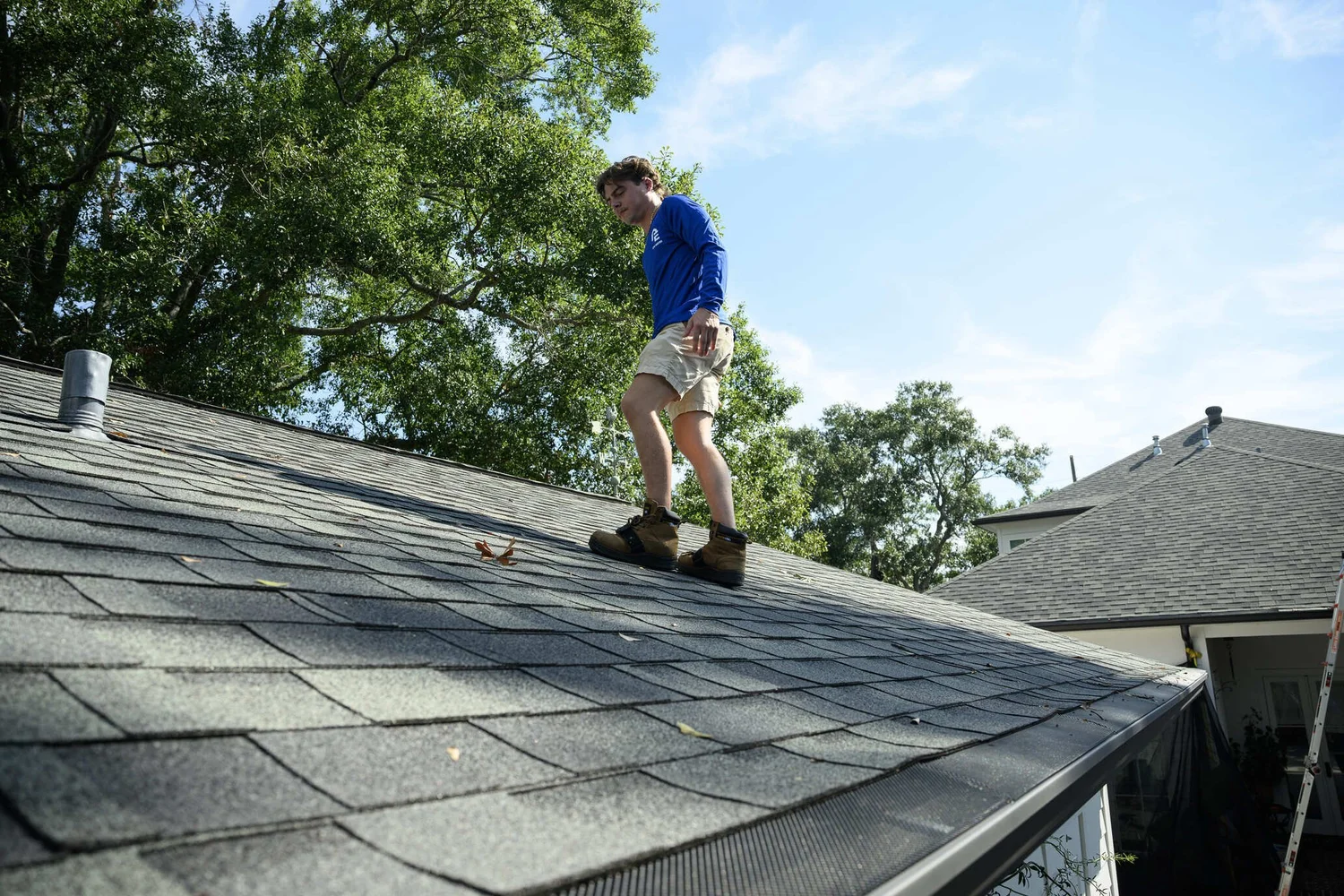
The first hail visit on a Central house builds the baseline. Later visits cover the same ground, so the two sets can be laid side by side. A set holds six things:
The visit date and the storm it follows:
The set is labeled with the day we were on the roof and the report date for the hail in question, May 21 or June 11, for example, so nobody has to remember later which visit came after which storm.
Each slope from the drone:
Overhead and angled frames of each roof plane, labeled north, south, east or west, with impacts mapped slope by slope.
Close-ups of each suspect mark:
Each one is chalk-tested, photographed close up, and placed on its slope in the written summary, so its size can be weighed against the stones reported for that date.
Wear that was already there:
Old patches, nail pops, blistering, cracked sealant at the pipe boots and thinning granules on the sunniest slope show up in the photos too. That helps keep ordinary aging out of a later hail count, and a mark left in 2011 out of 2025.
Deck boards seen from below:
From the attic, we photograph the boards beneath the most-marked slope and take moisture readings at any stain, which shows whether a hit let water through.
The shingle itself:
Maker, product line, and color, read from a leftover bundle wrapper, an old invoice, or the shingle's features, so a repair can be ordered to match.
On a return visit, the new photos can be laid beside the earlier report slope by slope, and marks missing from the earlier set stand out. Each report sits in CompanyCam with its date, and each one is yours to keep.
Costs Tied to the Central Photo Set
When the damage is limited to one area, such as a few fractured shingles and a cracked pipe boot on the west slope, a Central hail repair typically falls between $400 and $1,800. Once the mapped marks call for work on several slopes, or for new ridge cap and flashing at more than one point, the figure usually falls in the $2,000 to $5,000 range. The estimate shows which marked spots each item fixes, so the price ties back to the photos.
When the mapped marks fill nearly every slope, a reroof price goes next to the patch list, so you can set a Central roof replacement against patching slope after slope. The inspection carries no fee and no deposit; the written estimate comes 2–5 business days later.
Before and After the Next Central Hailstorm
We had the roof checked after the May 2025 hail. Did the June storm call for a second look?
If hail reached your street on June 11, it was worth one. With the May photos already on file, the second visit answers a narrow question: what is on the roof now that was missing three weeks earlier. If the answer is nothing, the note says that.
Can quarter-size hail like the stones on Pheasantwood Drive damage shingles?
It can, mostly on roofs that are already aging. Newer shingles often come through stones that size with a little granule loss, while older, drier shingles can bruise or crack. We check the shingles directly.
Some spots on our roof look like hail marks, but we never heard of hail on our street. What else could they be?
Blisters are the usual suspect. Heat can raise small bubbles in a shingle that later pop, leaving pits, and they tend to gather on the slope that gets the most sun. Scuffs from foot traffic, rubbing from a branch, and old repair work can also leave marks. They also tend to turn up in the baseline photos as existing wear, so a later visit can set them aside.
Is it worth taking our own photos after a hailstorm?
Yes, from the ground. A phone photo can pin down more than people expect. Shots of the hail on the lawn, a dented gutter or a pocked car hood, with the time saved on the phone, help tie a date to whatever we find. Stay off the roof; shingles covered in wet hail are slick.
Do we have to file an insurance claim before you inspect?
No. The inspection and the photo set stand on their own, and the decision to file is yours and your agent's. If you do file, we can share the dated sets and meet the adjuster when invited. Louisiana RS 22:1684 bars roofers from serving as public adjusters, so we do not negotiate or settle claims.
Why photograph the slopes that came through clean?
Because a clean slope on a dated photo is a fact you can use later. If the north slope showed nothing after May 21 and then showed marks after the next storm, the timing is much easier to determine. Skip that slope, and nobody can say for sure when its marks arrived.
Your First Central Photo Set Is the Baseline
Give us the hail date that worries you and whether anyone has been up on the roof since: 225-396-8122. The first visit sets the baseline, and if hail returns, the next one is measured against it. If the baseline shows wear instead of hail, such as cracked sealant at a pipe boot, that belongs to ordinary Central roofing upkeep, not to a hail scope.
137 Girod Street, Suite 3, Mandeville, LA 70448
Get A Free Inspection
Fill out the form below, or for quicker service, call us at 225-396-8122.
Submit Request