
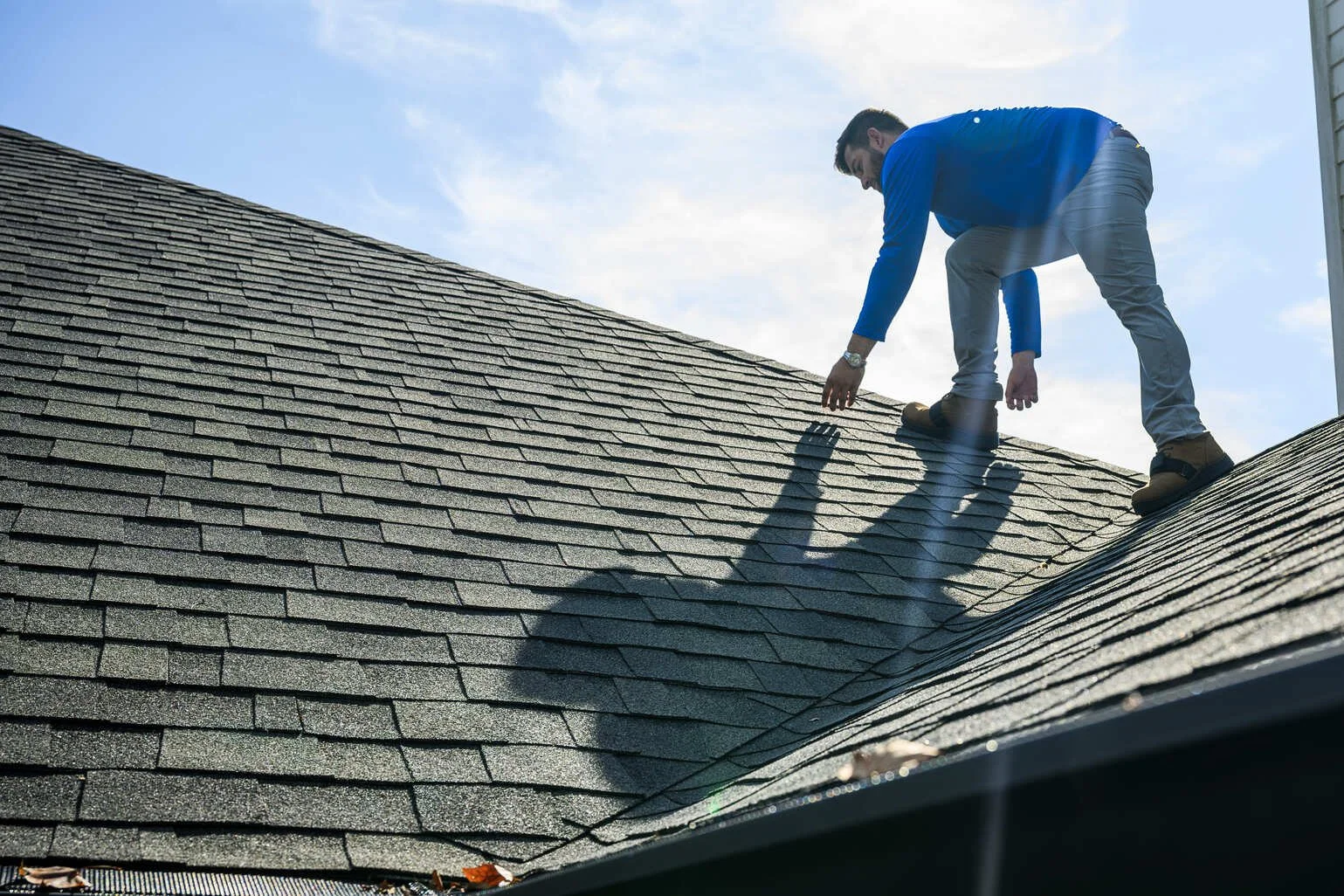
Hail Damage Roof Repair in Harvey, LA
Where the ice piled up and melted is where a Harvey hail inspection is hardest: in valleys, gutters, low rear additions, and on the flat roofs along Manhattan Boulevard.
On March 29, 2011, as evening fell, Harvey experienced an odd hailstorm. The stones were small, reported at quarter size at most, but so many came down that the ice stood nearly a foot deep in parts of town. The worst of it ran along Manhattan Boulevard, in a band of wind and hail damage about 1.8 miles wide.
A drift of hail is a different problem from one hard stone. It can settle in the low spots of a roof, melt over hours and let its water go where the roof drains slowest. So a Harvey hail inspection from Epic Roofing gives those low spots a close look, and the inspection is free.
The Night Hail Piled Up in Harvey
A damage survey afterward traced the 2011 storm to straight-line winds. Those winds snapped or shoved over more than a mile of power poles, and the hail fell with them. At about 7:15 that evening, quarter-size hail was reported at the corner of Manhattan Boulevard and the Westbank Expressway.
Slow drainage is something that corner has plenty of: shallow back additions on the pitched houses behind it, and membrane over the storefronts that line it. In 2011, the ice came down on both kinds of roofs, and piled ice tends to gather where water moves slowly.
In August 2026, local media shared a video of hail reported as quarter-size, falling just north-northwest of Harvey. The Harvey hail reports we found from the past two decades are quarter-size or smaller, which is why a check here weighs where hail settles as heavily as what a stone strikes.
Where Piled Hail Sits on a Harvey Roof
Hail that lands on a pitched slope bounces and slides until something stops it. Where it stops, it can melt for hours, and the water can seep out from under the pile in places built to move rain off fast. On a Harvey visit, we work through five of those places and photograph each one in CompanyCam:
Valleys:
Two slopes empty into every valley, so sliding hail collects there first. While ice still clogs the channel, melt can run sideways under the cut edges of the valley shingles or past old valley metal. We check the lining, those cut edges, and the nails closest to the center line.
Gutters, downspouts and the eave:
A gutter packed with ice is heavy and may not drain. Water held behind it can climb over the drip edge and soak the fascia board and the lowest course of decking. We photograph the hangers, fascia and drip edge, and note any downspout still choked with granules or leaves.
Low rear additions:
Hail sliding off the taller main roof can bank up against the joint where a low-pitch room meets the house. A shallow pitch drains slowly, so this joint gets the closest look: the flashing between the two roofs, the laps of the shingles or metal on the addition, and any give in the deck underfoot.
Flat sections and their drains:
On a storefront or office roof, ice can drift against the parapet walls and over the drains and scuppers. With the drains buried, melt can pond on the membrane. We look at drain bodies and strainers, scupper openings, seams near each drain, and any puncture, under Epic's commercial license (CL69991).
The attic beneath those spots:
From the attic, we check the decking under each valley, eave, and addition joint for staining, with a moisture meter wherever something looks damp.
After the Ice Melts: Harvey Hail Questions
Hail sat in our valleys and gutters for hours before it melted. Could a leak still show up weeks later?
It can. Water that ran under a pile may wet the underlayment or the edge of the deck without reaching a ceiling right away. We check the attic below those spots and take moisture readings, so a slow leak has a chance of being caught before it marks the drywall.
Ice is still lying on our roof. Should we photograph it or try to clear it?
Photograph it from the ground or a window, with your phone recording the date, and keep off the roof and ladders while there is ice on it. Shoveling or chipping at hail can tear shingles and membranes. When it has melted, call us during business hours, and your photos go into the record with ours.
We own a shop on Manhattan Boulevard with a flat roof. What should be checked after hail?
Ponding marks left after the melt help show where water stood, so we photograph them along with the drains, seams, and parapet walls. Commercial roofs are bid on their own, in writing, usually in 5–10 business days.
The stones on our street were small. Why have the roof looked at?
The 2011 hail in Harvey was reported at most quarter-size, yet it piled up nearly a foot deep in places. Small stones can still crack older, worn shingles, and a heavy fall can block drainage for hours. A free inspection tells you whether anything needs repair.
We heard the 2011 storm was a tornado. Was it?
No. The damage survey found straight-line winds. The same storm brought limbs down onto roofs, so when wind came with the hail, we photograph limb strikes, lifted tabs, and torn flashing on the same visit as the melt spots.
Will you be there when the adjuster looks at the hail?
We document the roof and, if you invite us, meet the adjuster on site with our photos. Opening the claim is yours to do. Louisiana RS 22:1684 bars roofers from serving as public adjusters, so we do not negotiate or settle claims.
Pricing a Harvey Hail Repair by Where the Water Sat
A repair that stays in one place, such as relining a single valley or reflashing the joint where a back addition meets the house, typically comes to $400 to $1,800. When water has done harm in more than one area, for example a valley, the eave below it and the addition joint, the work moves up to $2,000 to $5,000. Flat sections on commercial buildings are priced from a written bid for that roof.

If the decking under the slow-draining spots has softened in several places, a full reroof may be the better answer. For a Harvey house of roughly 2,000–2,500 square feet, plan on $13,000 to $23,000 for a roof replacement in Harvey. Leaks that hail played no part in are handled through roof repair in Harvey. Each residential estimate comes in writing with photos within 2–5 business days.
Who Checks the Melt Spots, and With What
Moisture tools on the free visit.
A drone flight covers each slope; we look into any attic we can reach, and a moisture meter or infrared camera is deployed where water has been reported.
Epic employees only.
They inspect the melt spots and make the repair; no subcontractors are brought in.
Tell Us Where the Hail Piled Up
Phone 225-396-8122 and describe where you saw ice sitting after the storm: in the gutters, down a valley, against the back addition, or on the flat roof. Those spots get a close look. The rest of the roof gets the chalk test and a soft-spot check. Our hail damage roof repair uses it on every slope, and each photo lands in the written estimate our Harvey roofing crew prepares.
137 Girod Street, Suite 3, Mandeville, LA 70448