
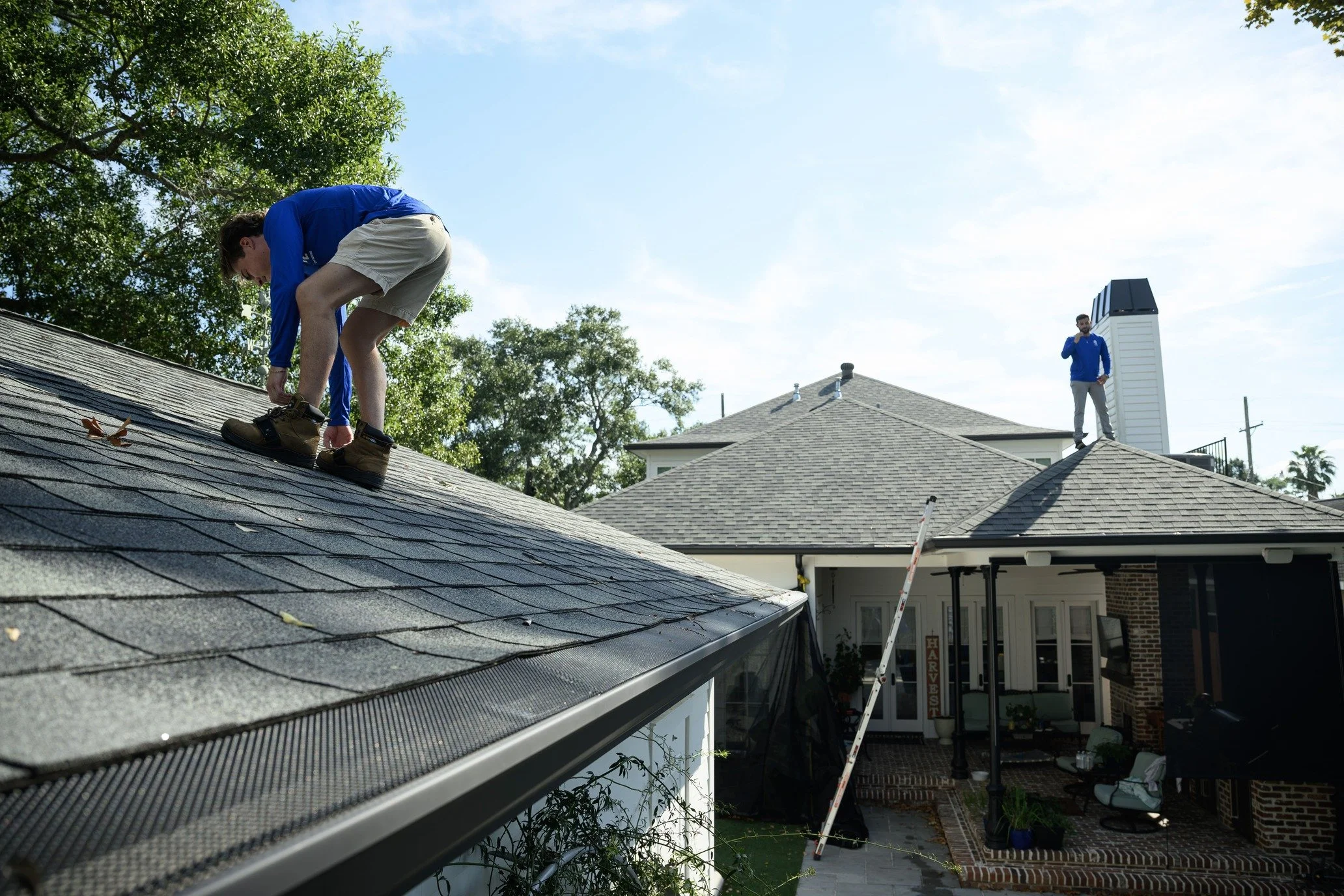
Roof Leak Detection & Repair in Central, LA
Leaks in Central homes traced from the stain back to the entry point, written up with photos and readings, then repaired by our own crew.
A Central leak call starts at the ceiling stain and ends at whatever let the water in, which may sit some way uphill once the water has crossed the decking and run down a rafter. Long rains and older flashing both contribute to Central leaks, and our roof leak detection and repair prices the fix only once the source is known.
Rain, Roof Age and Leaks in Central
During the August 2016 storm, a rain gauge on Hooper Road, one of the main routes across the city, measured just over 21 inches over three days, with more than 14 inches in a single day. Water that keeps coming for hours has time to work into valleys and into the joints where a roof meets a chimney or a wall, so some Central leaks appear only in a long, hard rain.
Age plays a part in roofing in Central as well. By census estimates, the median Central home was built around 1990, so many roofs here sit on houses old enough that their original flashing and vent boots deserve a close look, even where the shingles above them still seem sound.
Tools and Checks on a Central Leak Call
Flashing first:
Chimney counterflashing and wall step flashing get the closest look, then vent boots, valleys, ridge and box vents, and the small bath-fan and dryer openings.
Infrared imaging:
The thermal camera covers the suspect spot and the slope around it, looking for damp decking under shingles that seem dry.
Moisture meter checks:
A meter confirms each thermal reading before it counts as wet, and each reading is logged by location.
The attic side:
Where there is a hatch, the water marks on rafters, insulation, and the underside of the deck are followed uphill toward the entry.
Hose testing:
When the source stays hidden, water goes on one small area at a time, starting low on the slope, and someone in the room or attic below calls out the first drip.
Findings, then the fix:
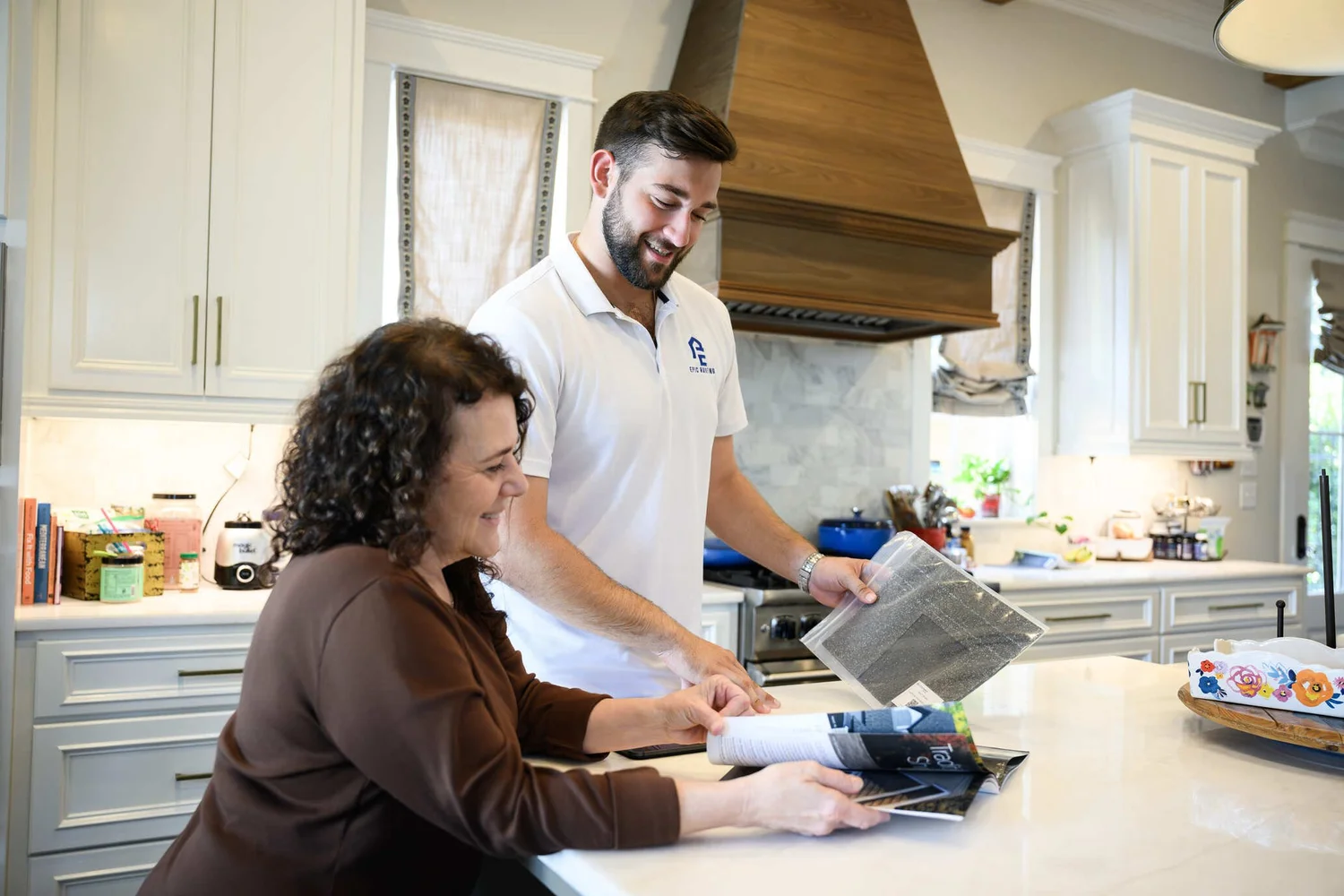
You get photos, thermal images, and readings with a short explanation of how the source was found, and the roof-side repair is priced for each source.
The Order a Leak Visit Follows
Inside the house:
The stain is photographed, and its position in the room noted, and if there is attic access, we trace the water marks upward from there.
Up on the roof:
The infrared scan and meter go over whatever spot the attic trace suggested, plus the slope around it.
Hose, then weather:
A hose test comes next if the scan and meter came up empty. If even that fails, the report records it, and the next visit is booked for a real rain, so nothing gets cut open on a hunch.
Report and written estimate:
Both reach you within 2–5 business days, and you pay no deposit at the consultation.
Repair and record.
When you sign off, our roofers repair the items in the report, and the CompanyCam album includes shots of the finished repair alongside the before photos. The repair's workmanship is covered in writing for as long as the scope states, a shorter period than a full replacement gets.
Pricing Once the Leak Is Found
The price follows from what the report finds. When it names more than one source, or the decking under the opening has softened and must be replaced, the job falls between $2,000 and $5,000. A single-point fix, such as resealing a chimney's counterflashing or replacing a split vent boot, costs between $400 and $1,800.
Sometimes the report shows wear across most of the roof, and at that point we say a replacement is a better fit than a repair; the next step is a quote for roof replacement in Central. For damage you can already see, such as missing shingles, start with roof repair in Central.
Ceiling Stains and Drips: Central FAQs
A ceiling we replaced after the 2016 flood has a new stain. Could the roof be the cause?
It could, and the attic usually answers that. Water from a roof leaves a trail from above: stains on the underside of the deck, down a rafter, then onto the ceiling. If the attic is dry over the stain, the cause may be a pipe, an AC line, or something else inside, and we say so in the report.
Our leak needs hours of steady rain before it drips. Which parts of the roof do you look at first?
Valleys come first, since they carry the most water, then the uphill side of a chimney and the step flashing along any wall where the roof runs into it. Knowing roughly how long it had been raining when the drip began helps us choose where to start the hose test.
A storm dropped limbs on our roof near Greenwell Springs. Could that be the leak?
It is worth checking. A limb can crack a shingle, break the seal on a tab, or bend a piece of flashing without leaving an obvious hole. We look at the area where it landed first and photograph what we find.
Can you find the leak if our attic has no access?
We can still work the problem from the roof, though the visit may take longer. Without an attic trace, we lean on the thermal scan, meter readings, and, if needed, a hose test, and we match the photos of the stain inside against the roof above it.
If the leak came from storm damage, is the report useful for a claim?
Yes, as evidence. The photos, thermal images, and readings show what we found and where. Filing is up to you; Epic files no claims and does not negotiate with your carrier. Interior drywall, paint, and insulation sit outside our work and go to other trades.
Find the Source of Your Central Leak
Call 225-396-8122 with the location of the stain and the weather that causes it. A photo of it helps.
137 Girod Street, Suite 3, Mandeville, LA 70448