
3-Tab vs Architectural Shingles: Which One Protects Your Roof Longer?
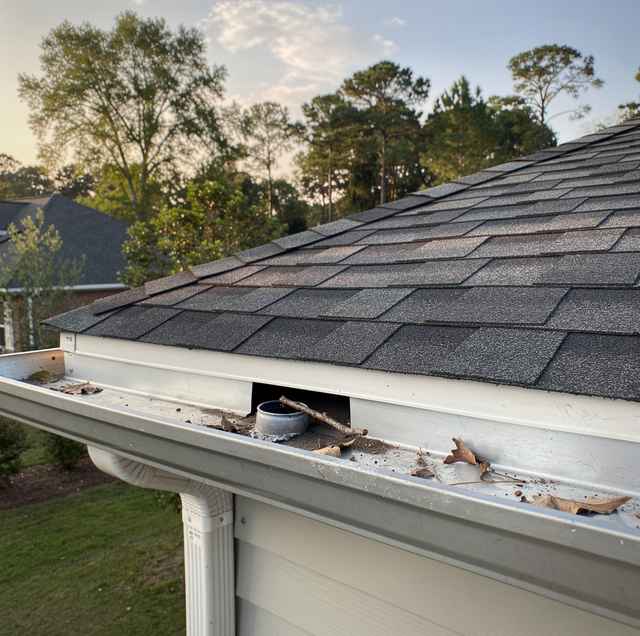
Quick Answer: Architectural shingles are laminated from two or more layers, which makes them thicker, heavier, longer-lasting, and rated for higher wind than the single flat layer of a 3-tab. A 3-tab is lighter and gives a uniform, flat look. If wind resistance and service life matter most, architectural wins; if you want the simplest, lightest uniform roof, 3-tab still has a place.
Stand at the curb and look up at almost any asphalt roof in the country, and you are looking at one of two shingles: a 3-tab or an architectural. They are both made from the same core materials, they go on the same deck, and from a distance, a lot of people cannot tell them apart. Up close, and over the years, they behave very differently.
The choice between them shapes how your roof handles wind, how long it lasts before the granules wear thin, and how the house reads from the street. This is a comparison worth understanding before a salesperson hands you a contract, because the difference is not just cosmetic. It is structural.
What Both Shingles Have in Common
Before the differences, it helps to know what these two have in common, because there is more than you might expect.
Both are fiberglass-asphalt shingles. Under the surface, each one is built on a fiberglass mat that gets coated in asphalt and topped with ceramic-coated mineral granules. Those granules are the part you see, and they do the real work of shielding the asphalt from the sun. Both types also carry a factory-applied sealant strip, a line of heat-activated adhesive that softens in warm weather and bonds each course to the one below it. That seal is what keeps wind from getting under the shingle and peeling it back.
Both nail into a defined nailing zone printed or embossed across the shingle, and both rely on that nailing line being hit correctly. So when people ask which one is "better made," the honest answer is that they are made the same way, from the same ingredients, on the same kind of roof. The gap between them comes down to how many layers are stacked and how the tabs are cut.
The 3-Tab Shingle: One Flat Layer
A 3-tab shingle is a single, flat layer of material. Its name comes from the three evenly spaced tabs created by two cutouts, or slots, notched into the lower edge of each shingle. When they are laid in overlapping courses, those cutouts line up into a repeating grid, and that grid is what gives a 3-tab roof its flat, uniform, almost printed appearance.
Because there is only one layer, a 3-tab is thinner and lighter than its laminated cousin. That lighter weight is easy on a roof structure and simple to handle on the deck. The trade-off shows up in two places: wind and time.
The cutouts that create the tabs also form edges, and every edge is a spot where wind can find a grip and start lifting. Many 3-tab products are rated in the roughly 60 mph wind class, tested, and installed to the manufacturer's specifications. Because the single-layer shingle is thinner, it tends to shed granules and wear through sooner than a thicker shingle, which is why 3-tab products generally have a shorter service life and warranty.
None of that makes a 3-tab a bad shingle. On a simple roof, in a milder wind environment, a properly installed and sealed 3-tab does its job for years. It is a simple, economical, uniform roof, and for some homes, that is exactly the point.
The Architectural Shingle: Layers Laminated Together
An architectural shingle, also called a dimensional or laminate shingle, is made by bonding two or more layers of material. That lamination is what sets it apart. Instead of one flat sheet with cutouts, the manufacturer laminates a base layer and one or more overlay tabs of varying size, then fuses them so the shingle has real thickness and a three-dimensional surface.
Two things follow from that extra material. First, the shingle is noticeably heavier because you are effectively carrying more shingles per square foot. Second, there are no slot cutouts running through it, so the continuous laminated body gives wind far fewer edges to catch. Manufacturers commonly rate architectural shingles in the 110-130 mph range, again, as tested and installed to spec. A laminated shingle behaves like plywood next to a single plank: the glued layers brace one another and resist lifting and cracking in ways a single thin layer cannot.
The layered build also lasts longer. More asphalt and more granule surface mean the shingle can weather more sun and more cycles of expansion and contraction before it thins out, which is why architectural products usually carry a longer manufacturer warranty than 3-tab lines. And because the overlay tabs are cut in irregular sizes with shadow lines between them, the finished roof reads as textured and layered rather than flat, more closely resembling wood shake.
How the Two Compare Side by Side
| Feature | 3-Tab Shingle | Architectural Shingle |
|---|---|---|
| Layers | Single flat layer | Two or more laminated layers |
| Look | Flat, uniform, repeating grid | Dimensional, textured, shadowed |
| Wind rating (as tested/spec) | Often ~60 mph class | Commonly 110-130 mph class |
| Service life | Shorter | Longer |
| Weight | Lighter | Heavier |
Read the table top to bottom, and a pattern shows: nearly every line that involves protection and longevity favors the architectural shingle, while the 3-tab holds an edge only in weight and in that clean, uniform grid some homeowners specifically want.
The Deciding Factors
Picking between the two comes down to a handful of questions. Here is how to weigh them.
Wind resistance: This is where architectural shingles pull clearly ahead. In a storm-prone area, the higher tested wind rating and the absence of cutout edges matter because wind uplift is what strips shingles off a roof. Cold weather can stiffen and embrittle asphalt so a shingle cracks rather than flexes under a gust, and heat plus constant thermal cycling the rest of the year fatigues the same shingle from the other direction. A heavier laminated shingle simply gives both extremes less to work with year-round.
Appearance: If you want depth, shadow, and a look that reads like dimensional wood shake, architectural is the answer. If you want a flat, even, uniform field, the 3-tab grid delivers that in a way the layered shingle cannot.
Weight and structure: A 3-tab is lighter and easier on any deck. An architectural shingle is heavier, and while a sound roof handles that weight without issue, there is a real difference in load and handling during installation.
Service life and warranty: Architectural shingles generally last longer and carry a longer manufacturer’s warranty. If you plan to stay in the house and want the longest interval between roof replacements, that gap is worth considering.
One caution on every wind and lifespan number here: those ratings are manufacturer claims, valid only when the shingle is installed exactly to spec, on sound decking, with the fasteners placed correctly. A great shingle nailed wrong performs like a cheap one.
A Safety Note Before You Climb Up
It is tempting to get on the roof yourself to check what you have or eyeball a lifted tab. Resist it. Roof work combines a walking surface that slopes and gets slick with a fall height that turns a small slip into a serious injury. Shingle inspection, wind-damage assessment, and any repair belong to a professional who is equipped and trained to work at height. Judge your roof from the ground, and let someone with the right footing handle the rest.
Frequently Asked Questions
A 3-tab is a single flat layer with cutout tabs, while an architectural shingle laminates two or more layers together, and that extra layer is what gives it both the dimensional look and the added weight and wind resistance. The lamination also lets the layers brace one another, so a lifted corner does not propagate a crack across the shingle the way a stress point can travel through a single unbroken sheet.
Architectural shingles typically carry a higher tested wind rating, often the 110 to 130 mph class, versus roughly 60 mph for many 3-tabs, largely because the laminated layers and lack of cutouts leave fewer edges for wind to lift. In addition to the rating, some architectural lines offer an upgraded installation using six nails per shingle instead of the standard four, which raises the field-installed wind performance beyond the baseline printed on the wrapper.
No. The thinner single-layer of a 3-tab generally wears faster than the heavier laminated architectural shingle, which is why architectural products usually carry a longer manufacturer’s warranty. Wear tends to begin as granule loss, and once the granules thin out, the exposed asphalt hardens and starts to crack, so the roof that sheds its granules first is usually the one that ages out first.
Yes. A 3-tab roof reads as a flat, even grid because of the repeating tab cutouts, while an architectural roof looks layered and shadowed, almost like wood shake, because the tabs vary in size and there are no straight cutout lines. A quick tell from the ground is the shingle's bottom edge: a 3-tab shows a straight, unbroken line across the course, while an architectural shingle shows a staggered, irregular edge.
Both nail into a defined nailing zone and rely on a heat-activated sealant strip, but architectural shingles are heavier, and the nail line placement is critical, since a nail set too high misses the laminated layer and voids the wind warranty. On a laminate shingle, the correct zone is narrow and sits over the doubled section, so a fastener driven even a fraction high can catch only the single overlay and pull through under load.
The shingle sits on the same deck and underlayment, but a heavier architectural shingle still needs sound decking and proper attic ventilation, because trapped heat and moisture age asphalt shingles from beneath, regardless of which type is on top. An underventilated attic can drive shingle-surface temperatures high enough that some manufacturers will reduce or void the warranty if intake and exhaust ventilation do not meet their minimum requirements, regardless of which shingle is installed.
Schedule a roof inspection before your next storm season — know exactly which shingle protects your home and how much life it has left. Epic Roofing LLC serves Mandeville, Covington, Baton Rouge, and the surrounding area. Call (225) 819-3742 for an inspection.
