
How to Spot Storm and Hail Damage on Your Roof
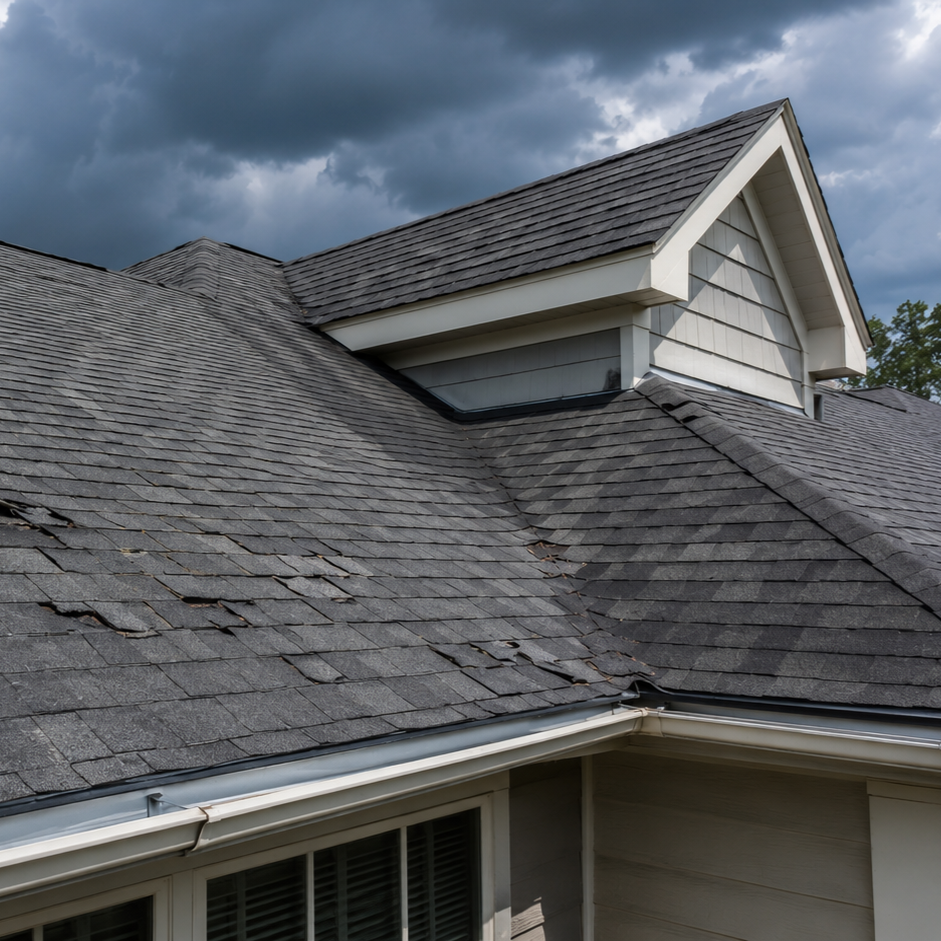
Quick Answer: After a storm, signs of roof damage include missing, lifted, torn, or creased shingles from wind; dented or bruised shingles, dings on metal vents and flashing, and dark spots where granules were knocked off from hail; granules collecting in gutters and downspouts; and damaged or bent flashing. Indoors, look for new water stains or leaks. You can spot much of this safely from the ground or with binoculars, plus checking the attic — but you shouldn't climb onto a storm-damaged roof yourself, as it's dangerous. Storm and hail damage can be subtle and lead to leaks over time, so it's worth having a professional inspect the roof after a significant storm.
After a significant storm — high winds, hail, or both — your roof may have damage that isn't obvious from the ground but can lead to leaks and bigger problems down the road. Knowing the signs of storm and hail damage, and how to check for them safely, helps you catch it early. Here's what to look for and how to do it without putting yourself at risk.
How Wind and Hail Damage a Roof
Storms damage roofs in different ways. High winds can lift, loosen, tear off, or crease shingles, breaking the seal that keeps water out and sometimes removing shingles entirely. Hail strikes the roof with force, denting or bruising shingles, knocking off the protective granules, and damaging softer components like vents and flashing. Both can compromise the roof's ability to keep water out, even when the damage looks minor. Understanding that wind tends to lift and tear while hail dents and bruises helps you know what signs to look for after each kind of storm. The damage isn't always dramatic, which is exactly why it's worth checking carefully.
Signs of Wind Damage
After a windstorm, look for shingles that are missing, lifted, curled, torn, or creased. A creased shingle — folded or bent from being lifted by wind — may have a broken seal even if it's still in place, which can let water under it. Missing shingles leave the roof exposed. You might also see shingle debris in the yard. Wind can also damage or lift flashing (the metal around chimneys, vents, and valleys). These signs indicate the wind has compromised the roof's water-shedding surface, and even a few lifted or missing shingles create entry points for water.
| Damage type | Signs to look for |
|---|---|
| Wind | Missing, lifted, torn, or creased shingles; debris |
| Hail | Dents, bruises, dark granule-loss spots; dinged vents/flashing |
| Both | Granules in gutters; damaged flashing |
| Indoors | New water stains, leaks, or attic moisture |
Signs of Hail Damage
Hail damage can be subtler and harder to spot. Look for dented or bruised shingles — spots where the hail impacted, which may appear as dark marks where granules were knocked off, exposing the shingle underneath. Dings or dents on metal surfaces like vents, gutters, and flashing are clear signs that hail hit the roof. A lot of granules collecting in your gutters and downspouts after a hailstorm indicates hail knocked the protective granules off the shingles. Hail bruising can weaken shingles and lead to leaks over time, even if it doesn't cause an immediate hole, which is why hail damage is worth identifying even when the roof seems intact.
How to Check Safely
You can spot much of the damage without climbing onto the roof, which is important because a storm-damaged roof is dangerous to walk on. From the ground, look up at the roof — using binoculars helps — for missing, lifted, or damaged shingles and visible dents or dark spots. Check the ground and gutters for shingle pieces and granules. Look at metal vents, gutters, and flashing for dents. Inside, check the attic and ceilings for new water stains, leaks, or signs of moisture. These checks let you identify likely damage safely. What you should not do is climb up onto the roof yourself to inspect closely, since walking on a roof — especially a potentially damaged one — risks a serious fall and can cause further damage.
Don't climb onto your roof to inspect storm damage yourself. Walking on a roof is dangerous and risks a serious fall, and a storm-damaged roof may be even less stable. Check from the ground, with binoculars, and from inside the attic, and leave the close-up roof inspection to a professional with the proper training and safety equipment.
Why a Professional Inspection Matters
Because storm and hail damage can be subtle and lead to leaks over time, having a roofing professional inspect the roof after a significant storm is worthwhile. A professional can safely access and closely examine the roof, identify damage that's hard to see from the ground — like hail bruising or compromised seals — and assess whether repairs are needed. Catching storm damage early, before it leads to leaks and water damage, is the goal, and a thorough inspection finds problems you might miss. After a major wind or hail event, even if your ground-level check looks okay, a professional inspection gives you a clear picture of the roof's condition. In a storm-prone area, that post-storm check is an important part of protecting your home.
Frequently Asked Questions
Look for missing, lifted, torn, or creased shingles from wind; dented or bruised shingles and dark granule-loss spots from hail; dents on metal vents, gutters, and flashing; granules collecting in gutters; and damaged flashing. Inside, check for new water stains or leaks in the attic and ceilings. Much of this can be spotted from the ground or with binoculars without climbing onto the roof.
Hail damage appears as dented or bruised shingles — spots where hail impacted, often showing as dark marks where granules were knocked off. You'll also see dings or dents on metal vents, gutters, and flashing, and a lot of granules in the gutters after a hailstorm. Hail damage can be subtle and may not cause an immediate hole, but it can weaken shingles and lead to leaks over time.
You can safely check from the ground (binoculars help), look at the gutters and yard for shingle pieces and granules, examine metal surfaces for dents, and inspect the attic and ceilings for water stains or leaks. What you shouldn't do is climb onto the roof, since walking on a roof — especially a storm-damaged one — is dangerous and risks a serious fall. Leave close-up inspection to a professional.
No, it's not recommended. Walking on a roof is dangerous and risks a serious fall, and a storm-damaged roof may be less stable than normal. Inspect from the ground, with binoculars, and from inside the attic instead. Close-up roof inspection should be left to a roofing professional who has the proper training and safety equipment to access the roof safely.
Because storm and hail damage can be subtle and lead to leaks over time. A professional can safely access the roof, closely examine it, and identify damage that's hard to see from the ground — like hail bruising or compromised shingle seals — then assess whether repairs are needed. Catching storm damage early, before it causes leaks and water damage, is why a post-storm professional inspection is worthwhile.
Yes. Storm and hail damage isn't always dramatic, but even subtle damage — a creased shingle with a broken seal, hail bruising, or a few lifted shingles — can compromise the roof's ability to keep water out and lead to leaks over time. That's why minor-looking damage is worth identifying and addressing, rather than assuming the roof is fine because it doesn't look badly damaged from the ground.
Spot It Safely, Then Get It Checked
Storm and hail damage to a roof shows up as missing, lifted, or creased shingles from wind and dented, bruised shingles with granule loss from hail, plus dinged flashing and granules in the gutters. You can spot much of it safely from the ground, with binoculars, and from the attic — but don't climb onto the roof yourself. Because the damage can be subtle and lead to leaks, having a professional inspect the roof after a significant storm is the smart way to catch problems early.
Roof took a hit from wind or hail? — Get a safe, professional inspection to find storm damage before it leaks. Epic Roofing LLC serves Mandeville, Covington, Baton Rouge. Call (225) 819-3742.
