
Impact-Resistant Shingles: Do They Hold Up in Hail?
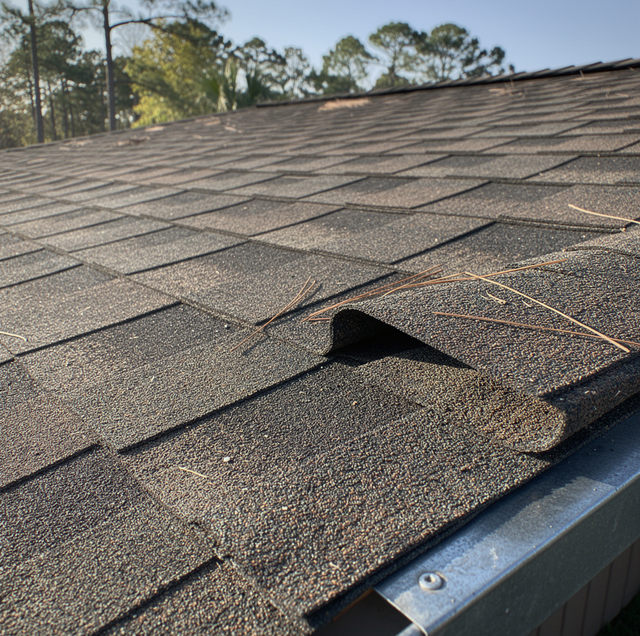
If you live where a passing storm can drop hail along with the wind and rain, you know the drill: the storm clears, the yard is littered with ice, and a few weeks later, you are looking at a roof that lost granules or cracked shingles again. After a couple of those hits, the idea of a shingle actually built to take a hailstone starts to sound less like an upgrade and more like common sense.
Impact-resistant shingles are made for exactly this. Whether they make sense for your roof comes down to how they are built, how they are tested, and what you are up against in your area.
What Makes a Shingle Impact-Resistant
A standard asphalt shingle is not designed to withstand ice traveling at speed. A hailstone can crack the mat, knock the protective granules loose, or bruise the shingle, causing it to fail later. Impact-resistant shingles are engineered to absorb that blow instead of cracking under it, usually through a tougher, more flexible construction, often with a polymer-modified (SBS) asphalt or a reinforcing backing that lets the shingle flex and rebound rather than shatter. The result is a shingle far more likely to shrug off a hailstone that would crack an ordinary one.
Class 4 Is the Standard to Look For
There is a clear way to know a shingle is truly rated for impact, and it is the UL 2218 test. In that test, steel balls are dropped onto the shingles from set heights to simulate hail strikes, and shingles are rated Class 1 through Class 4 based on how well they resist cracking. Class 4 is the highest rating, standing up to the equivalent of roughly two-inch hail without the mat cracking. When people talk about impact-resistant shingles, they almost always mean Class 4, because that is the level built to face serious hail.
| Standard shingle | Class 4 impact-resistant |
|---|---|
| Hail response | Can crack, bruise, lose granules; flexes and rebounds, resists cracking |
| Rating | Class 1–3 or unrated; UL 2218 Class 4 (highest) |
| Wind and debris | Less resistant; more resistant to wind-driven debris |
| Lifespan in storms | Shorter in hail-prone areas; longer, fewer storm replacements |
Where Impact-Resistant Shingles Earn Their Keep
The case is strongest exactly where hail is frequent and severe. Where hail turns up among the wind and rain, a standard roof can take damage storm after storm, and each hit risks another repair or an early replacement. A Class 4 roof is far more likely to come through the same storms intact, which means fewer disruptions and a roof that reaches its full lifespan instead of being cut short. There is often an insurance angle too: many insurers offer a premium discount for a verified Class 4 roof, since it is less likely to generate a hail claim. In storm-prone areas, the same toughness that shrugs off hail also stands up better to the wind-driven debris that comes with severe weather, which is why impact resistance and strong wind performance tend to go together on a well-built roof.
What They Won't Do
It is worth being clear-eyed. Impact-resistant does not mean hail-proof. A large enough or fast enough hailstone can still damage any roof, and a Class 4 shingle can be dented or lose some granules in an extreme storm, even when the mat holds. The rating means the shingle resists cracking and structural failure that can end a roof’s life early, not that it comes through every storm untouched. After a severe event, a Class 4 roof still deserves an inspection; it is just far more likely to pass it.
What to Confirm Before You Buy
If part of your reason for choosing impact-resistant shingles is the insurance discount, verify the details before installation. Make sure the shingle is labeled as UL 2218 Class 4, and ask your roofer for the manufacturer’s paperwork that verifies the rating, because that is what your insurer will want to apply a premium discount for. It is also worth asking your insurance provider up front what they require, since the discount and the documentation vary by company. Confirming the rating and coverage together, rather than after the roof is on, turns the tougher shingle into savings as well as protection.
Frequently Asked Questions
Class 4 is the highest impact rating in the UL 2218 test, where steel balls are dropped onto shingles to simulate hail. A Class 4 shingle resists cracking from the equivalent of roughly two-inch hail. It is the level to look for if you live in a hail-prone area, since lower classes offer less protection against serious storms.
No. They are far more resistant to hail damage than standard shingles, but no roof is truly hail-proof. A large or fast enough hailstone can still dent or scuff a Class 4 shingle. What the rating buys you is strong resistance to the cracking and mat failure that shortens a roof's life, so the roof is much more likely to survive storms intact.
Often, yes. Many insurers offer a premium discount for a roof with verified Class 4 impact-resistant shingles because that roof is less likely to result in a hail claim. The discount and the requirements vary by insurer, so it is worth asking your provider what documentation they need to apply it. It is a common reason homeowners in hail country choose them.
Like other quality asphalt shingles, they are generally built for a long service life, and in hail-prone areas, they often outlast standard shingles by avoiding the storm damage that would otherwise force early replacement. Their advantage is less about a longer base lifespan and more about actually reaching it, because they are not being chipped away by every hailstorm.
They are installed like standard shingles during a re-roof or new roof, so the natural time to switch is when you are replacing the roof anyway, including after storm damage. You would not typically overlay them onto a failing roof. If a hailstorm has already damaged your current roof, that replacement is the moment to move up to Class 4.
The case is strongest where hail is frequent and severe. If serious hail is rare in your area, the added protection matters less, though the wind and debris resistance can still help in storms. Where hail comes most years, the reduction in repeat damage, the longer roof lifespan, and a possible insurance discount make the tougher shingle a practical choice.
Built for the Storms You Actually Get
Impact-resistant shingles hold up in hail because they are engineered to flex and rebound where a standard shingle cracks, and Class 4 under the UL 2218 test is the level that faces serious hail. They are not hail-proof, but in an area that gets battered storm after storm, they resist the damage that ends roofs early, often come with an insurance discount, and pair naturally with strong wind performance. Where hail is a regular visitor, a roof built to take it is the one that lasts.
If you are tired of repairing your roof after every hailstorm, ask about a Class 4 impact-resistant roof built for storm-prone areas. Epic Roofing LLC serves Mandeville, Covington, Baton Rouge, and the surrounding area. Call (225) 819-3742 for an inspection.