
Louisiana Roof Strong Grant: How to Get $10,000 for a FORTIFIED Roof
The Louisiana Fortify Homes Program (LFHP) — what most people call the Roof Strong Grant — pays up to $10,000 toward a FORTIFIED roof upgrade. The program is lottery-based, opens in roughly 5-day registration windows a few times a year, and has awarded about 1,800 grants since October 2023. Last-day applicants have the same odds as first-day applicants. The most common reason homeowners get disqualified isn't the lottery — it's signing a contractor before the grant is approved.
The insurance bill went up again this year. The roof is approaching replacement age. A neighbor at the gas station mentioned $10,000 from the state to upgrade to a FORTIFIED roof. Now the homeowner is trying to figure out whether the grant is real, who qualifies, and what it actually takes to get one.
The grant is real. Roughly 1,800 Louisiana homeowners have collected since the first round in October 2023. The program is run by the Louisiana Department of Insurance and structured as a lottery — odds depend on the round, not on how fast the application button gets clicked. Here is how it actually works, what disqualifies an application, and the documents to have ready before the next registration window opens.
What the Roof Strong Grant Actually Covers
The grant pays up to $10,000 in construction costs for a FORTIFIED roof upgrade. The check does not go to the homeowner — it goes directly to the contractor on completion of the work and submission of the IBHS FORTIFIED certificate. The homeowner handles cash flow for everything else.
What the grant does not cover: the FORTIFIED Evaluator's fees, building permits, additional inspections, and any construction cost above the $10,000 cap. A typical FORTIFIED upgrade in Louisiana costs about $16,000, so most homeowners pay about $6,000 out of pocket, even after the grant. Plus a few hundred for the evaluator and permits.
| Cost Component | Who Pays |
|---|---|
| FORTIFIED Roof construction (up to $10,000) | LFHP grant (paid to contractor on completion) |
| Construction cost above $10,000 | Homeowner |
| FORTIFIED Evaluator fees (initial + final) | Homeowner |
| Building permits | Homeowner |
| Additional inspections | Homeowner |
| Any insurance deductible (if combined with claim) | Homeowner |
Plan for cash flow before construction starts. The state issues the grant check to the contractor only after the work is done and the IBHS FORTIFIED certificate is in hand. Some contractors require progress payments during the build. Confirm payment terms in writing before signing — including who carries the float between completion and grant disbursement.
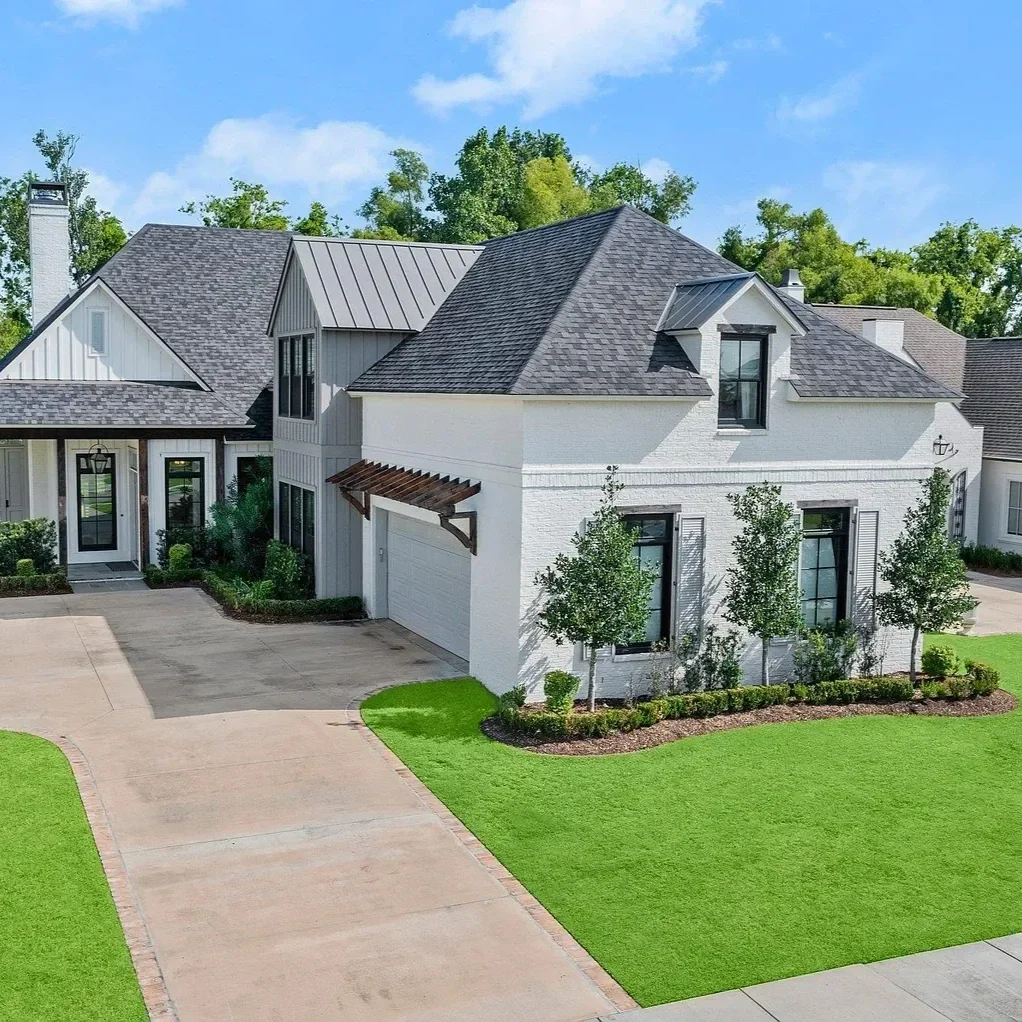
Louisiana home with upgraded FORTIFIED roof eligible for Roof Strong grant funding and long-term hurricane insurance premium savings.
Who Is Eligible (and Who Is Not)
The program is built for Louisiana homeowners with existing primary residences. The eligibility rules are strict, and the LDI verifies them before issuing any funds.
Eligible
Primary residences. Single-family homes. Duplexes and similar two-family structures where the owner occupies one unit. The home must be in good repair — meaning it can pass a FORTIFIED Evaluator's inspection without significant pre-existing damage.
Not eligible
New construction. Condominiums. Mobile homes. Investment or rental properties without owner occupancy. Vacation homes that are not the owner's primary residence on file with the parish. Homes with significant existing damage that fail the initial evaluator inspection.
Coverage requirements
Active residential insurance with wind coverage on the property. If the home is in a FEMA Special Flood Hazard Area (SFHA), proof of an active flood insurance policy. Confirm both with the agent before applying — gaps in coverage are the second-most-common disqualifier after starting construction early.
Homestead exemption
A homestead exemption on the property is required. The LDI verifies this through the parish assessor's records if the applicant is selected. For homeowners who moved in recently and have not filed for the exemption, file before registering for the lottery.
How the Lottery Actually Works
Registration windows open periodically throughout the year — typically 5 days each. The Louisiana Department of Insurance announces them through email subscribers and press releases. Recent rounds (most recently the February 2025 round) opened on a Wednesday and closed at 5 p.m. the following Sunday.
When the window closes, the LDI randomly selects grant recipients from the registered pool. The February 2025 round selected 1,000 grants. Past rounds have sized the pool similarly. Applicants not selected can register again in the next round — but they have to register again. Previous registrations do not carry over.
Critical detail most homeowners get wrong: the last-day registrant has the same odds as the first-day registrant. There is no advantage to refreshing the page at midnight when registration opens. Register before the window closes.
Some rounds are geographically restricted. The first round of 2025 was limited to Louisiana's Coastal Zone plus the Lake Charles, Sulphur, and Westlake areas. Whether a home falls inside the eligible zone for a given round is determined by the state's online coastal zone map. Other rounds open statewide. The LDI announcement specifies eligibility for each window.
Create the profile at ldi.la.gov/fortifyhomes immediately. The setup takes 10 minutes and can happen any time. Then sign up for the LFHP email subscription list. When the next lottery window opens, the homeowner is ready to register the same day with no scrambling for documents. The applicants who get grants are almost always the ones who set up before the window opens.
The 9-Step Process from Profile Creation to Roof Certificate
Step 1 — Create the LFHP profile
ldi.la.gov/fortifyhomes. Takes 10 minutes. This step can happen any time, well before the next lottery window. Add basic homeowner information and contact details.
Step 2 — Subscribe to LFHP announcements
Sign up for email notifications about upcoming grant lottery rounds. The state does not run rounds on a fixed calendar — they open as funding allows. Email is the best signal.
Step 3 — Register during an open lottery window
When a window opens, register the home for the lottery through the profile. Confirm geographic eligibility for that specific round. Have the homestead exemption tax bill, driver's license, insurance declarations, and flood policy (if applicable) ready to upload.
Step 4 — Wait for selection
The LDI randomly selects recipients after the registration window closes. Selection notifications go out within roughly 2-4 weeks. Applicants not selected can register again in the next round.
Step 5 — Hire a FORTIFIED Evaluator
If selected, the homeowner has 15 days to schedule an on-site inspection with a FORTIFIED Evaluator from the LDI's approved list. The Evaluator is a third-party professional, not the contractor — they are independent. Evaluator fees come out of pocket; this is not covered by the grant. The initial evaluation determines whether the home is eligible for the FORTIFIED upgrade and what work is required.
Step 6 — Get 3 bids from approved contractors
At least 3 bids from contractors on the LDI's approved FORTIFIED Contractors list are required. Submit those bids to LFHP for review. Verify the lead installer on the job — the actual person installing the roof — holds a current FORTIFIED Roofer credential, not just the company.
Step 7 — Get LFHP acceptance, then begin work
Wait for LFHP acceptance of the contractor and project plan before construction begins. This is the single most-violated step in the process. Starting work before acceptance automatically loses the grant.
Step 8 — Construction and final evaluation
Construction proceeds under FORTIFIED standards. The Evaluator returns to verify that the completed work meets the specification. The Evaluator submits documentation to IBHS and obtains the FORTIFIED Roof certificate.
Step 9 — Grant payment and insurance discount
Once the FORTIFIED certificate is issued, the contractor invoices LFHP for the grant amount. The homeowner receives the certificate. A copy goes to the insurance agent for the mandatory wind/hail discount under Louisiana Act 533. The FORTIFIED designation renews every 5 years through a re-inspection.
What to Have Ready Before Registering
The registration window is short, and the upload is part of the process. Keep these in a folder on a phone or desktop, ready to attach the moment the window opens.
Homestead exemption tax bill. The most recent parish assessment showing the exemption is in place on the property.
Driver's license or state ID. Standard identity verification.
Insurance declarations page. The page that lists policy limits, dwelling coverage, and wind coverage explicitly. If the dec page does not mention wind, call the agent — wind is sometimes excluded on Louisiana policies.
Flood insurance declarations (if the home is in a FEMA Special Flood Hazard Area). FEMA's online map confirms SFHA status. In an SFHA, no flood policy means no grant.
Email address checked regularly. The LDI communicates via email — including the selection notification with a 15-day clock on the evaluator inspection. Missing it costs the grant.
The Top 5 Reasons Applications Get Denied or Disqualified
Most disqualifications happen for predictable reasons. Knowing them in advance is half the work.
Started construction before grant approval: Signing a roofing contract or beginning work before LFHP accepts the project is automatic disqualification. This is the single most common disqualifier and is not negotiable. Wait for written acceptance.
Wrong property type: Mobile homes, condos, new construction, and non-owner-occupied investment properties are all ineligible. The LDI verifies this against parish records.
No homestead exemption: Without a filed and maintained homestead exemption on the property, the applicant does not qualify. File before registering for any homeowner who moved in recently.
Missing wind or flood coverage: Wind coverage is required statewide. Flood coverage is required for homes in a FEMA Special Flood Hazard Area. Gaps in either get an applicant disqualified during document verification.
Outside the eligible geography for that round: Some rounds restrict to the Coastal Zone or specific cities. Check the geographic boundary for the specific round, not the program's general eligibility.
How to Stack the Grant With Other Louisiana Incentives
The Roof Strong Grant is the largest single incentive, but not the only one. Louisiana stacks several programs that reduce the out-of-pocket cost or the recurring premium on a FORTIFIED roof.
Louisiana state income tax credit. Up to $10,000 for FORTIFIED Roof installations completed on or after July 1, 2025. Subject to a $10 million annual statewide cap on a first-come, first-served basis. Apply on the state tax return for the year of installation.
Construction Code Retrofitting Deduction. 50% of the install cost up to $10,000, deductible against Louisiana income taxes. Effective for taxable periods beginning January 1, 2026. Combine with the income tax credit for further offset.
Mandatory insurance discount under Act 533 (2024). Every admitted Louisiana insurer must offer an actuarially justified discount on FORTIFIED Roof-certified homes. The median Louisiana homeowner saves roughly $1,250 per year. Recurring savings — the gift that keeps giving.
For income-qualified households, additional grants stack on top: the FHLB FORTIFIED Fund grant (up to $15,000 for households at or below 80% Area Median Income) and CDBG grants administered through Rebuilding Together New Orleans (up to $35,000 in Orleans Parish). Confirm program-by-program stacking rules — not all combinations are allowed.
What If the Application Isn't Selected This Round?
About one in three or four registrants gets selected in any given round, depending on pool size and grant availability. Three honest options remain for those not picked.
Re-register in the next round. Past entries do not carry over — registration has to happen again. Staying subscribed to LFHP announcements catches the next window. The carryover funding from past rounds means new windows open on a regular basis.
Self-fund the FORTIFIED upgrade. The grant is financial assistance, but the FORTIFIED standard and certification process operate independently of it. The homeowner pays full cost, hires a FORTIFIED-approved contractor, gets the IBHS certificate, and claims the mandatory insurance discount and tax credit. The math works longer (~13-year payback instead of 5), but the recurring savings are the same.
Add a FORTIFIED endorsement to the insurance policy. Some Louisiana carriers offer this — it commits the carrier to replace the roof to FORTIFIED standard if it is damaged in a covered event. No upfront cost beyond the endorsement premium. The FORTIFIED discount does not apply until the roof is actually replaced under the endorsement.
How to Find an Approved Contractor and Evaluator
Both lists live on the LDI website and update regularly. Check ldi.la.gov/fh-approved-contractors for contractors and ldi.la.gov/fh-approved-evaluators for evaluators. Only contractors on the list can receive grant payment directly from the program.
When contacting a contractor for a bid, ask three questions. First, is the lead installer on this job credentialed as a FORTIFIED Roofer (not just the company)? Second, what specific products are used for the sealed deck membrane, the ring-shank nails, and the edge components? Third, what is the typical timeline from grant acceptance to FORTIFIED certificate?
Frequently Asked Questions
The grant is paid directly to the contractor, not to the homeowner. Consult a Louisiana tax professional for current treatment — tax law on home-improvement grants can shift. Most homeowners do not report it as personal income, but verify before filing.
Yes. The grant can pay the difference between the insurance claim payout and the cost of a FORTIFIED-standard upgrade. The open or recent claim must be disclosed during the grant application process — undisclosed claims are a disqualifier.
Plan for 4-6 months from grant acceptance to FORTIFIED certificate. Selection notification comes within 2-4 weeks of the lottery closing. Then, 15 days to schedule the evaluator. Then bidding, project review, weather windows for the install, and final inspection. Faster is possible — and slower is common.
The evaluator's report identifies the issues. Some are fixable (replace damaged decking, repair flashings, address ventilation). Others are deal-breakers (significant structural damage, roof slope outside FORTIFIED specs). For an ineligible home, the grant offer is not lost — the homeowner can reapply later after completing the prerequisite repairs.
Yes, and the math is favorable. If insurance pays $14,000 to replace a storm-damaged roof but the FORTIFIED upgrade costs $18,000, the grant covers the $4,000 gap. Disclose the claim during application — undisclosed claims disqualify the applicant.
Yes. The IBHS certificate stays with the property and transfers to the buyer at closing. The new owner submits the certificate to their insurer for the mandatory discount. It is a feature in the listing — buyers value the recurring insurance savings.
The grant has no hard deadline once accepted, but practical pressure exists — the contractor does not get paid until the FORTIFIED certificate is issued. Most disputes resolve through the LDI's program staff. If a contractor walks off the job, contact LFHP immediately. Substituting another approved contractor from the list to finish the work is often possible.
Set Up the Profile Before the Next Window Opens
The Roof Strong Grant is the largest standing roof incentive in Louisiana. Real money — about 1,800 grants paid out in three years, and the program continues with permanent annual funding through Act 79. The homeowners who collect are the ones who created their LFHP profile in advance, kept their documents organized, and registered the moment the next window opened. The lottery odds are the same whether registration happens on day one or day five. Preparation is what separates the winners from the people who scramble.