
What Is Drip Edge? The Small Metal Strip Saving Your Roof
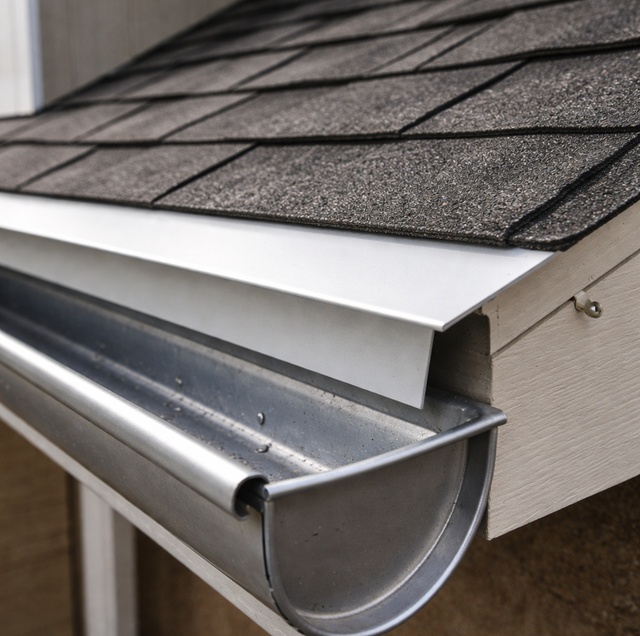
Quick Answer: Drip edge is metal flashing installed along the eaves and rakes of a roof. It directs rainwater off the roof edge and into the gutter, keeping it from wicking back under the shingles and rotting the fascia and roof deck.
Drip edge is the strip of bent metal flashing installed along the very edge of a roof, at the eaves (the horizontal bottom edge) and the rakes (the sloped side edges). Its whole purpose is to control where water goes at that vulnerable seam. It catches runoff coming off the shingles and throws it clear of the wood behind the edge, sending it into the gutter instead of letting it curl back underneath.
Water does not always drop straight down. Surface tension lets a sheet of runoff cling to a surface and wrap around an edge, a behavior anyone who has poured from a mug has watched happen. On a roof, that means water reaching the bottom row of shingles can hook back under them and run down the face of the fascia board or soak into the exposed edge of the roof deck. Drip edge exists to break that path. The metal extends past the wood and bends downward and outward, so water has nothing to cling to and falls away.
What Drip Edge Actually Does
The edge of a roof is where three materials meet: the shingles, the underlayment beneath them, and the wooden fascia and decking that frame the structure. Without a metal transition at that meeting point, water finds the gaps. Drip edge covers the seam and gives runoff a clean, controlled exit.
A properly installed piece does three things at once. It shields the top edge of the fascia board from direct water contact. It creates a small gap, so water drips off rather than tracking back along the underside. And at the eave, it guides that water forward into the gutter trough instead of behind it, which is the difference between a gutter that works and one that quietly dumps water against the house.
The Two Profiles And Where Each Goes
Not all edge metal is shaped the same, and the two common profiles are not interchangeable. Roofers refer to them by letter shapes because the bent metal, seen end-on, resembles a letter.
Type C or L Profile (Standard Drip Edge): This is the classic drip edge. Bend a flat strip into an L and add a short lip flared out at the bottom, and you have a Type L. A Type C adds a hem, a folded-back edge, for extra rigidity. Both have a face that lies against the fascia and a flange that sits on top of the roof deck. This profile is used mainly along the rake edges and is the general-purpose choice.
Type D or T Profile (Gutter Apron): The Type D, sometimes called a T-style or a gutter apron, has a longer, more pronounced lower leg that projects out and then kicks down. That extended leg reaches over the back lip of the gutter, so water is delivered inside the trough rather than dribbling behind it. This profile is the better performer at the eave, directly above the gutter, because it closes the gap where overshoot happens.
A common setup uses a gutter apron along the eaves and standard drip edge along the rakes. What matters most is not the letter but the order of installation relative to the underlayment, which changes depending on which edge you are on.
The Installation Order That Makes It Work
Drip edge only functions if it is layered correctly with the underlayment (the water-resistant sheet rolled over the deck before shingles go on). The rule flips between the two edge types, and getting it backward defeats the entire point.
At The Eave: Metal First, Then Underlayment: Along the bottom eave, the drip edge goes on the deck first, and the underlayment laps over the top of its roof flange. Reasoning: Any water that gets under the shingles travels down the underlayment and needs to shed onto the top of the metal, then off the edge. If the underlayment tucked under the metal here, that water would run behind the drip edge and onto the fascia, the exact failure the part is meant to prevent.
At The Rake: Underlayment First, Then Metal: Along the sloped rake edges, the order reverses. The underlayment goes down first, and the drip edge is installed over it. Wind-driven rain tends to push water sideways and up the rake slope, so the metal sitting on top of the underlayment sheds that water outward over the edge rather than trapping it. The starter course and field shingles then lock the flange down.
Fasteners run along the top flange, spaced along its length and kept back from the edge, and successive pieces overlap in the direction water flows so no seam faces uphill into the runoff.
How A Missing Or Wrong Piece Fails The Roof
Plenty of older homes were built with no drip edge at all, or with the wrong profile, or with the layering reversed. The damage tends to show up first in the wood along the edge, out of sight until it is advanced.
The most common result is fascia rot. Runoff that wicks back under the shingle edge sits against the top of the fascia board, and that repeated wetting breaks down the paint, then the wood. Soft, spongy, or discolored fascia is the visible symptom of water that a drip edge would have carried clear. From there, moisture can travel into the soffit (the underside panel that closes off the eave), staining it, peeling its finish, and in bad cases feeding rot into the framing behind it.
Missing edge metal also lets the exposed edge of the roof decking absorb water directly. Plywood and oriented strand board swell and delaminate when their cut edges stay wet, which softens the surface the shingles are nailed to. And without a gutter apron directing flow into the trough, water overshoots the gutter entirely in a heavy downpour, sheeting down the fascia and splashing at the foundation. A gutter that seems undersized is sometimes just missing the apron that would aim water into it. Cold months add freeze-thaw stress at that same edge, while summer heat and constant UV embrittle the wood the rest of the year, so the edge takes abuse in every season, not just one.
Materials: What Drip Edge Is Made From
Edge flashing is stamped and bent from a few standard metals, each with its own trade-offs.
Aluminum is the most widely used on homes. It never rusts, comes in a range of baked-on colors to match fascia or gutters, and is light enough to work easily. It is the softer of the metals, so it dents more readily, but on an edge that rarely matters.
Galvanized steel, and its heavier cousin galvalume, is stiffer and holds a straight line well over long runs, which is why it shows up often on commercial jobs and longer eaves. Its zinc coating resists corrosion, though a scratched or cut edge can eventually rust if the coating is breached.
Copper is the premium choice, used on higher-end and historic homes. It lasts for generations, needs no coating, and weathers to a patina many owners want. It calls for careful detailing where it meets other metals, since dissimilar metals in contact can corrode.
Thickness matters more than the metal alone. A thin, flimsy gauge can flutter in wind and telegraph waves along the edge, so a solid, appropriately heavy gauge is worth specifying regardless of material.
How Drip Edge Ties Into The Rest Of The Edge
Drip edge does not work alone. It is one layer in a stack of edge details that together seal and drain the perimeter, and it has to coordinate with the pieces around it.
The starter strip, a bead of adhesive-backed shingle installed as the first course along the eave, seals down over the drip edge flange and gives the first row of shingles something to bond to at the very edge, resisting wind uplift. The two pieces overlap so the shingle sheds onto the metal and the metal sheds off the roof.
The ice-and-water membrane, a self-adhering waterproof sheet applied along the eave before the field underlayment, is the belt-and-suspenders backup at the most leak-prone edge. Coordinating it with the drip edge takes judgment: the membrane needs to bond to the deck while the metal still sheds water outward over the edge, and the sequence at the eave keeps runoff shedding onto the metal and off the roof rather than behind it. This is one reason edge detailing is a job for a roofer rather than a guess.
Because drip edge measurably improves how the roof edge sheds water and resists rot, it has moved from optional upgrade to standard practice, and it is now called for on most new shingle installations. Requirements vary by jurisdiction and by the manufacturer's warranty terms, so the specifics should be verified locally before a job.
Can You Add Drip Edge To An Existing Roof
Retrofitting drip edge under shingles that are already down is possible but delicate. The bottom course has to be gently lifted, and any edge nails worked loose so the metal can slide up under the shingles and onto the deck, then the shingles reset. Do this on brittle or aged shingles, and they crack, which trades one problem for another. A roofer can also judge whether a retrofit is worth it or whether the edge is due for reworking anyway.
On a steep or wet roof, the real danger is the fall, not the shingles. Roof-edge work means standing at the perimeter, the exact spot with nothing to stop a slip, so this is pro work with proper anchorage rather than a ladder-and-nerve weekend project.
Frequently Asked Questions
Drip edge is one type of flashing, but not the only one. Flashing is the general term for any bent metal that directs water at a joint or transition. Step flashing weaves up a sidewall, valley flashing lines the trough where two slopes meet, and pipe boots seal around vents. Drip edge is specifically the flashing at the roof's outer edges. All are flashing; drip edge is the perimeter member.
The drip edge flange sits on the roof deck, and its lower leg extends over the back edge of the gutter so water is delivered into the trough. A gutter apron, the Type D profile, is shaped specifically for this and reaches farther over the gutter's back lip. If the gutter was hung before an apron was added, the apron's leg should still tuck behind the gutter's back wall so water lands inside, not behind it.
A kickout is a small piece of flashing installed where a roof edge meets a wall, most often at the bottom of a rake that runs into siding. It kicks runoff away from the wall and into the gutter instead of letting it pour down behind the siding. Drip edge handles the open edges; the kickout handles that one wall junction where a plain edge would dump water into the wall cavity, a frequent hidden-rot source.
Yes, and that is the trap. Reversed layering, underlayment over the metal at the eave, or an eave piece with no gutter apron, looks identical from the ground while it channels water to the wrong place. The failure shows up years later as soft fascia or a stained soffit. Because the mistake is invisible until the wood rots, edge work is worth inspecting on any roof with recurring edge damage.
It comes in stiff lengths, commonly ten-foot sticks, defined by the width of each face (the roof flange and the vertical fascia leg) and the metal gauge. A taller fascia leg covers more board and suits homes with thicker fascia. Corners at rake-to-eave transitions are cut and overlapped, not butted, so the upper piece laps over the lower in the direction water runs.
It helps with both, in different ways. Against wind-driven rain, the rake profile sheds sideways-pushed water outward rather than letting it creep under the shingle edge. Against ice and freeze-thaw at the eave, it works with the ice-and-water membrane to keep meltwater backing up behind an ice ridge from reaching the fascia and deck. It is one layer of a system, not a standalone cure for either.
Have a roofer check your roof edges before the wood pays for it — a quick inspection catches rot early and confirms your drip edge is doing its job. Epic Roofing serves Mandeville, Covington, and Baton Rouge. Call (225) 819-3742.
